
Total Energy Expenditure (TEE) represents the total number of calories a person burns per day, including resting metabolism, physical activity, and the energy used for digestion. Accurate measurement of TEE under real-life conditions is essential for nutrition, metabolism, obesity, and health research.
What is the DLW Method?
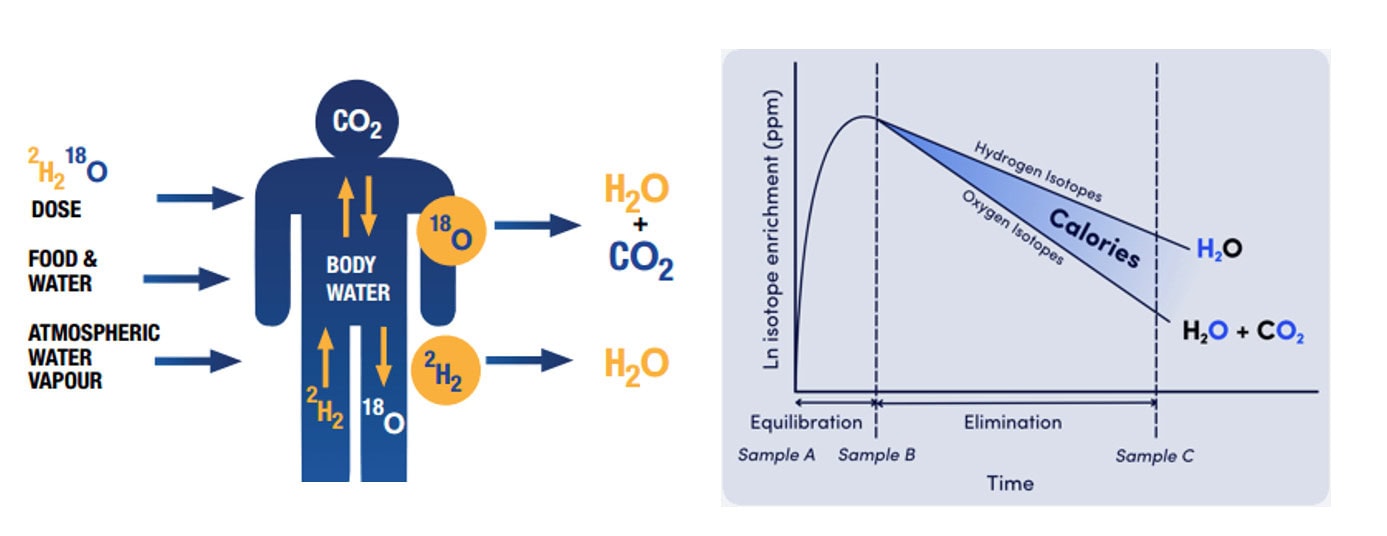
The DLW method measures TEE by tracking how much CO₂ the body produces over time. As CO₂ production is directly linked to energy metabolism, the DLW method is the ideal tool for clinical studies with a focus on weight loss and energy consumption.
What Does Participation Involve?
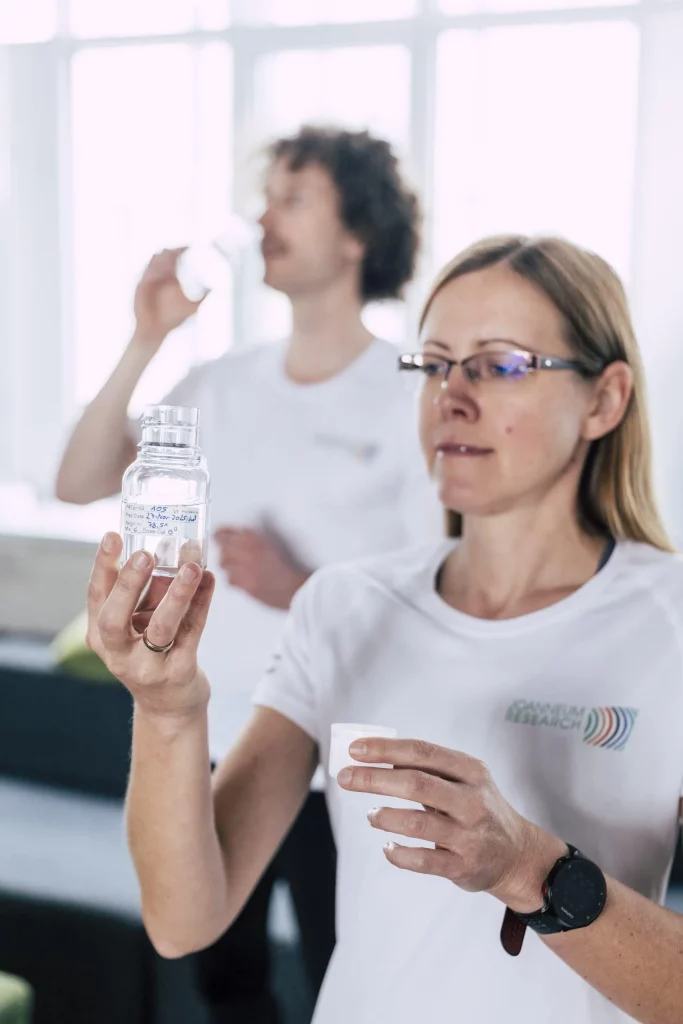
At home, participants drink water enriched with two safe, stable (non-radioactive) isotopes that naturally mix with the body’s water: deuterium (²H) – a stable isotope of hydrogen and oxygen-18 (¹⁸O) – a stable isotope of oxygen. Participants then collect urine samples at home (no blood sampling, no hospital or laboratory visit). The typical observation period is 3 to 14 days, with longer protocols possible if required.
Key Benefits
Why Use DLW?
Traditional laboratory techniques (respiration chambers, ventilated hoods, face masks) restrict movement and behavior and only capture short time periods. DLW uniquely answers the question:
“How much energy does a person truly expend in everyday life?”
Complete DLW Services available at JOANNEUM RESEARCH
Please order our ready-to-use TEE – DLW kits including isotope solutions and urine cups here: