The LAISA-5G project addresses key challenges in mobile robotics, in particular autonomous navigation and the semantic understanding of dynamic, unknown environments. Existing inspection robots often rely on structured operating environments, complex pre-mapping or specialised training data, and demonstrate limited robustness in the face of unforeseen situations. At the same time, there is a growing need for flexible, autonomous inspection solutions in sectors such as energy infrastructure, industrial facilities, and disaster and emergency response scenarios.
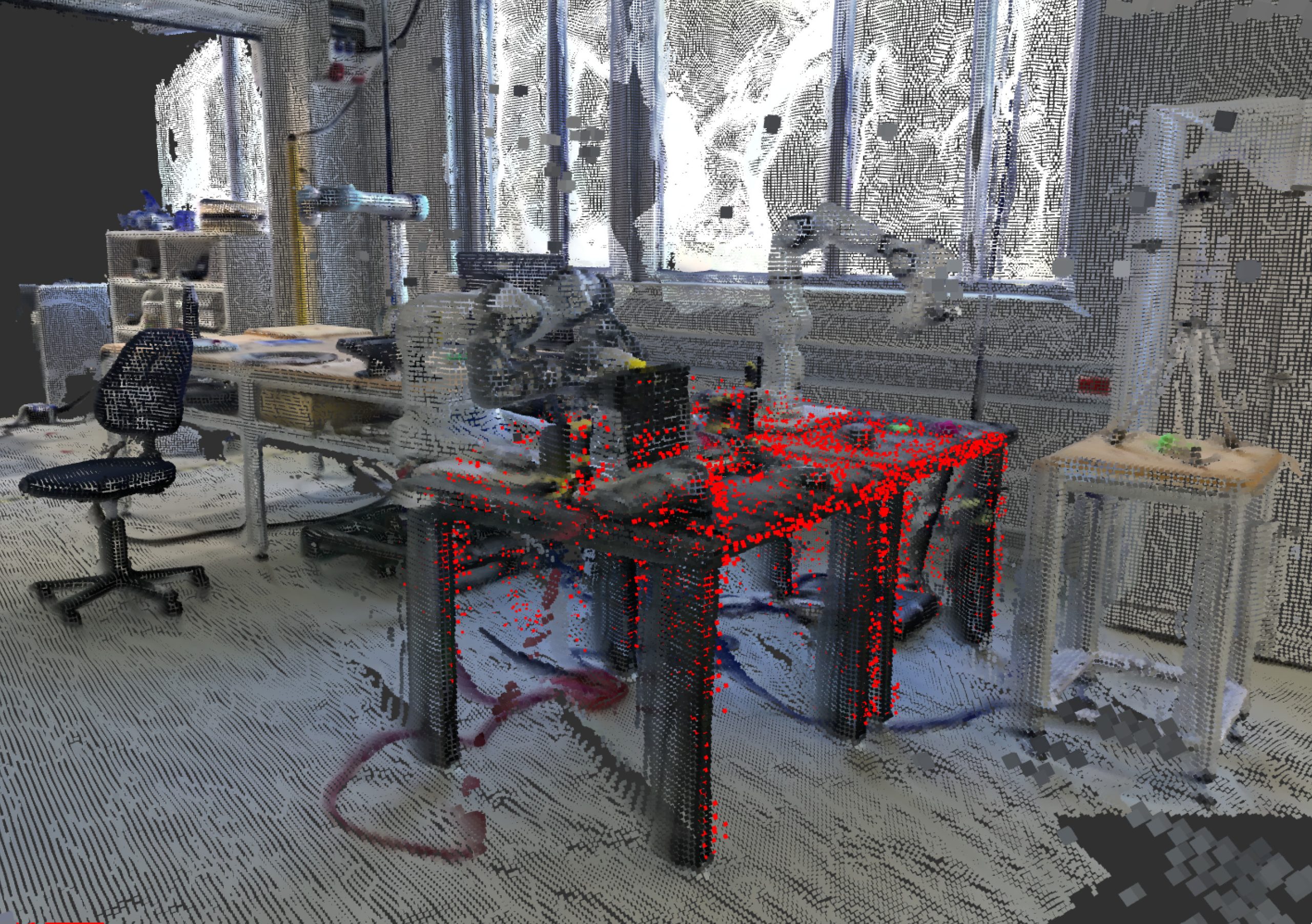
LAISA-5G therefore adopts an ‘inference-as-a-service’ approach, in which powerful, cloud-based Visual Language Foundation Models (VLFMs) are integrated into mobile robotic systems via low-latency 5G networks. Computationally intensive inference processes are offloaded from the edge to a central high-performance infrastructure. The robots continue to perform time-critical functions such as navigation and sensor data acquisition, whilst the AI models semantically analyse the incoming data streams and provide context-related information in near real time.
The 5G connection enables reliable, low-latency communication between robots and inference services, thereby laying the foundation for the scalable integration of modern AI functionalities. Sensor data, such as camera and LiDAR information, is continuously transmitted, processed and made available to the robots to inform their decision-making.
The key innovation lies in flexible, language-based perception: by using VLFMs, robots can recognise and interpret objects and structures in a context-dependent manner without relying on extensive, task-specific training datasets. This enables significantly greater adaptability in variable operating environments.
The approaches developed are evaluated in realistic demonstration scenarios and assessed for performance, latency behaviour and reliability in 5G standalone networks. LAISA-5G thus makes a significant contribution to the further development of scalable, AI-supported inspection systems and enhances efficiency, safety and sustainability in demanding application areas.