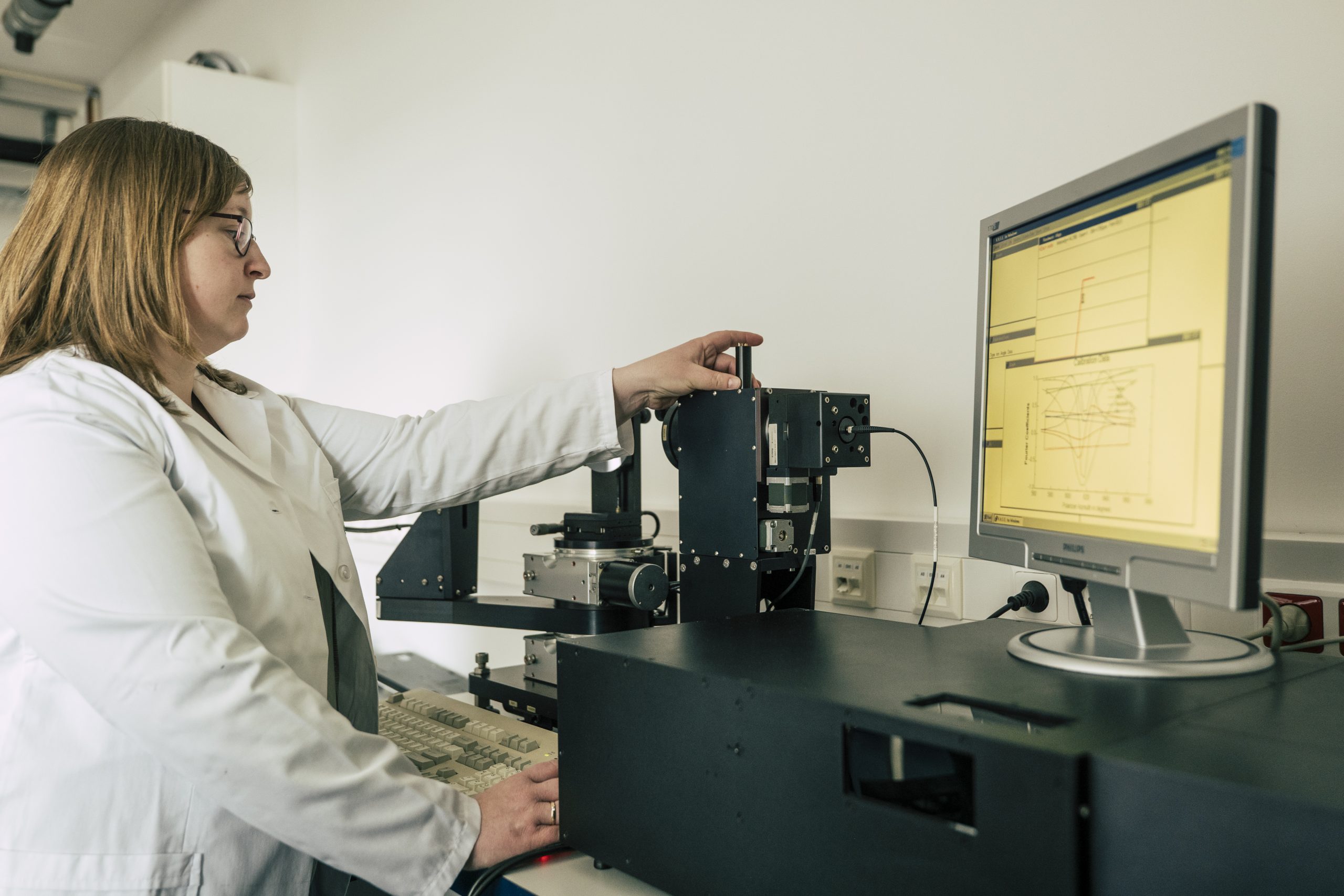
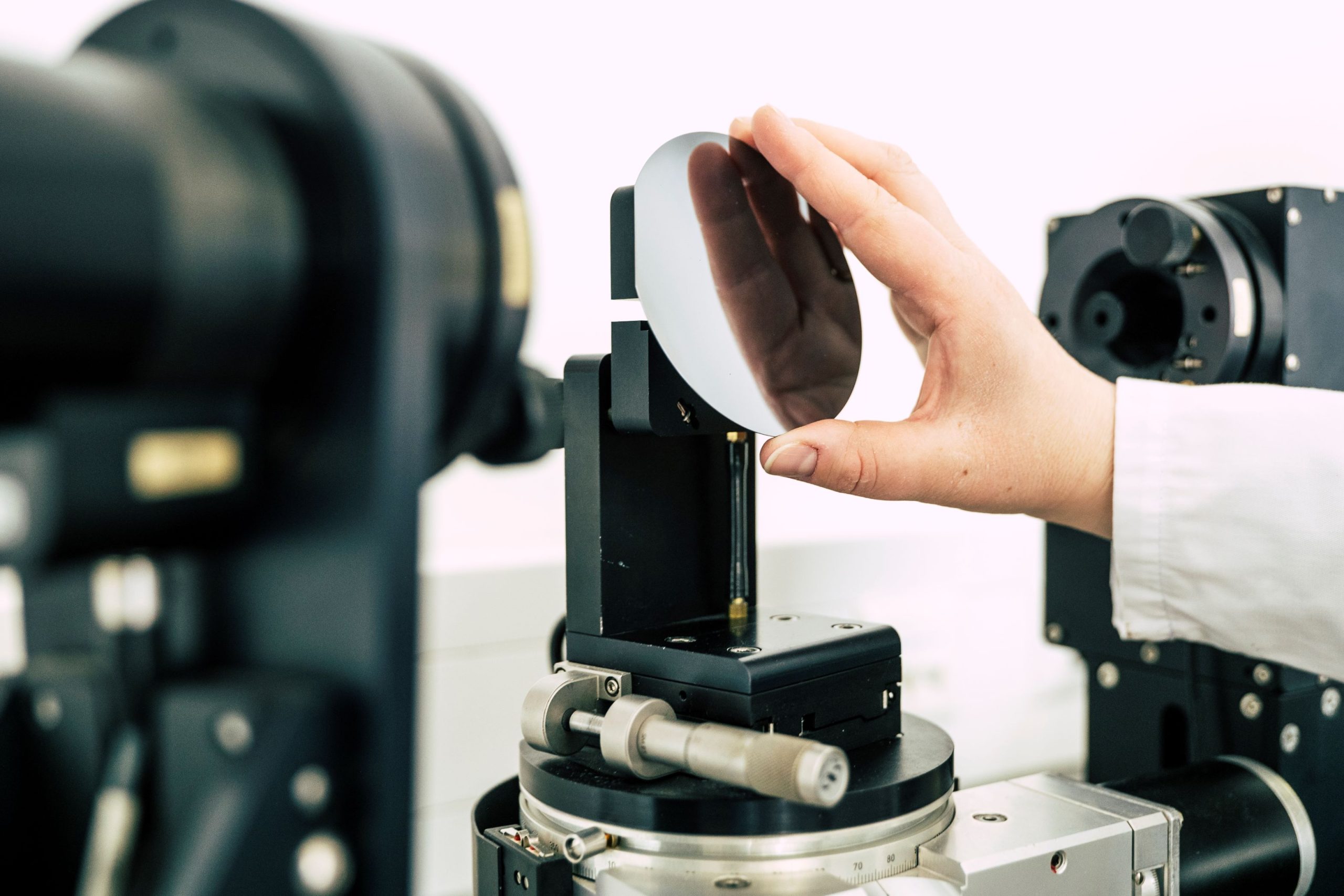
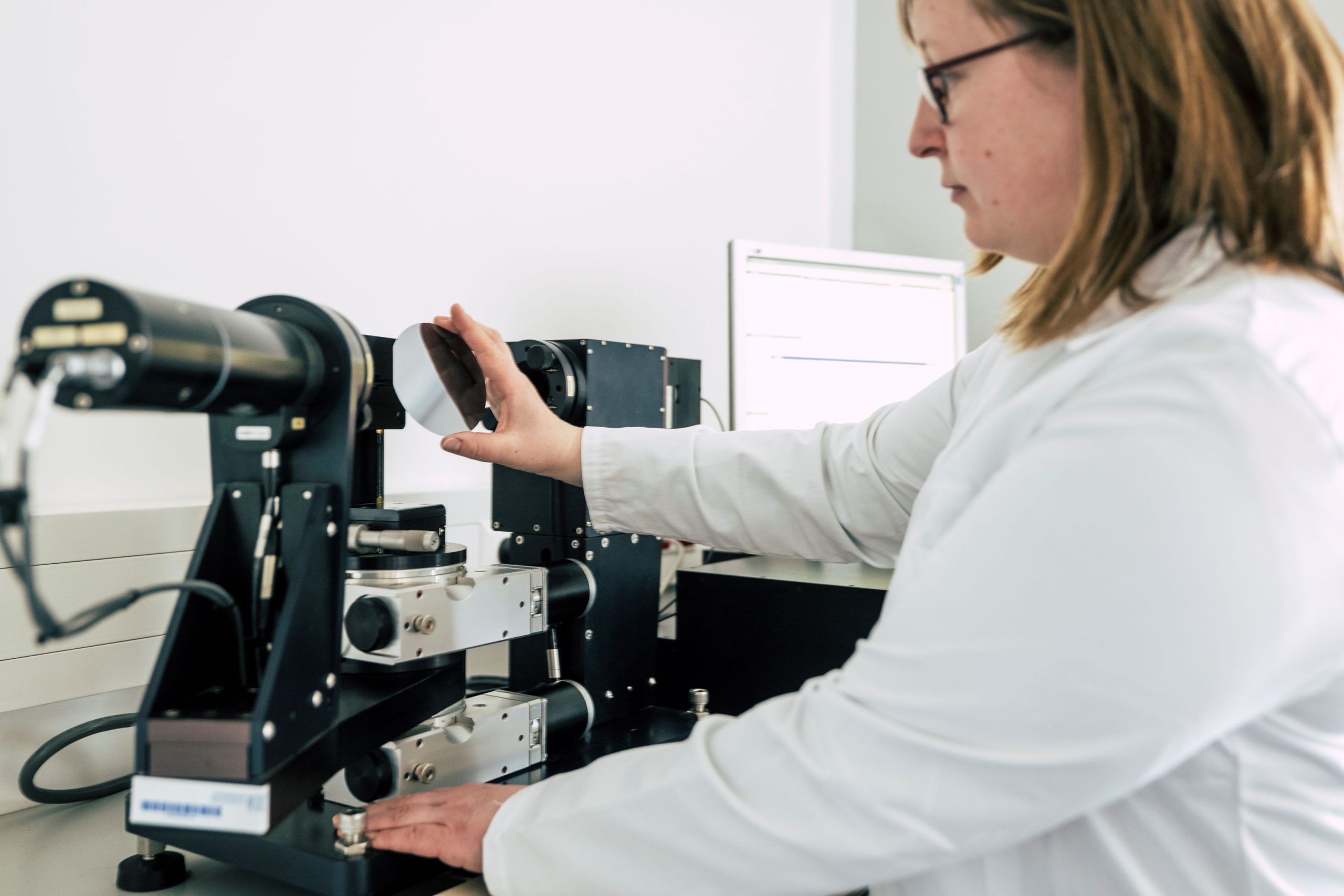
Spectroscopic ellipsometry for determining optical constants and thin-film thicknesses. Used in photonics, semiconductor processing, and materials research.
Equipment
M-2000® / J.A. Woollam
Method
Spectroscopic ellipsometry is an optical technique using the relative changes of the phase and amplitude in polarized light when reflected from a surface, a thin layer or multiple layers. From these measurements, optical properties of the sample like refractive index, permittivity, absorption coefficient, film thickness or anisotropies derive are derived.
Expected Result
Accurate measurements of film thickness, refractive index, and absorption characteristics enable manufacturers to optimize processes enhancing product quality in sectors like e.g. electronics and solar technology.
Case Study
A customer wants to learn about the refractive index and absorption coefficient of a surface coating over the full visible light spectrum.
M-2000® spectroscopic ellipsometer, J.A. Woollam Inc.
UV-Vis/NIR spectrometer for analyzing transmission, reflection, and absorption of solid and liquid samples. Ideal for optical material characterization in research and development.
The tensile testing machine enables precise measurement of tensile strength, elongation and modulus of elasticity of a wide range of materials in research, development and quality control.