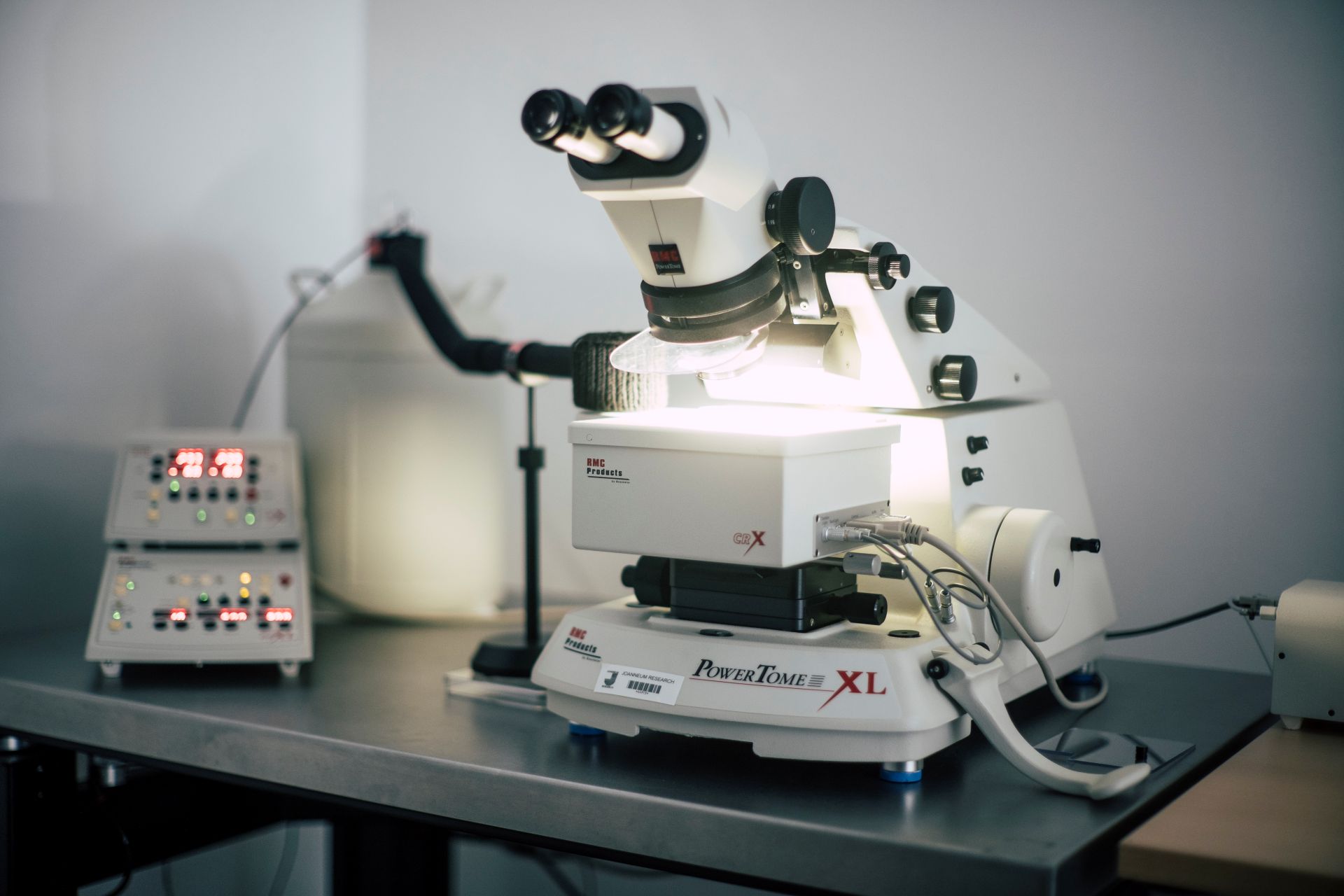
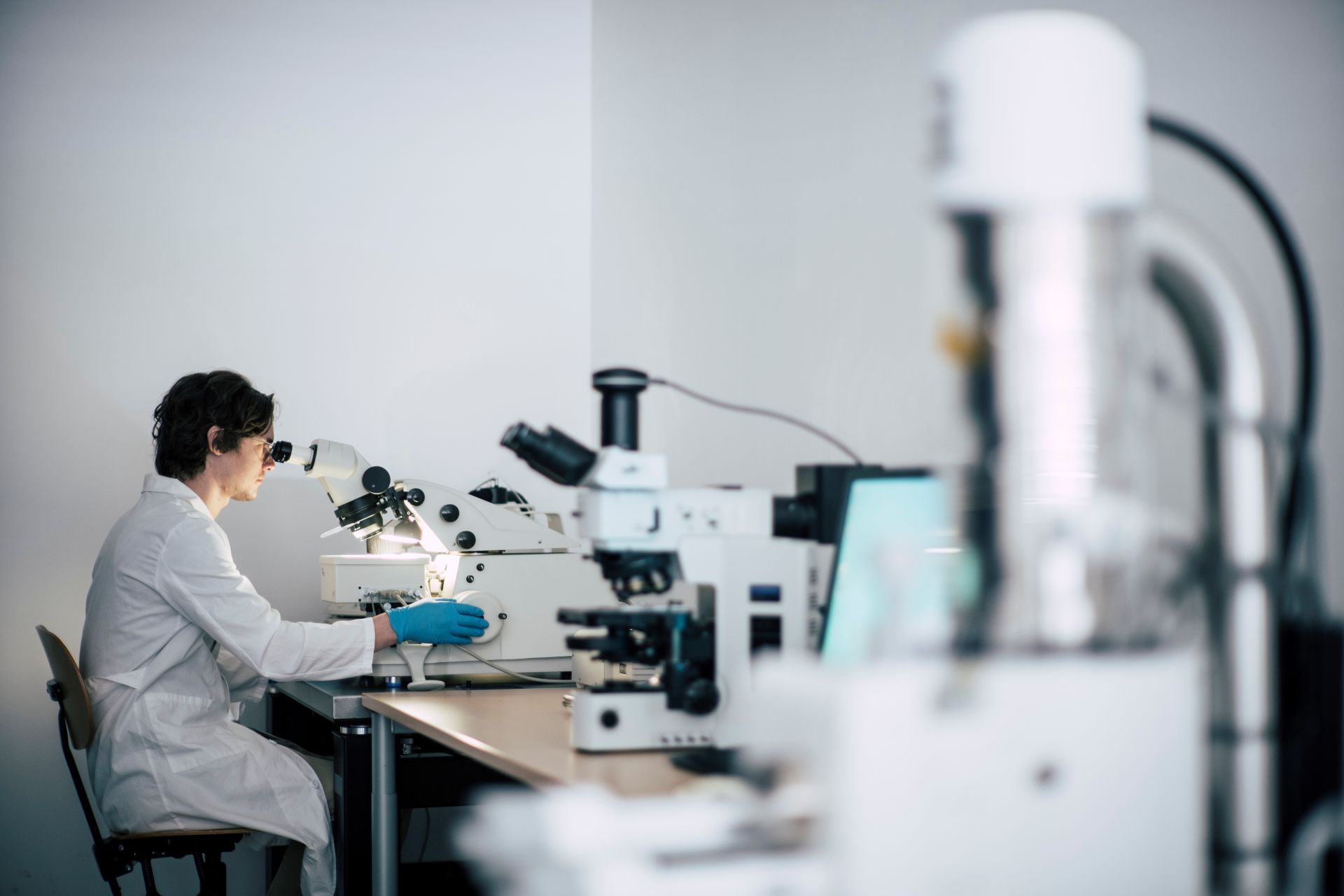
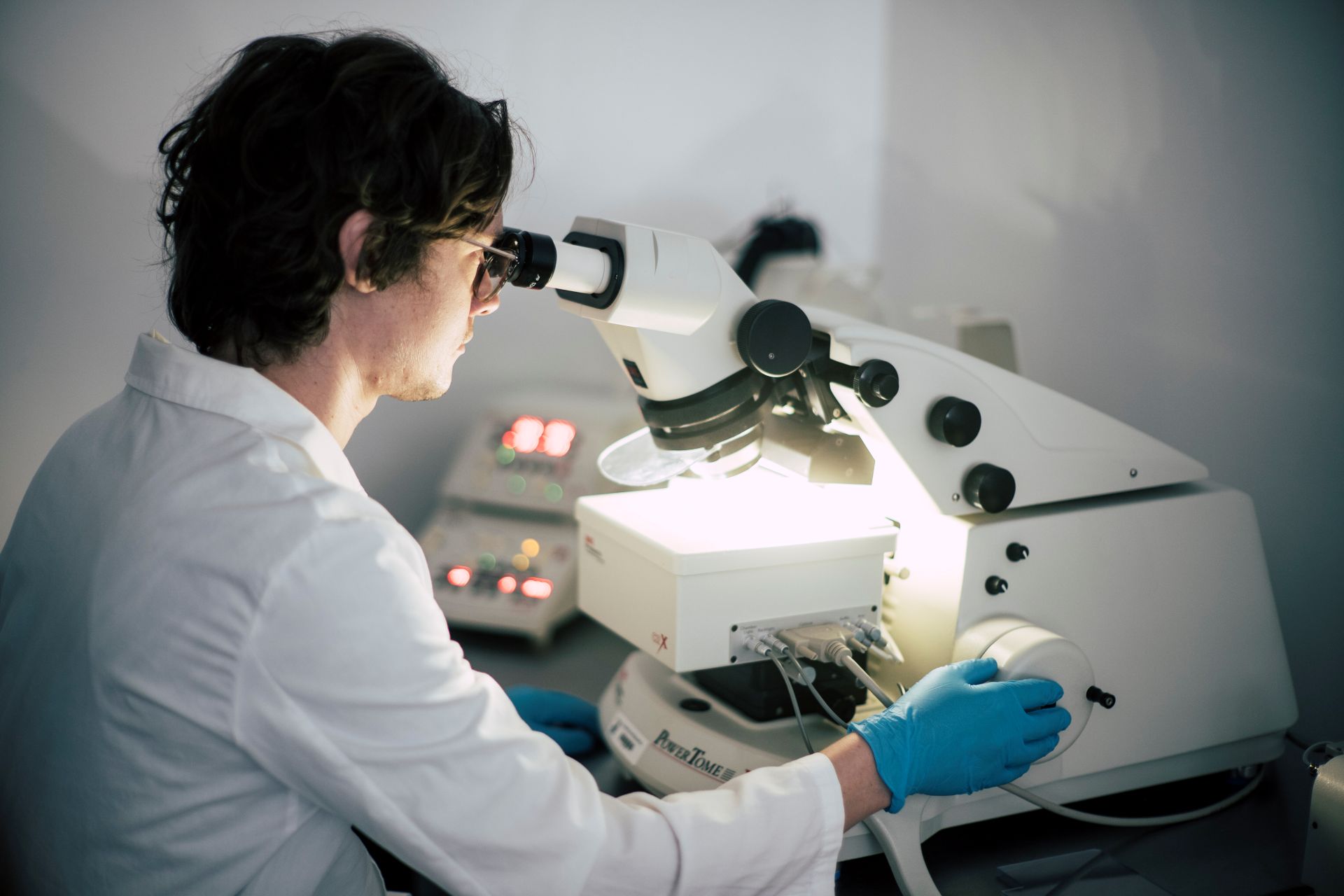
Ultramicrotome for preparing ultrathin cross-sections for analytical purposes. Essential for high-resolution layer and material investigations in nanoanalytics.
Equipment
PowerTome XL / RMC Boeckeler
Method
The ultramicrotome slices extremely thin layers (200 nm to 1µm) from samples. This enables a clear cut of the edge, thus a direct view onto the layered structure of a sample is possible. In addition, the cut off slices can be inspected independently. Typically, this method prepares the samples for further investigations using optical microscopy, fluorescence microscopy or scanning electron microscopy.
Expected Result
This process enables high-resolution analysis of layered or composite structures (e.g. layer thickness, aggregation behavior) and the quality of individual layers. Faulty areas and incompatibilities of layers amongst other problems might be identified.
Case Study
A paper-based print circuit board hosts ink-based conductive lines on its surface as well as on its backside. Vertical interconnection accesses (VIAs) provide electrical connections between the lines. Using ultramicrotomy, the penetration of the ink into the porous structure of the paper as well as the VIA quality is analysed.
Ultramicrotome – PowerTome XL / RMC Boeckeler
Specifications
Sample dimensions: up to 5×5 mm²
Solid soft materials
Controlled thickness: 200 nm – 1 µm
Ultramicrotome with knife block
Specimen holder with an advancement mechanism
Samples physically hardened by cooling with liquid nitrogen for better cutting results
UV-Vis/NIR spectrometer for analyzing transmission, reflection, and absorption of solid and liquid samples. Ideal for optical material characterization in research and development.
The tensile testing machine enables precise measurement of tensile strength, elongation and modulus of elasticity of a wide range of materials in research, development and quality control.