


Modern production processes are increasingly data-driven
Three-dimensional models and detailed process information are available digitally, yet the people carrying out the work often still must interpret this information on a separate screen and transfer it mentally to the physical task. IOJET addressed this gap by placing relevant visual information directly within the working area. Instead of requiring operators to move repeatedly between the process and an external virtual representation, the system provides clear guidance at the point of action. The goal was to create a direct and intuitive connection between the available digital data and the work taking place on the production floor.
From an industrial challenge to a working system
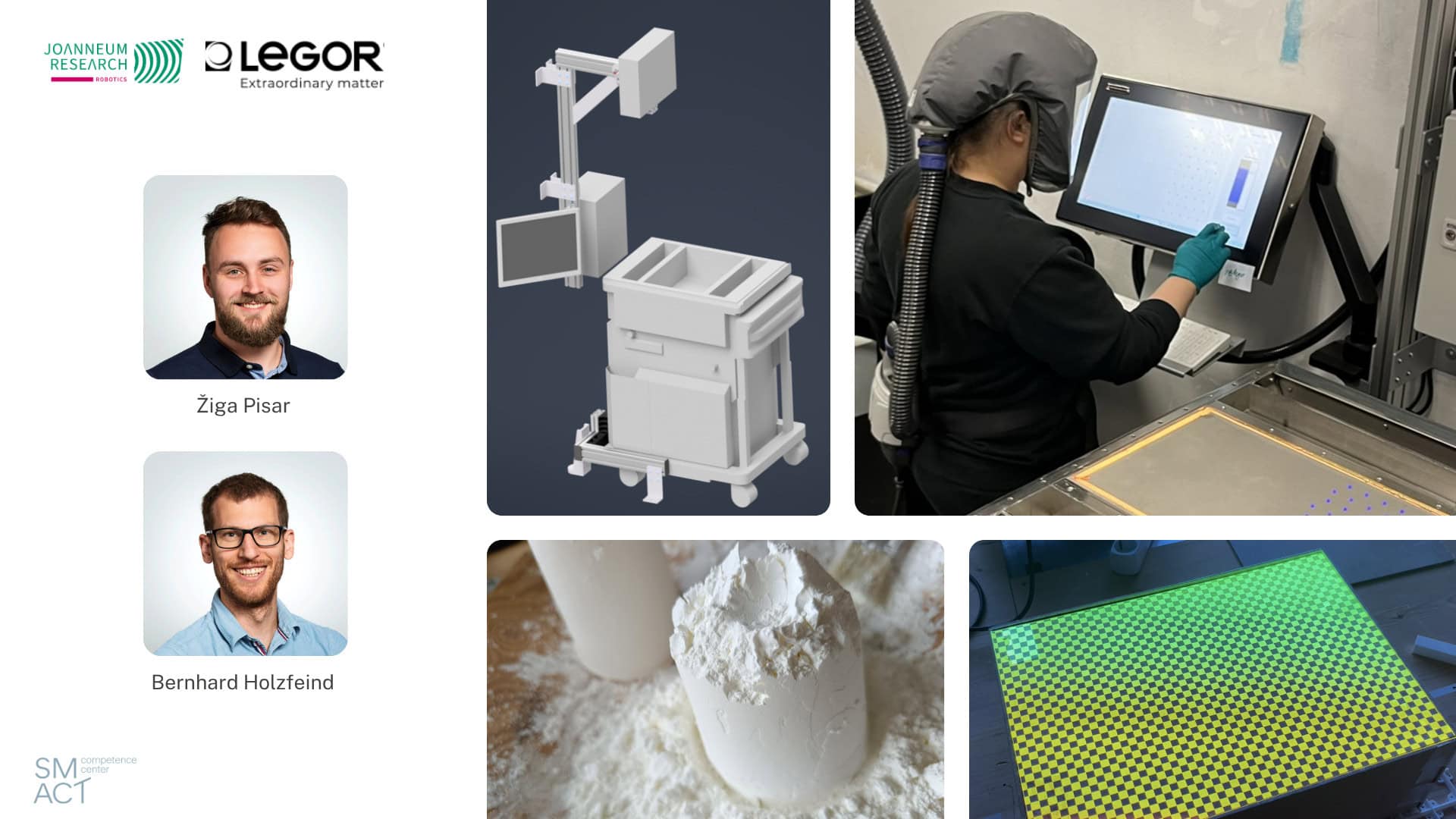
The project began with a detailed examination of the existing workflow, the industrial environment and the needs of the people performing the task. The system had to provide accurate and useful guidance while fitting naturally into an established production process. It also had to operate reliably under demanding environmental conditions without restricting the operator’s movement or adding unnecessary complexity. Based on these requirements, the project team developed a custom optical assistance system combining mechanical engineering, projection technology, custom software and operator-oriented controls. The development covered the complete innovation path: from feasibility assessment and concept development to laboratory simulation, prototype construction, software implementation, testing and installation in the industrial environment . Hardware and software were developed as parts of one integrated solution. Mechanical stability, visual accuracy, system responsiveness and straightforward operation all had to work together.
Digital guidance at the point of action
At the heart of the project is the idea that digital information is most valuable when it becomes a natural part of the industrial workspace. By projecting relevant guidance directly where the work takes place, the system connects people, data and physical processes in a more immediate and intuitive way. Rather than adding another layer of complexity, the solution is designed to make existing information easier to access, understand and apply during the task.
Hardware
- Industrial optical assistance platform designed for stable and reliable operation
- Integration of visual guidance into the physical workspace
- Operator-oriented controls, including touchscreen and hands-free interaction
- Adaptable architecture supporting future automation development
Software
- Transformation of complex 3D digital information into clear visual overlays
- Responsive guidance that follows the progress of operator’s workflow
- Adaptive calibration between the displayed information and the real environment
- Visualisation designed around visibility, usability and operator comfort
The hardware configuration was developed iteratively, with particular attention given to vibrational stability, available workspace and practical operator access. A flexible and space-efficient design was prioritised so that the assistance system would support the existing process rather than become an obstacle within it. The interface followed the same principle. Touchscreen controls provide direct access to the system, while hands-free control allows operators to continue working without unnecessary interruptions
From validation to industrial practice
Before being transferred to the production environment, the concept was evaluated through simulations in the JOANNEUM RESEARCH ROBOTICS Solution Center, designed to reproduce the essential conditions of the real workflow. These tests allowed the team to refine the interaction between hardware and software, evaluate the optical concept and address technical challenges before implementation.
Once installed in the industrial setting, the system was calibrated, tested and adapted under real operating conditions. Feedback from practical use was incorporated throughout the process, ensuring that the final result remained closely connected to the needs of the people working with it.
Combined expertise from research and industry
LEGOR GROUP S.p.A. has more than 40 years of experience in metal transformation, combining expertise in chemistry and metallurgy to develop premium-quality alloys, powders and plating solutions. Its commitment to sustainable innovation also extends to the Legor 3D Metal Hub , a center dedicated to the additive manufacturing of components in precious and non-precious metals. The hub applies 3D Metal Binder Jetting , an advanced powder-bed additive manufacturing technology that opens new possibilities for design freedom, product development and flexible production across jewellery, fashion and industrial applications.
Reflecting on the work of the JOANNEUM RESEARCH ROBOTICS team, Andrea Friso said:
„Their ability to translate complex concepts into practical and effective solutions has been truly impressive. This balance between innovation and real-world usability is what ultimately made the IOJET system a successful and impactful solution in Legor 3D Metal Hub’s production environment.”
he project’s success was built on the close collaboration between LEGOR GROUP S.p.Aand JOANNEUM RESEARCH ROBOTICS. By combining Legor’s industrial expertise with applied research and engineering know-how, the team turned a complex challenge into a practical solution shaped by real production needs.
We thank both teams for the trust, openness and commitment that brought the project from concept to successful implementation.
This project was financed within the framework of the Italian public funding managed by SMACT scpa .