

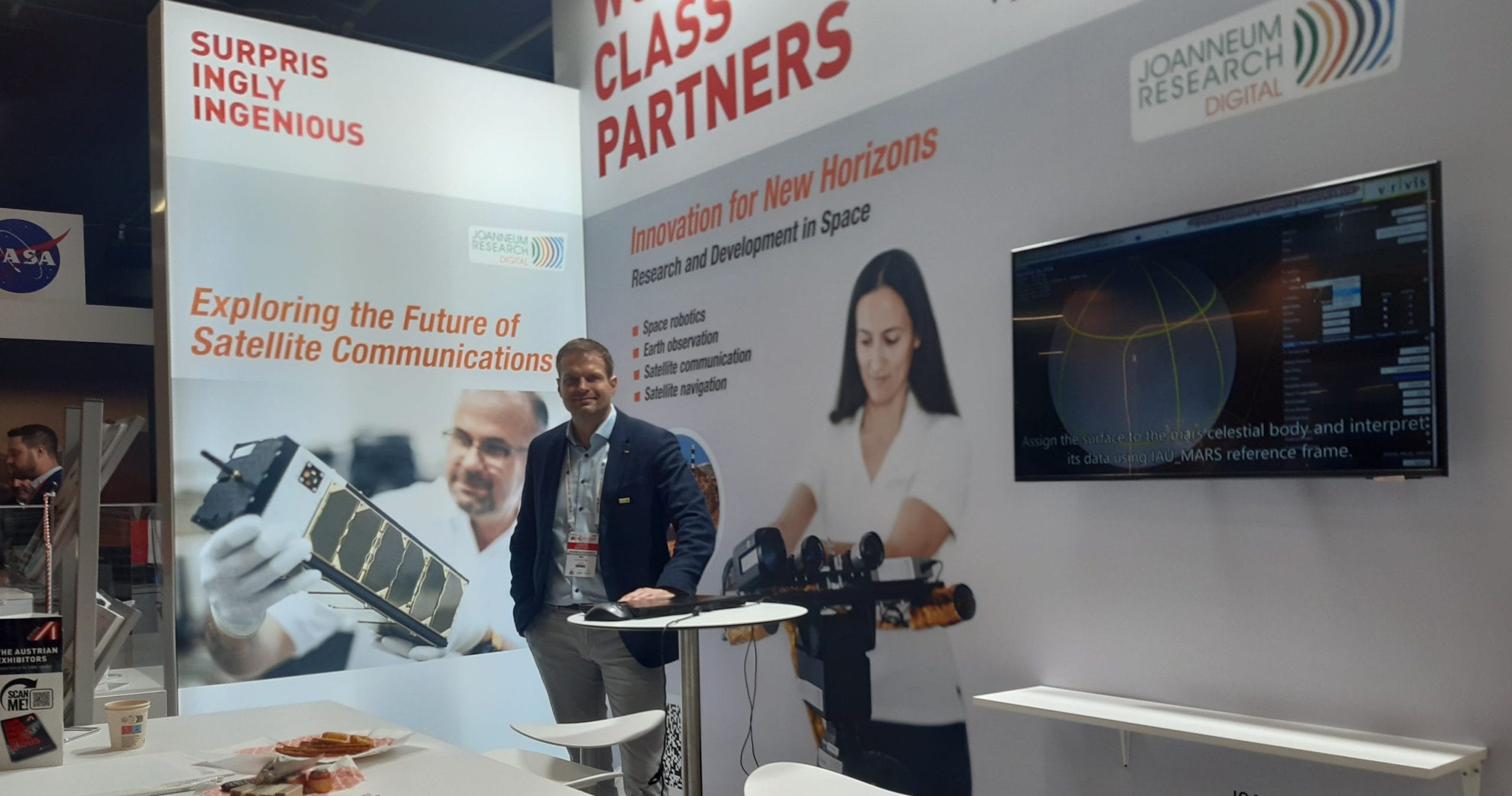
The 75. International Astronautical Congress (IAC) took place in Milan from 14 to 18 October 2024 and attracted the global space community under the motto ‘Responsible Space for Sustainability’. The world's largest trade fair for manned and unmanned space flight brought together scientists, industry representatives and decision-makers to discuss technological innovations and the future of space travel. The focus was on the responsible use of space to promote sustainability – an increasingly pressing issue in view of the growing challenges posed by space debris and resource scarcity.
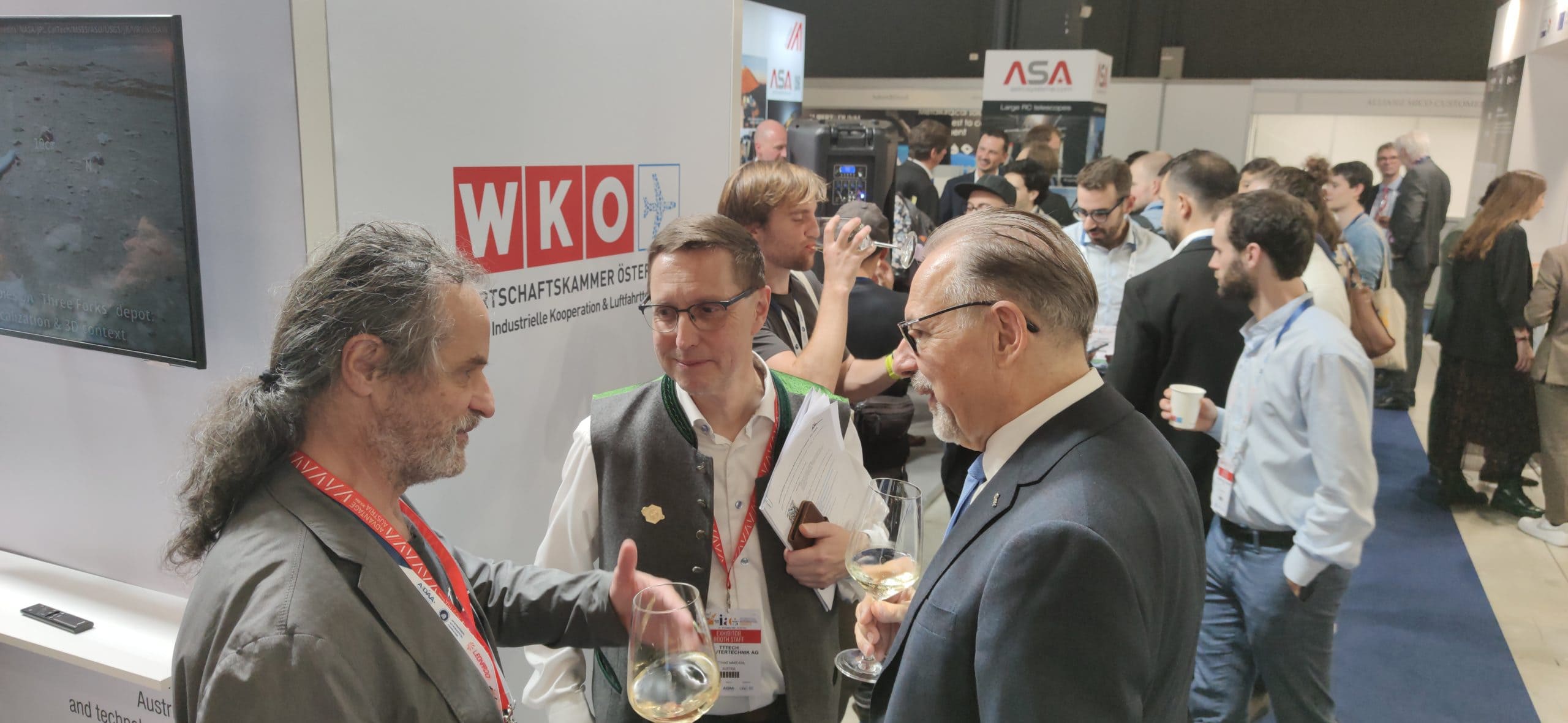
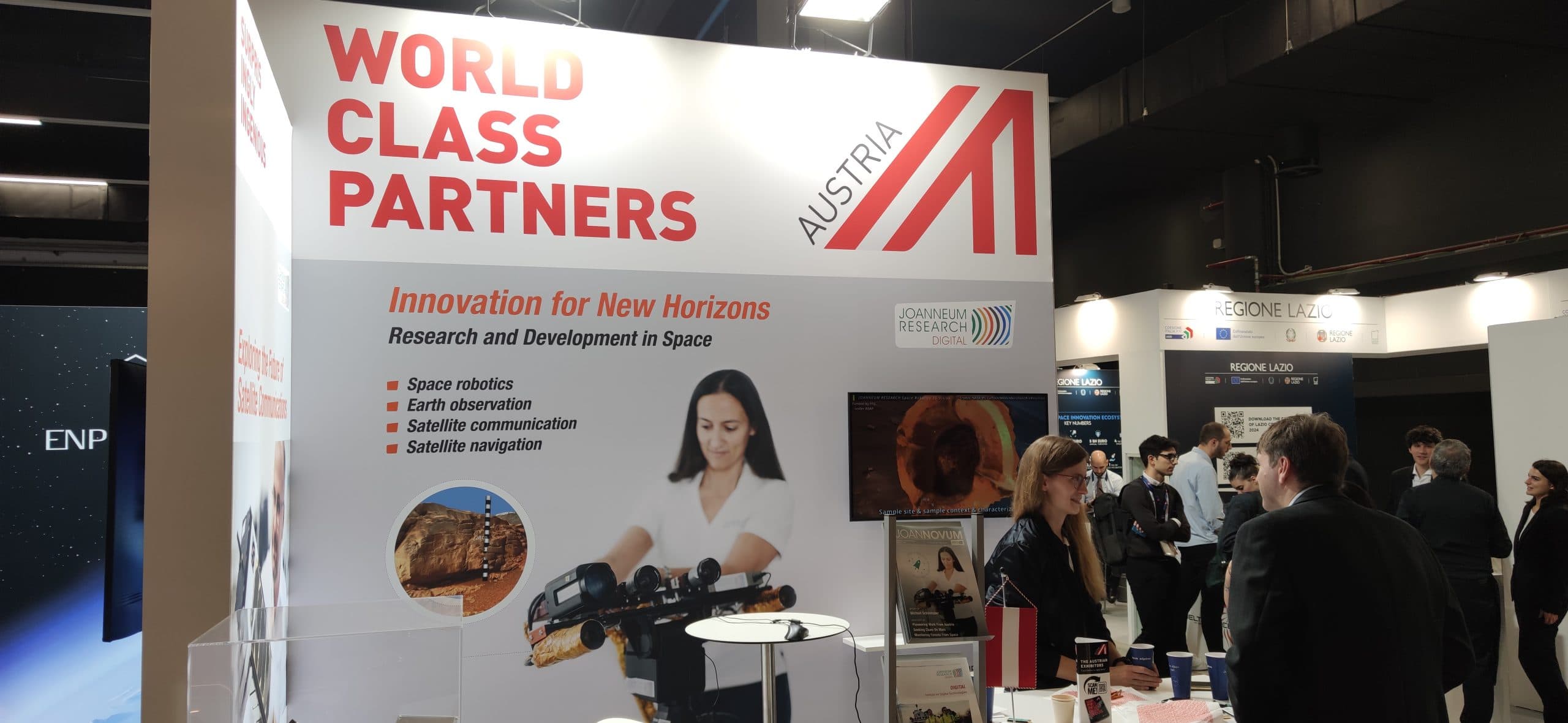
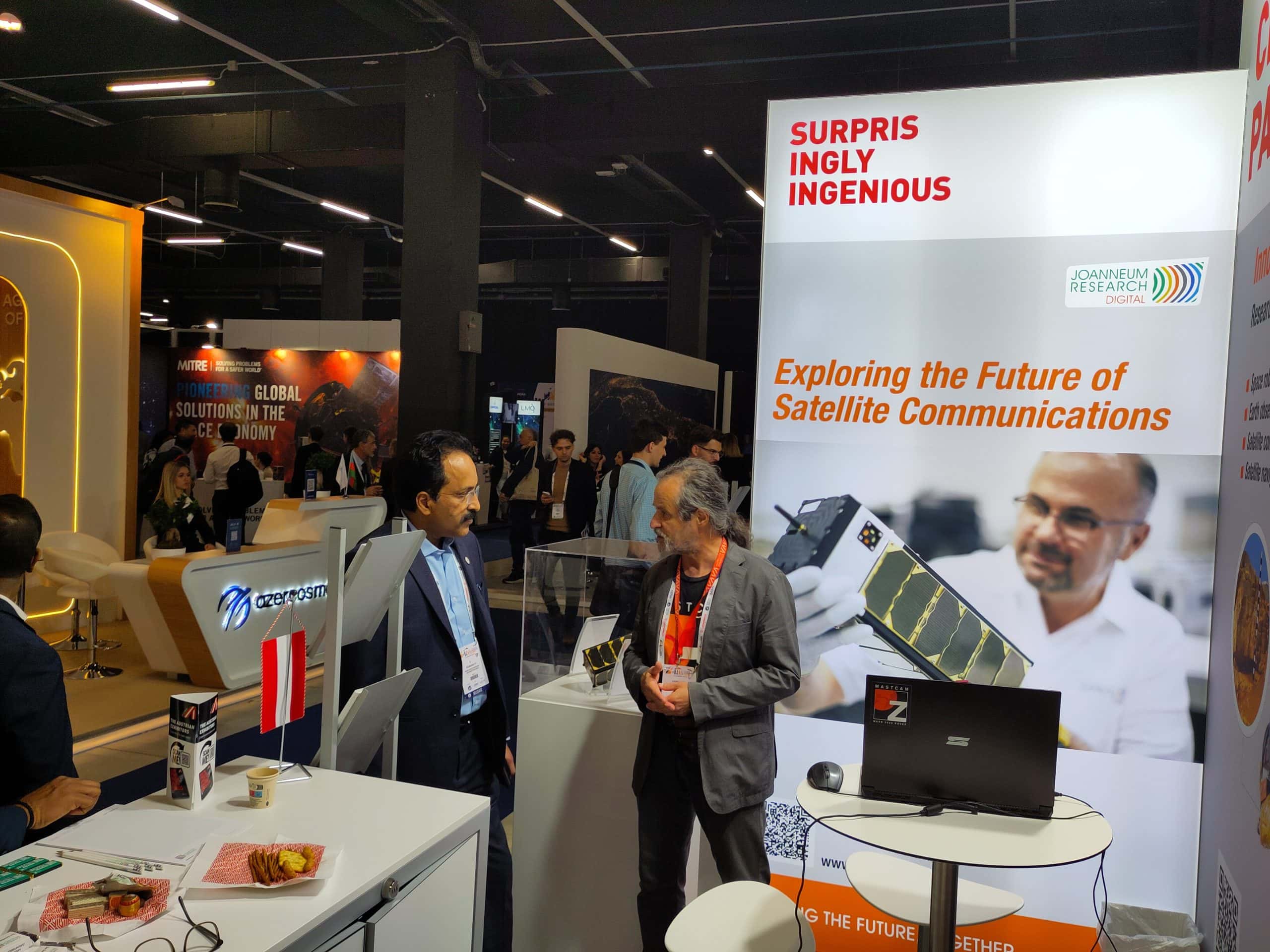
For the first time, Austrian industry presented itself with a joint stand organised by the Austrian Federal Economic Chamber (WKO). JOANNEUM RESEARCH DIGITAL was also represented by Matthias Rüther, head of the institute, and our space expert Gerhard Paar, to present the latest developments in the fields of space robotics and satellite communication. The stand attracted high-profile visitors, including the Director of the European Space Agency (ESA), Josef Aschbacher, and Austrian astronaut Carmen Possnig.
Technologies for the Moon, Mars and beyond
In the numerous exhibition halls, visitors were able to explore not only current launch systems and satellite technologies, but also visionary concepts for the colonisation of the Moon and Mars. These technological advances are crucial to laying the groundwork for future human missions that will extend the human presence beyond low Earth orbit.
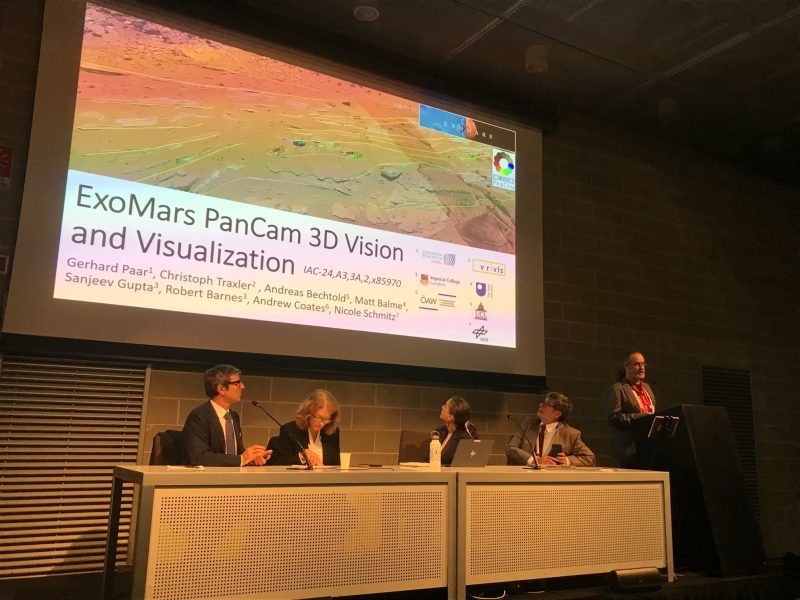
Our digital expert Gerhard Paar gave two talks on projects that will play a key role in future space missions. The talk ‘ExoMars PanCam 3D Vision and Visualization’ dealt with the preparations for the three-dimensional recording of the environment of the ExoMars rover Rosalind Franklin, which is scheduled to land in 2030. The image data from the PanCam instrument will be used to map the surface of the Red Planet in detail.
The second project, ‘Hera 3D Geographical Information System’, presented the development of a software environment for the three-dimensional evaluation of sensor data that the Hera 2026/27 space probe will collect during its rendezvous with the Didymos asteroid double system. The aim of this mission is to study the effects of the DART impact on the asteroid moon Didymos in 2022 in order to gain valuable insights for the defence against potentially dangerous asteroids.
Successful appearance of the Austrian space industry
The IAC 2024 provided an important platform for the Austrian space industry to present its achievements and establish new international collaborations. JOANNEUM RESEARCH and the other participants impressively demonstrated the country's innovative strength – not only in scientific research, but also in the development of key technologies for future space exploration and security.