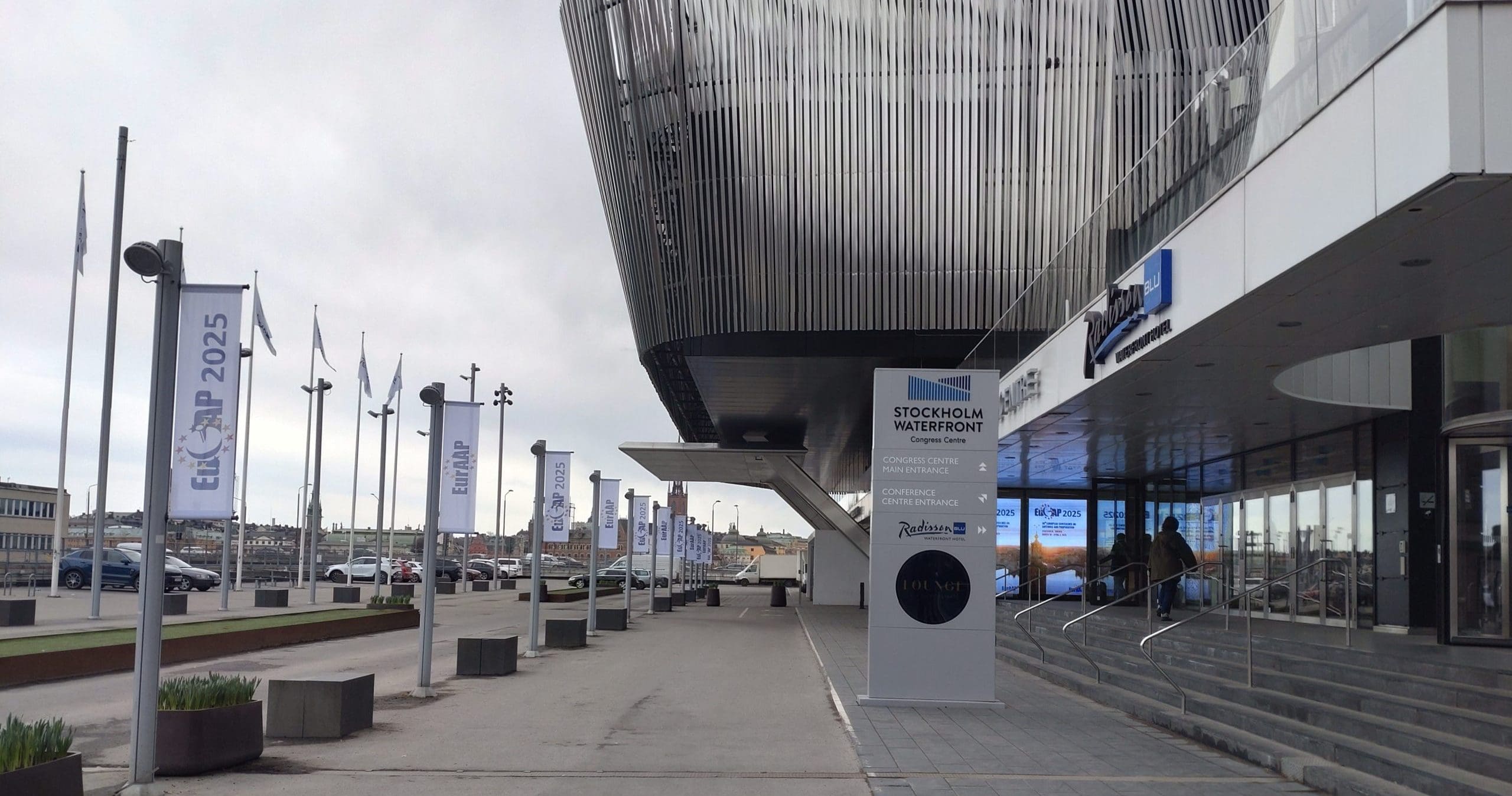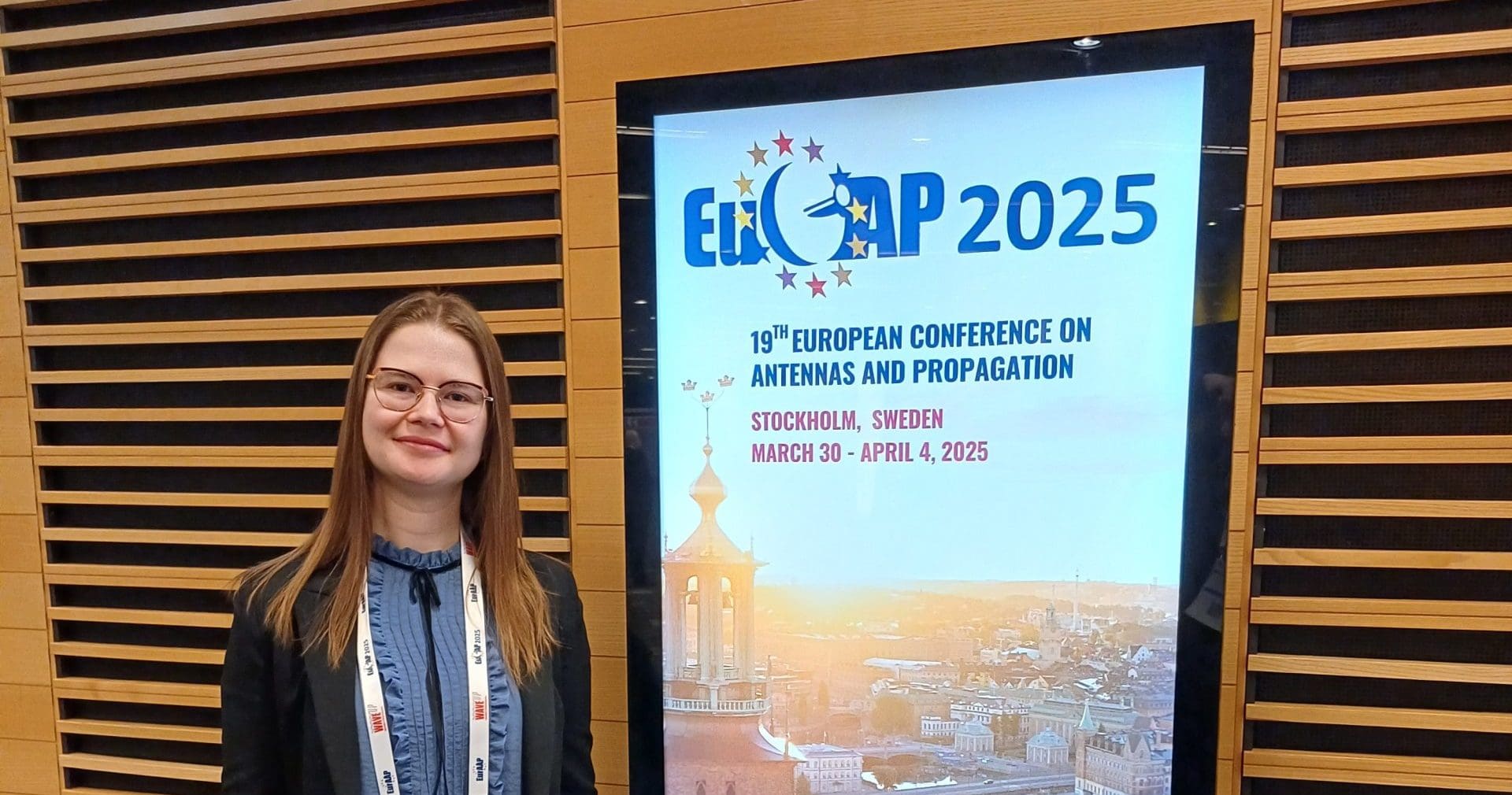


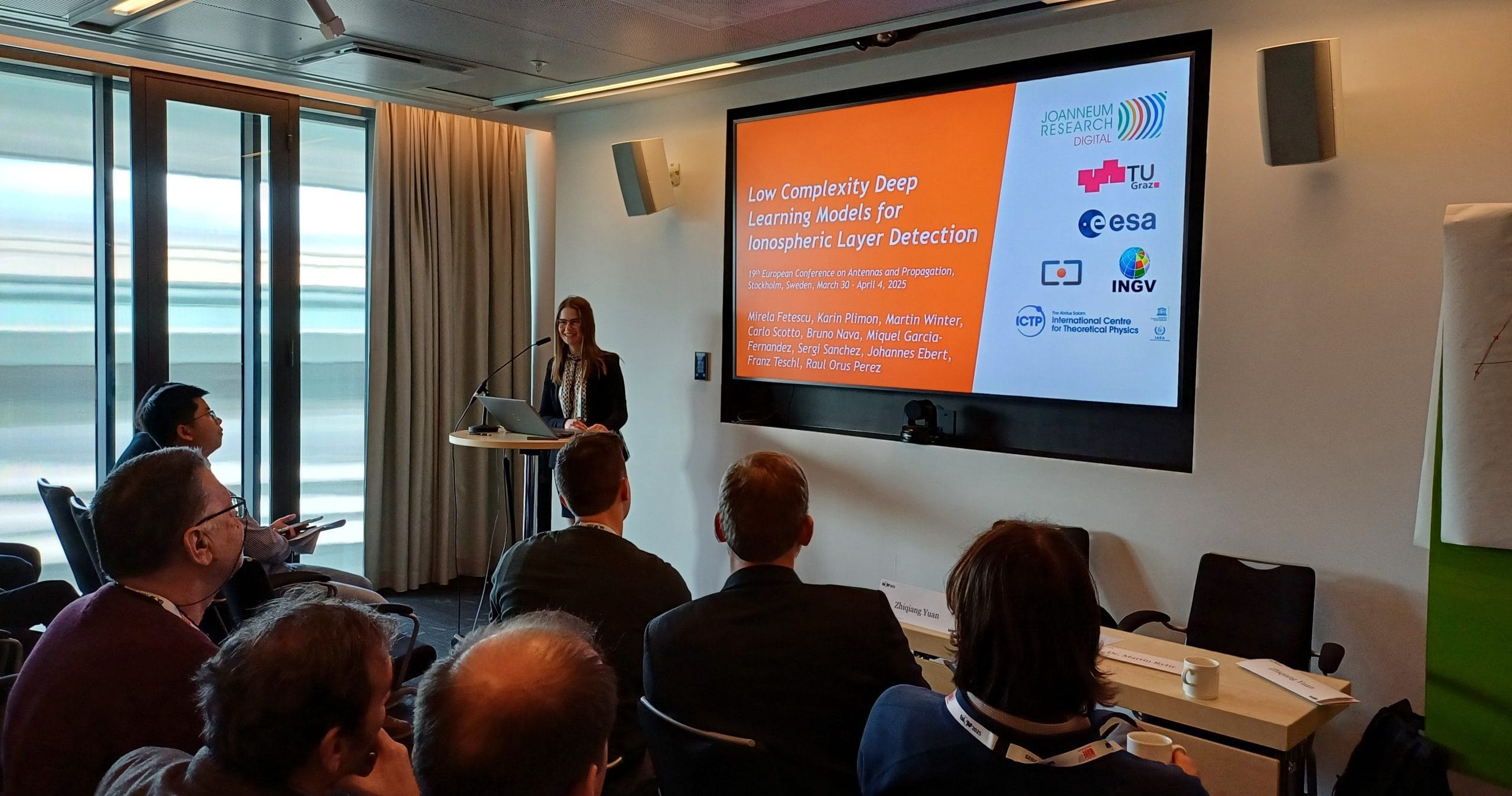
Great news from the Telecommunications, Navigation and Signal Processing (TNS) and Intelligent Vision Applications (IVA) research groups: the results of joint research projects with the European Space Agency (ESA) are presented at the renowned EuCAP 2025 in Stockholm. These successes are based on the close cooperation of our experts, who played a key role in the research assignments.
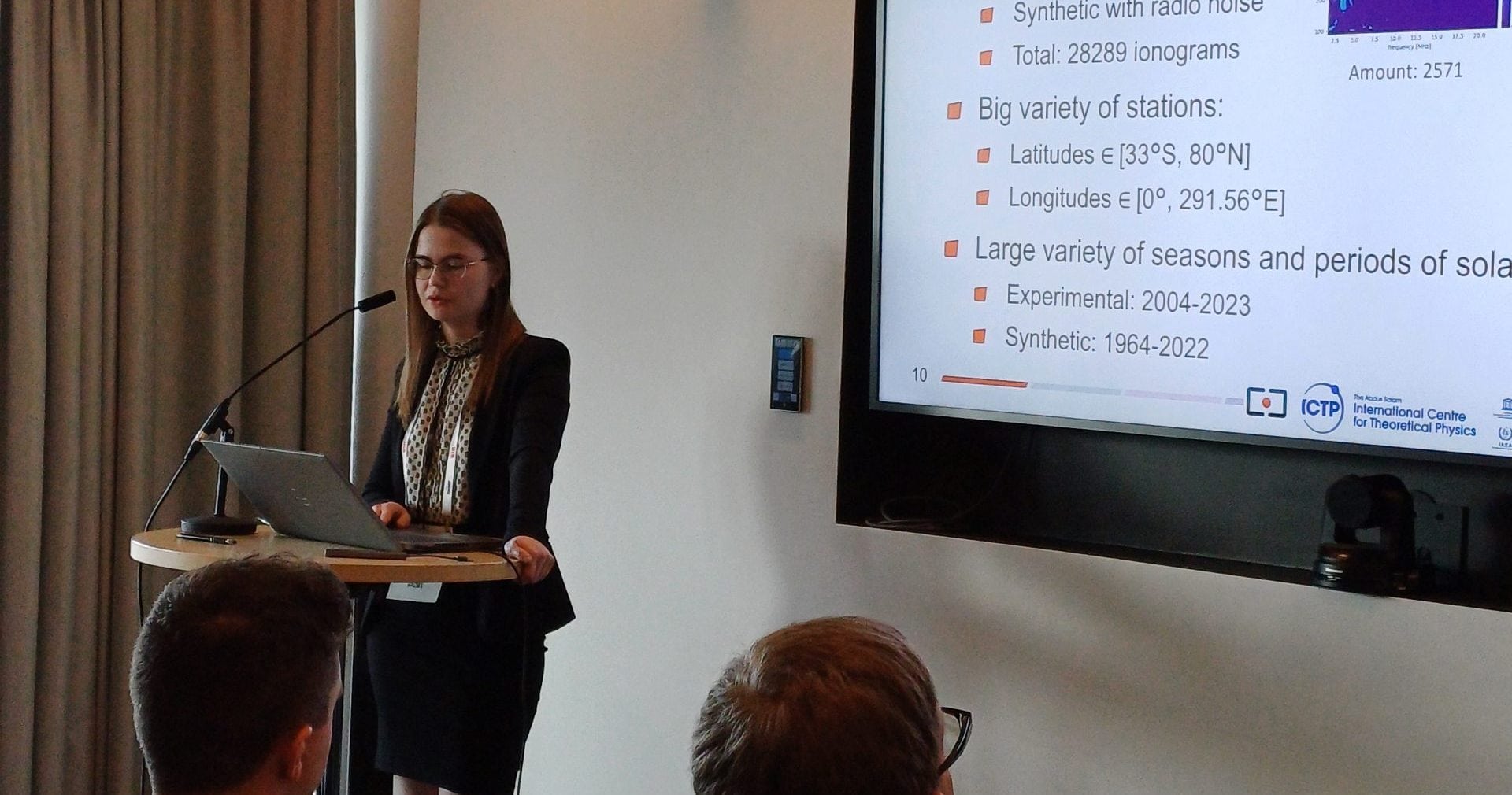
A special highlight: our researcher Mirela Fetescu has been invited to present her latest work on the application of deep learning in satellite communications and signal propagation at Europe's largest conference on antennas and wave propagation. EuCAP provides a unique forum that brings together international scientists, industry professionals and leading exhibitors from around the world. This year, 1,700 scientists from all over the world attended!
Mirela Fetescu presented her studies Low Complexity Deep Learning Models for Ionospheric Layer Detection and XGBoost Based Regression Forecast for ACM on Q/V-Band Satellite Links at the end of March 2025. Her research not only provides innovative approaches but also groundbreaking insights that will drive the further development of these key technologies.
- Low Complexity Deep Learning Models for Ionospheric Layer Detection
The ionosphere plays an important role in radio communication and satellite navigation. Ionograms, which depict its layers, are often analysed manually, although automated tools exist. Advances in deep learning are improving this automation and making it more accurate, but challenges such as recognising multiple layers and processing different data sets remain. In the study, a simple AI architecture is compared with a U-net and tested using data from different sources and times. The method shows similarly good results to more complex approaches in terms of important metrics such as Intersection over Union (IoU) and Recall. - XGBoost-based regression forecast for ACM on Q/V-band satellite links
This study compares the classic technique for adapting modulation and coding (ACM) with two methods that use machine learning. These models predict the signal-to-noise ratio (SNR) to improve ACM decisions. Data from the Q/V band collected over two years in Graz shows that the multivariate model performs best. It makes SNR estimation easier and increases efficiency.
We congratulate our scientists on the successful submission of their scientific papers and on their participation and presentation at EuCAP 2025. This is an excellent milestone for research in the field of satellite communications and signal propagation.