- About us
- Research fields
- DIGITAL – Institut für Digitale Technologien
- MATERIALS – Institut für Sensorik, Photonik und Fertigungstechnologien
- ROBOTICS – Institut für Robotik und Flexible Produktion
- COREMED – Zentrum für Regenerative Medizin und Präzisionsmedizin
- HEALTH – Institut für Biomedizinische Forschung und Technologien
- LIFE – Institut für Klima, Energiesysteme und Gesellschaft
- POLICIES – Institut für Wirtschafts-, Sozial und Innovationsforschung
- Business areas
- Products & services
- Research infrastructure
- Beteiligungen
- Career
- Aktuelles
- Publications
- Kontakt zu uns



CoMPASS – Cocoa Monitoring and Productivity Assessment System
RUNNING TIME:
10/2025
—
09/2027
Total project duration:
2 Years
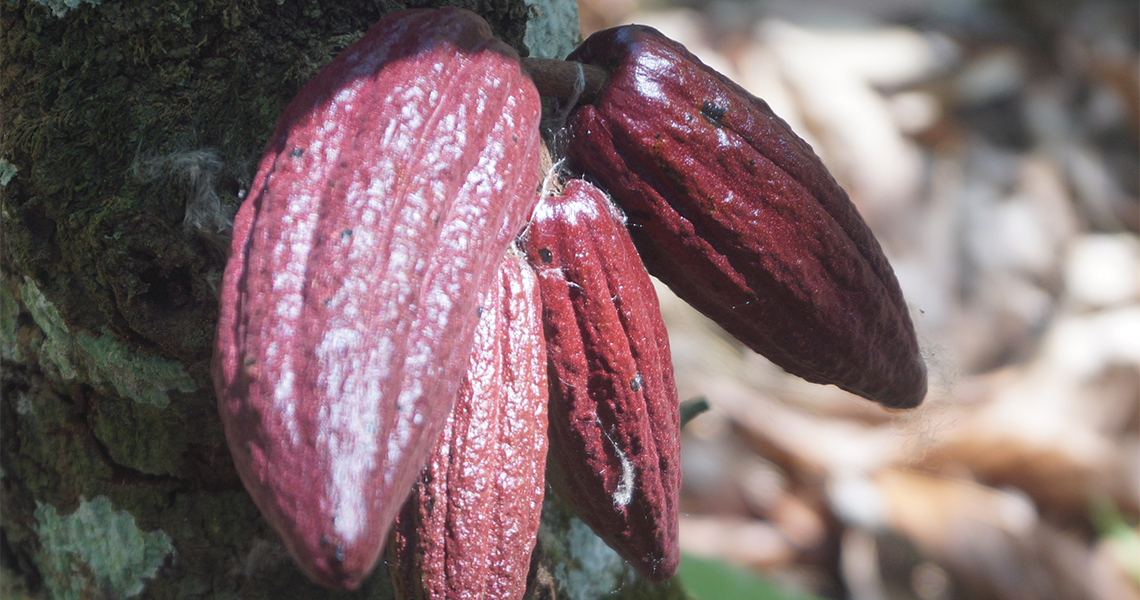
Rotschalige Kakaoschoten (Theobroma cacao) an einem Kakaobaum, Côte d’Ivoire, Foto: Beetle ForTech GmbH
The project
Global cocoa production is under increasing pressure. In Côte d'Ivoire and Ghana, which together account for around 70 per cent of global production, yields are falling due to climate change, ageing plantations, and diseases such as the Cocoa Swollen Shoot Virus Disease (CSSVD), which accounts for 15–50 per cent of crop losses and is a major factor behind the recent price rises. In particular, Cocoa Swollen Shoot Virus Disease (CSSVD) accounts for 15–50 per cent of crop losses and has been a major factor behind the recent price rises.
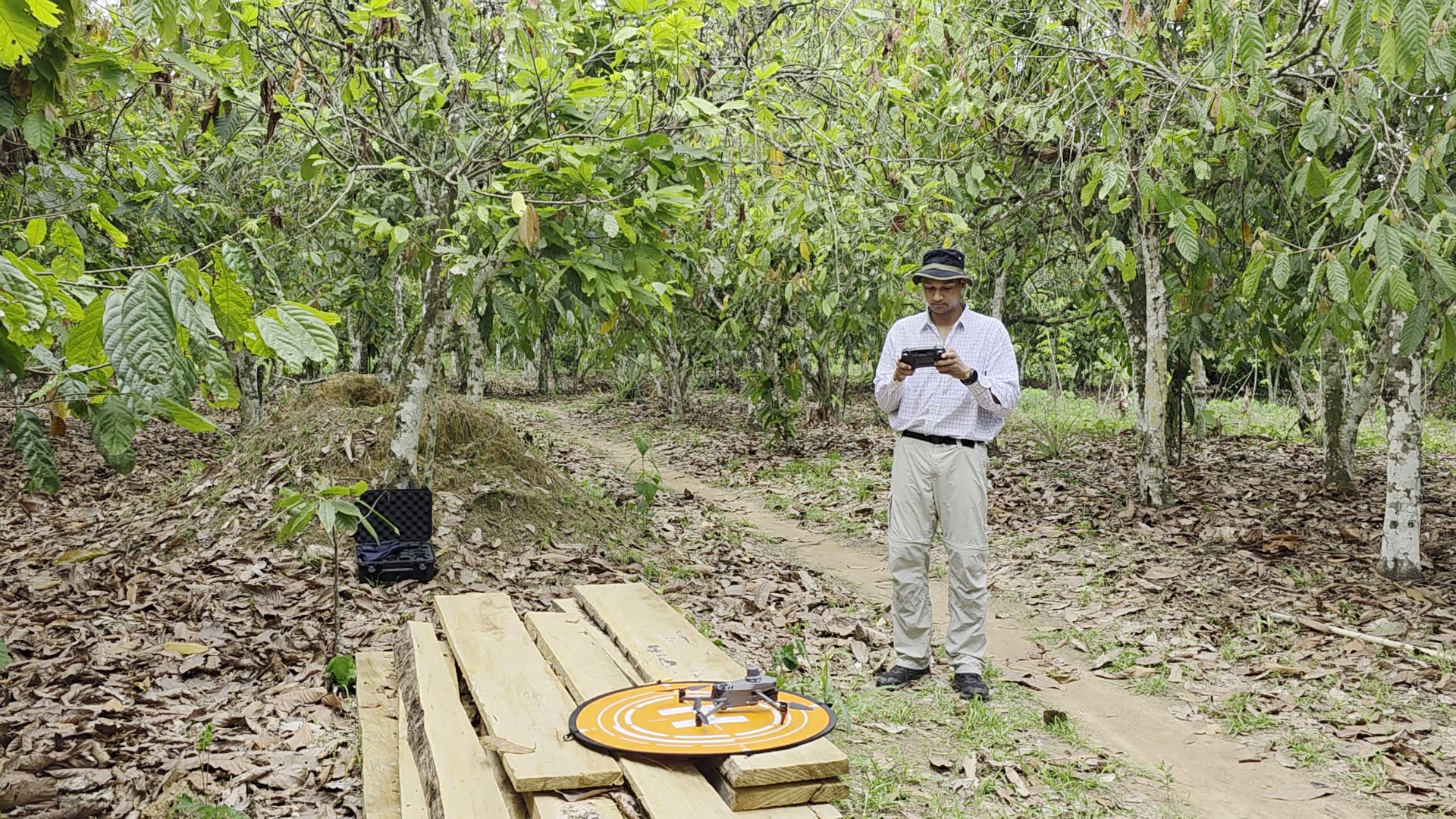
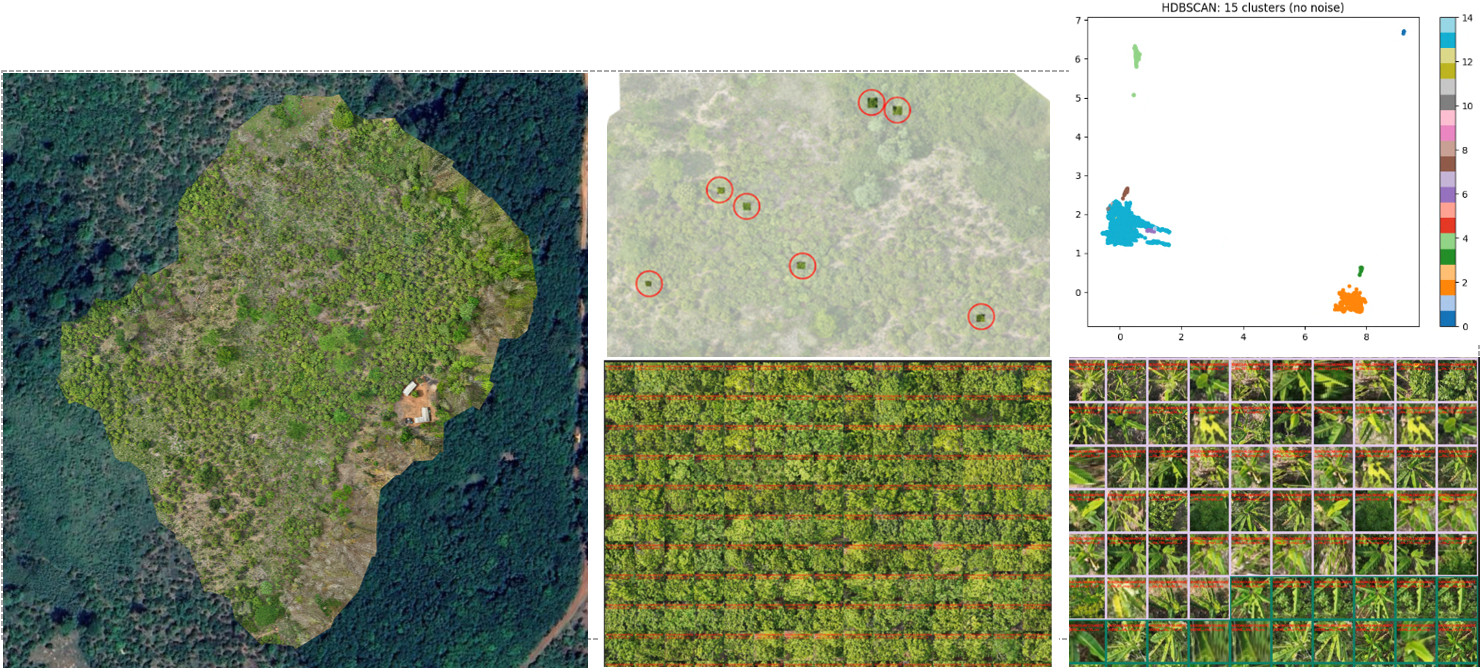
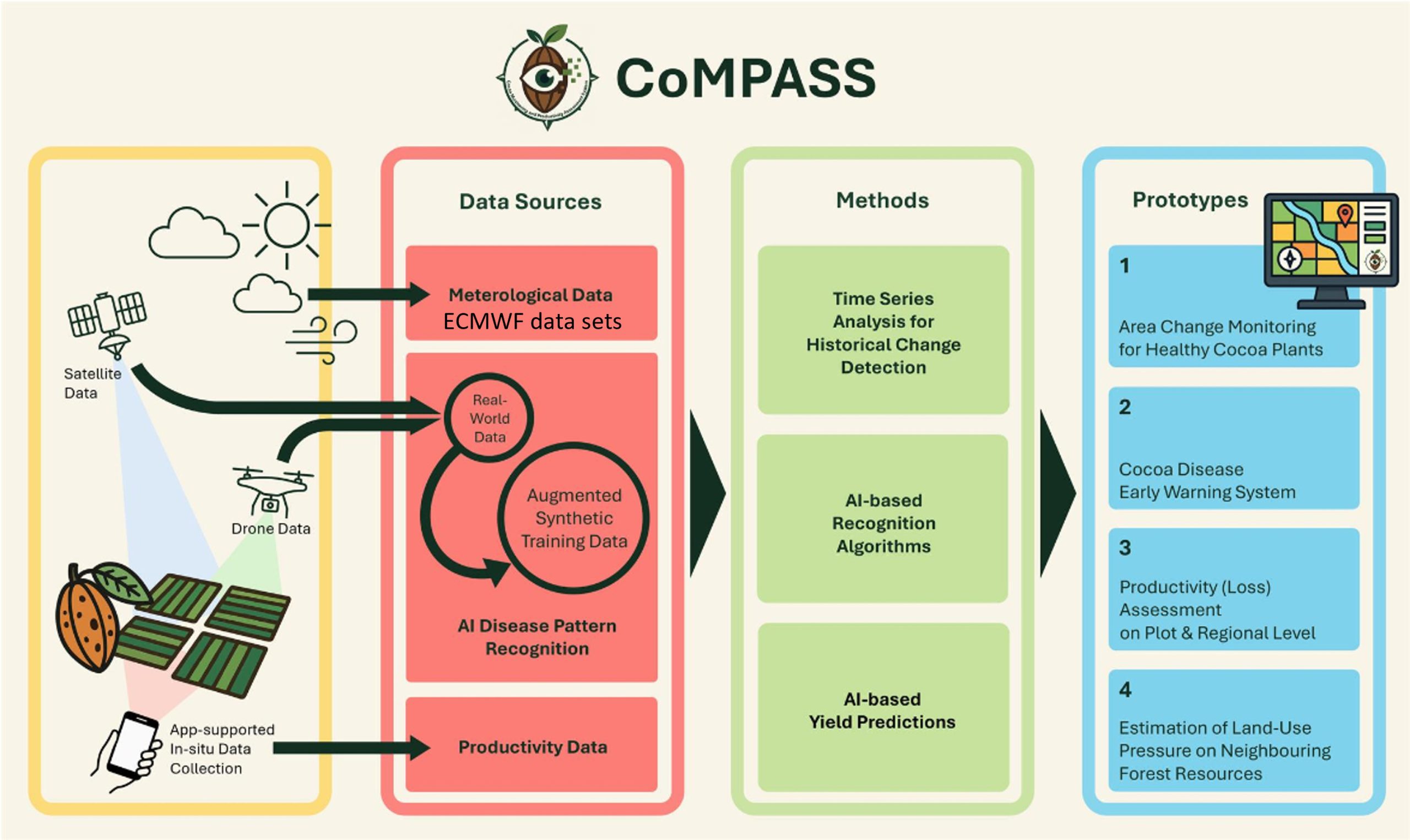
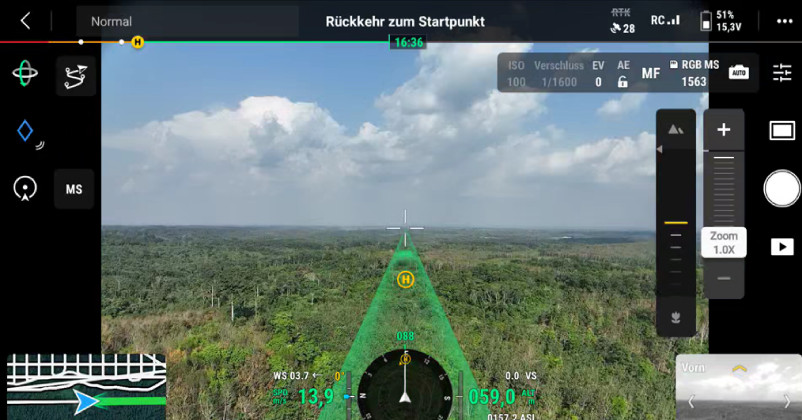
CoMPASS is developing and testing the world's first satellite-based monitoring and assessment system for cocoa plantations. The system uses a combination of Earth observation data (Sentinel and high-resolution satellite imagery), drone imagery, weather data, in-situ surveys and AI-generated synthetic training data to detect disease outbreaks and long-term declines in vitality at an early stage.
The four demonstrator products address the following areas: large-scale vitality assessment; an early-warning system for CSSVD; yield and productivity estimation; and tools for assessing deforestation pressure in line with the EU Deforestation Regulation (EUDR). The aim is to stabilise cocoa supply chains, secure the incomes of smallholder farmers, and minimise environmental impact in agroforestry landscapes.
Our activities in the project
JOANNEUM RESEARCH brings internationally recognised expertise in remote sensing to the consortium, focusing on forest, agricultural and land-use monitoring. The company is responsible for the Earth observation-based core components of the system.
At JOANNEUM RESEARCH, we are responsible for processing and analysing optical and radar-based satellite time series (including Sentinel-1 and Sentinel-2), as well as developing time series analysis methods for trend estimation and change detection. We are also working on AI-supported classification and prediction methods. Specifically, our experts are developing classification and mapping methods for cocoa plantations and agroforestry systems, as well as methods for deriving vitality and health metrics to enable the early detection of CSSVD. They are also developing methods for estimating yield and productivity. To this end, we are testing modern geospatial foundation model embeddings and multi-temporal approaches that go beyond established NDVI indices and consider the particular conditions of tropical agroforestry systems, such as shading and high cloud cover.
In addition, JOANNEUM RESEARCH contributes expertise from digital twin and early-warning projects. In the following FFG projects, methods were developed which are being adapted in CoMPASS for cocoa monitoring and the integration of Earth observation data with weather and climate data: DeFree (EUDR tools and vegetation monitoring); AIDForHeRI (bark beetle risk); and ALaDyn (use of weather and climate data from the ECMWF digital twin). JOANNEUM RESEARCH is also responsible for disseminating the project results scientifically through publications and conference papers.

Research groups
Downloads
Customers
FFG – Österreichische Forschungsförderungsgesellschaft
Österreichisches Weltraumprogramm ASAP (Austrian Space Applications Programme)
Project partners
Beetle ForTech GmbH (Konsortialführung)
JOANNEUM RESEARCH Forschungsgesellschaft mbH
Another Earth EOD FlexCo
Project details
Project starting point
The factors driving the spread of CSSVD are not yet fully understood. It is thought that factors such as the age and size of plantations, tree density, light conditions, temperature and humidity contribute to its spread. Traditional detection methods rely on resource-intensive manual field surveys that often only detect infections once the virus has already spread. Meanwhile, there is a lack of sufficient and high-quality training data for AI-based detection systems in African growing regions.
The four demonstrator products
- Large-scale assessment of vitality and change in cocoa plantations
- Early warning system for cocoa diseases (CSSVD)
- Yield and productivity estimates at plantation and regional level
- EUDR-Werkzeuge zur Abschätzung des Landnutzungsdrucks auf benachbarte Waldressourcen
Innovations
- AI-based generation of synthetic training data to overcome the data shortage
- Scalability through open, global datasets
- App-based, structured collection of field and reference data (including via crowdsourcing)
- Integration of heterogeneous data sources in a digital twin approach
- Dynamic productivity assessment rather than static indicators
- Agricultural monitoring in regions with limited data and smallholder farming systems
Sustainability
CoMPASS addresses all three dimensions of sustainability and supports SDGs 12, 13 and 15: environmentally, by preventing deforestation and reducing the use of agrochemicals; economically, by reducing yield losses and securing incomes; and socially, by improving the livelihoods of smallholder farmers – particularly women and children.
The CoMPASS project is funded by the Austrian Research Promotion Agency (FFG) as part of the Austrian Space Applications Programme (ASAP) (ASAP 2025 call for proposals). FFG project number: 5139817.
Funding organisation
The CoMPASS project is funded by the Austrian Research Promotion Agency (FFG) as part of the Austrian Space Applications Programme (ASAP) (ASAP 2025 call for proposals). FFG project number: 5139817.
Projektbeteiligte
Related projects
SHAPING THE FUTURE, TOGETHER
JOANNEUM RESEARCH provides innovation and technology services in the field of applied research. As a research company working on behalf of various federal provinces and regions in Austria, our expertise shapes the development of our modern society and economy – sustainably, and always with a focus on people. As a multidisciplinary team working in a flexible set-up that fosters innovation, we always live up to the highest social and scientific standards.