- About us
- Research fields
- DIGITAL – Institut für Digitale Technologien
- MATERIALS – Institut für Sensorik, Photonik und Fertigungstechnologien
- ROBOTICS – Institut für Robotik und Flexible Produktion
- COREMED – Zentrum für Regenerative Medizin und Präzisionsmedizin
- HEALTH – Institut für Biomedizinische Forschung und Technologien
- LIFE – Institut für Klima, Energiesysteme und Gesellschaft
- POLICIES – Institut für Wirtschafts-, Sozial und Innovationsforschung
- Business areas
- Products & services
- Research infrastructure
- Beteiligungen
- Career
- Aktuelles
- Publications
- Kontakt zu uns



PV4C
RUNNING TIME:
06/2024
—
11/2026
Total project duration:
2,5 years
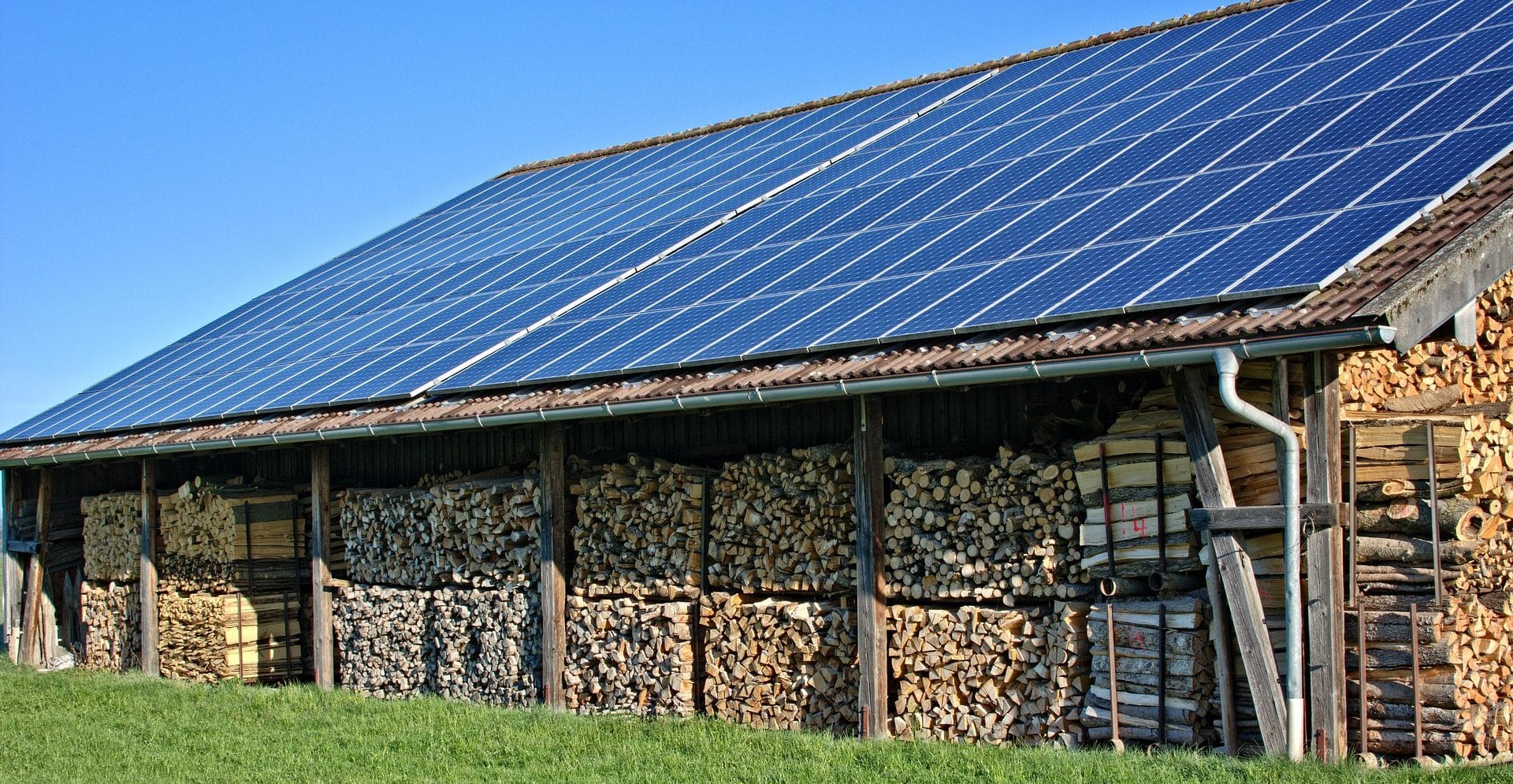
Symbolic image of a PV system, Credit: pixabay/M. A. Zimmer
The project
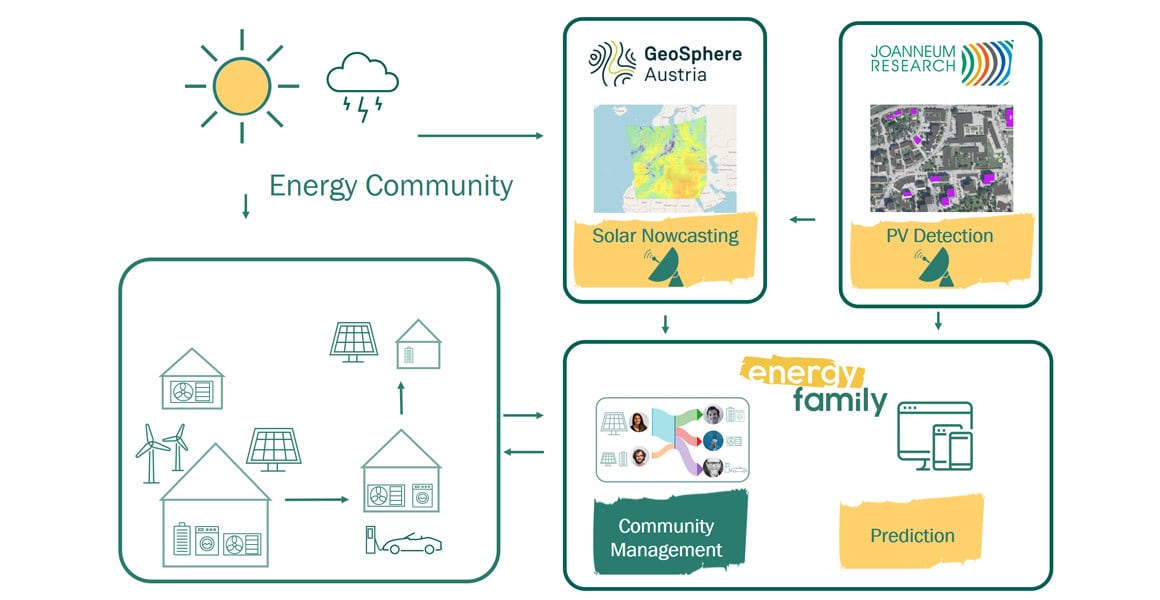
The primary objective of PV4C is to efficiently integrate renewable energy sources, such as photovoltaic (PV) systems, into energy communities. The scientific approach involves the utilization of satellite data, meteorological information, geospatial data on PV system locations, and historical generation data to develop models for estimating installed PV capacity and forecasting PV electricity generation. In contrast to smart meter-based systems, the satellite-supported nowcasting approach enables proactive coordination of energy generation and consumption. This reduces the strain on the grid infrastructure and allows the full potential of renewable energy sources to be harnessed.
Our activities in the project
JOANNEUM RESEARCH’s responsibilities within the project include, on the one hand, the collection of the required remote sensing data in the form of a data lake (such as high-resolution aerial imagery, digital elevation models, and Sentinel-2 time series), the detection of photovoltaic modules in the high-resolution aerial imagery, and the enhancement of the spatial resolution of the Sentinel-2 time series to 2.5 meters; and on the other hand, the direct detection of photovoltaic modules in the resolution-enhanced Sentinel-2 time series.

Research groups
Downloads
Customers
Project partners
energyfamily GmbH
GeoSphere Austria
Project details
Motivation
The energy transition is a significant focus of European energy policy, driven by geopolitical factors and the need to reduce CO2 emissions. Austria, like many European countries, is actively transitioning to renewable energy sources such as photovoltaic (PV) systems. This transition is critical for reducing dependence on (Russian) fossil fuels and meeting EU REPowerEU goals.
Problem statement
However, there are several challenges in this transition:
- Temporal variability of PV systems: PV energy generation fluctuates due to weather conditions and shading, making it challenging to integrate renewable energy consistently.
- Coordination of generation and consumption: Energy generation patterns often do not align with consumption, requiring energy storage and transportation solutions.
- Network losses and expensive procurement: Transmission losses in the power grid lead to high energy costs and strain the network infrastructure.
- Grid expansion challenges: Labor shortages, material scarcity, and approval processes hinder the expansion of renewable energies.
Goals and innovation
The main objective of the project is to research technologies and methods to address these challenges and optimize the use of green energy, contributing to the Green Deal.
The research approach involves using satellite data, weather data, PV system locations, and historical generation data to develop models for identifying installed PV capacity and predicting PV power production. In contrast to smart meters, satellite-based forecasting allows the coordination of generation and consumption, thus relieving the grid infrastructure and allowing the full utilization of green energy.
These models will be integrated into a demonstrator tool to support energy communities, cities, and regions in optimizing PV electricity usage and increasing energy efficiency. The research objectives include AI-powered identification of PV modules, accurate solar and PV production forecasts, near real-time PV production estimation, and implementation of prediction results in a customer presentation tool. Expected results include improved large-scale identification of PV modules based on satellite data, accurate solar and PV production forecasts, downscaled solar forecasts, and enhanced nowcasting for PV production.
Overall, the integration of AI and renewable energies offers a promising solution to the challenges facing the energy sector, making the energy transition more efficient and sustainable while reducing dependence on fossil fuels.
This is done together with our partners energyfamily and GeoSphere Austria.
Funding organisation


Funded by the Austrian Research Promotion Agency (FFG project number: 911917) as part of the Austrian Space Applications Programme (ASAP).
Projektbeteiligte
Related projects
SHAPING THE FUTURE, TOGETHER
JOANNEUM RESEARCH provides innovation and technology services in the field of applied research. As a research company working on behalf of various federal provinces and regions in Austria, our expertise shapes the development of our modern society and economy – sustainably, and always with a focus on people. As a multidisciplinary team working in a flexible set-up that fosters innovation, we always live up to the highest social and scientific standards.