


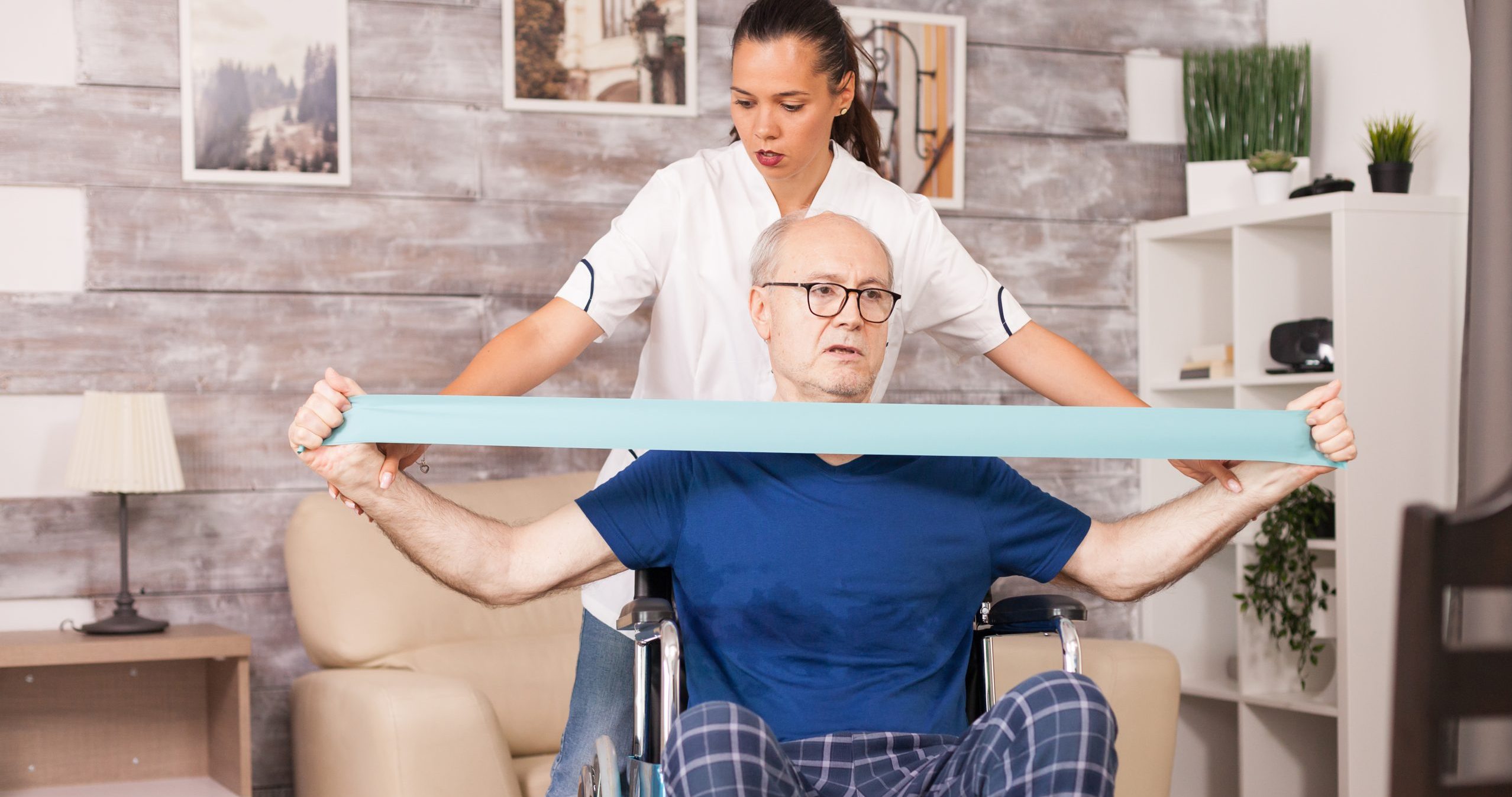
The care of older, multimorbid patients is one of the most complex and, at the same time, most urgent tasks facing our healthcare system. The recently published “Acute Geriatrics Report 2025” documents the extent to which this highly specialised care is being provided successfully and effectively in Austria. This annual publication, produced by the Austrian Society for Geriatrics and Gerontology (ÖGGG) and the HEALTH Institute at JOANNEUM RESEARCH, provides a well-founded and transparent insight into acute geriatric care based on structured quality data.
A comprehensive look at the data
For the 2025 reporting year, the inpatient treatment courses of a total of 8,539 patients from 16 participating Austrian acute geriatric and remobilisation units (AG/R) were statistically analysed. The cohort studied reflects the typical demographic distribution in this specialist field: with 5,646 women treated compared to 2,893 men, female patients accounted for almost twice as many cases. The average age was 81.6 years for women and 79.7 years for men.
The analyses paint a clear picture, as usual, of the clinical baseline: among the most common initial diagnoses for both sexes were fractures of the femur, followed by injuries to the lower limbs.
Measurable improvements in mobility and independence
The core philosophy of acute geriatric care lies not primarily in the isolated treatment of individual diagnoses, but in the holistic restoration of function and independence. The treatment outcomes cited in the report provide compelling evidence that this multi-professional, interdisciplinary approach is effective:
- Improving self-help skills: During their stay in the acute geriatric ward, patients were able to significantly improve their ability to care for themselves in everyday life – an average improvement of 14.2 points was achieved on the established Barthel Index. For 37.4% of those affected, their self-care ability improved immediately during their stay. By contrast, a deterioration was observed in only 1.7% of cases.
- Improved mobility and fall prevention: According to the Esslingen Transfer Scale – which measures the level of assistance required when transferring from bed to wheelchair – a direct improvement in mobility was achieved in one third of patients (33.1%). Furthermore, targeted therapeutic interventions successfully reduced the risk of falls (as measured by the Tinetti Mobility Test) in 40.5% of patients.
- Successful reintegration: The primary goal of remobilisation – a return to the patient’s familiar living environment – was achieved with flying colours: 90.4% of patients who had been living independently at home prior to their hospital stay were able to return to their own homes following discharge.
For the majority of patients (35.6% of women and 32.1% of men), the average length of stay in an acute geriatric ward was between 15 and 21 days. Fortunately, in almost 60% of cases, admission took place within two weeks of the initial acute event.
Methodological validation and future-oriented approach: SNOMED CT
The latest report also sets new methodological standards. Gender differences are analysed throughout the report. In the 2025 edition, a rigorous statistical validation was carried out for the first time using adjusted tests and the calculation of effect sizes, in order to identify the clinical relevance of these differences with even greater precision.
Another key focus for the future of documentation lies in ongoing digitalisation and standardisation. To ensure that the data recorded in the benchmarking system (CDS-BARS) remains internationally comparable and interoperable in the long term, and can be used for modern, AI-supported analyses and research projects, key data fields are being progressively mapped to the SNOMED CT medical terminology. This lays an important foundation for integrating geriatric care data into the future European Health Data Space.
Acute Geriatric Care Report 2025
The full 2025 Acute Geriatric Care Report is available here.