

As e-mobility increases, so too does the need for charging infrastructure. At the same time, the question arises as to how this additional energy demand can be met without placing an unnecessary strain on the electricity grids or incurring high costs for their further expansion. This is precisely where ‘shared charging’ comes in. A consortium comprising, amongst others, go-e, JOANNEUM RESEARCH, Kärnten Netz, Kelag and the Alpen-Adria University of Klagenfurt, is working on innovative solutions. The aim is to decouple the charging of electric cars from the electricity grid as much as possible. Local energy systems should make greater use of renewable energy and only draw on the public grid when necessary.
The focus is on making e-mobility affordable. Smart charging infrastructure is intended to help make mobility accessible to as many people as possible at low cost. At the same time, providing this infrastructure must also be commercially viable for operators. Workplaces play just as important a role in this as shopping centres or leisure venues.
Data for the mobility of tomorrow
The data and modelling provided by JOANNEUM RESEARCH form a key basis for the development of such solutions. Research is being carried out to determine where and when charging demand will arise in the future. To this end, population data, commuter flows, employer locations and infrastructure information, amongst other things, are being linked together.
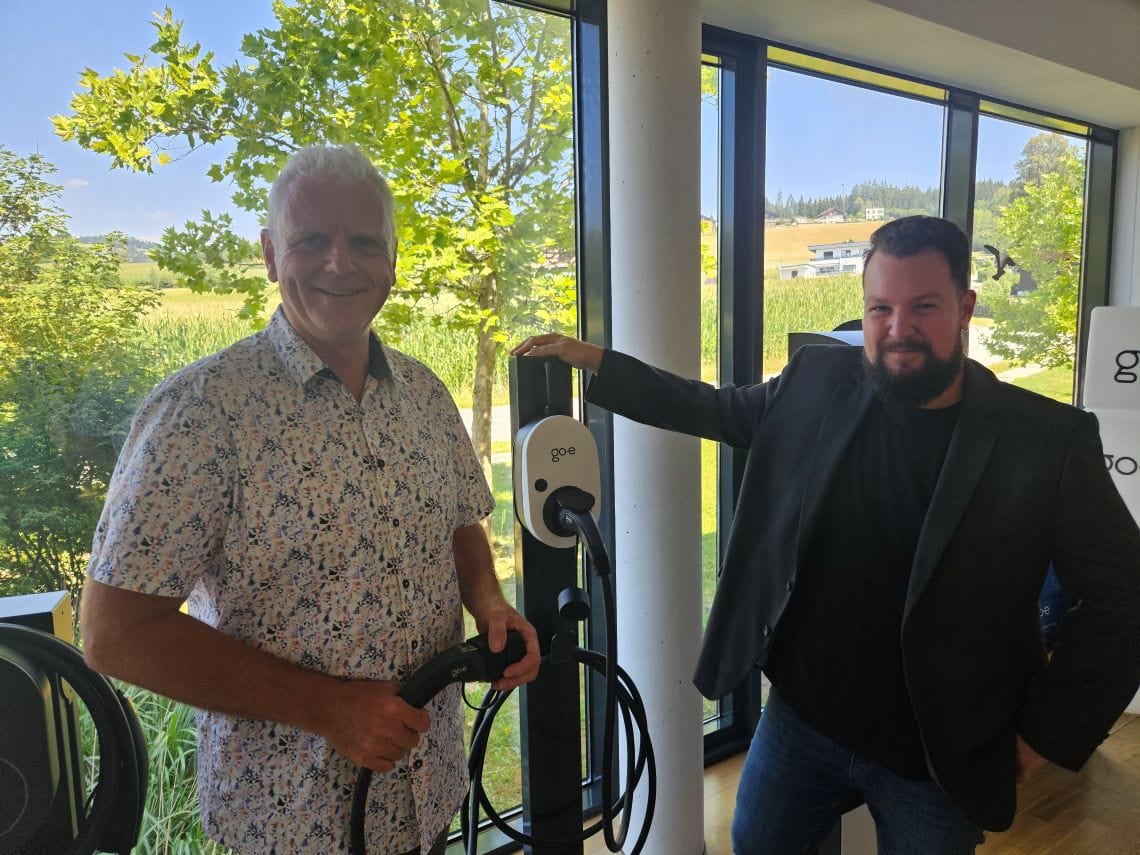
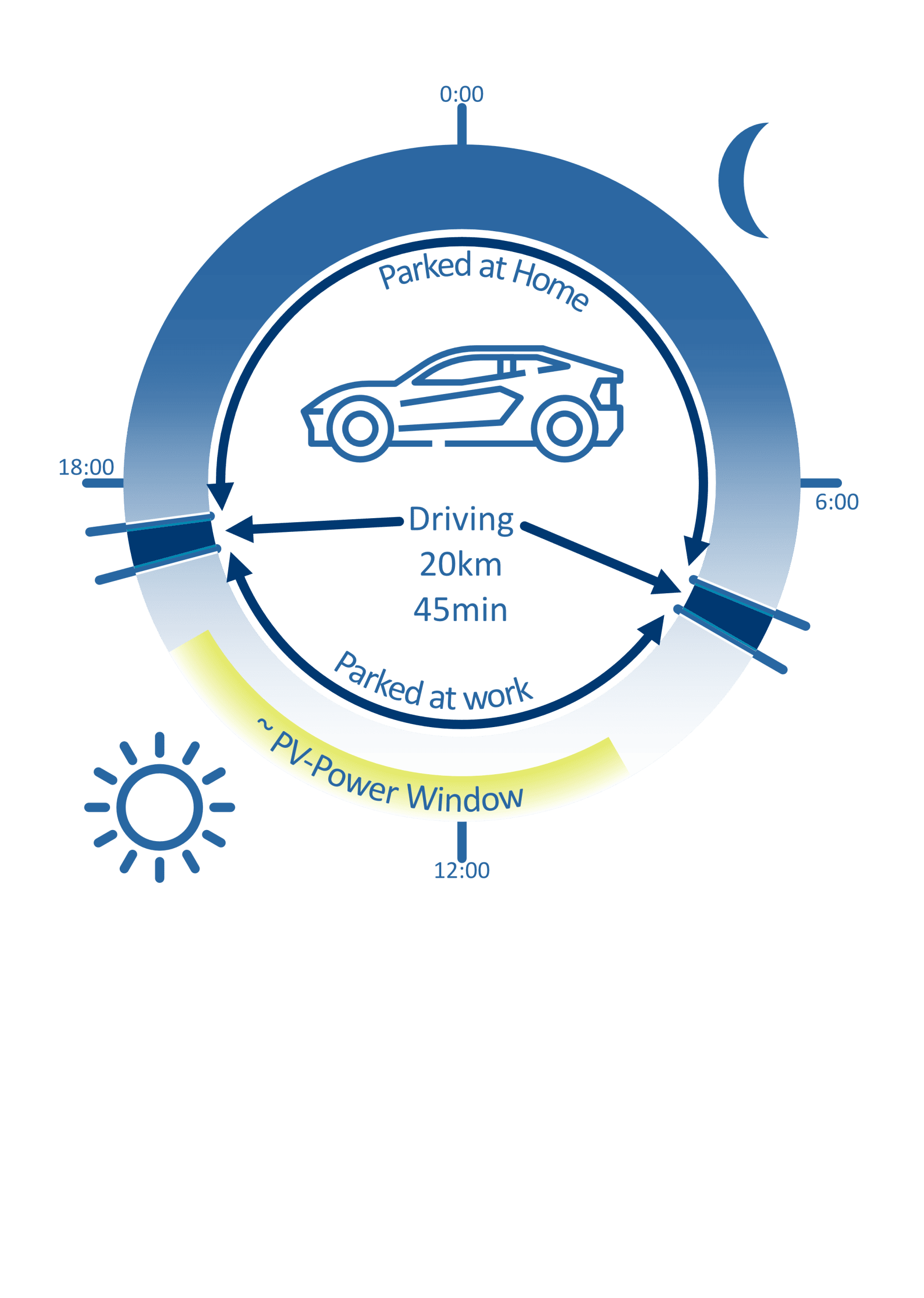
“We know where people live, we understand the commuting patterns between the various locations, and we know where people work,” explains Nicholas Katz of JOANNEUM RESEARCH. Mobility is viewed in the context of the interplay between home, work and leisure. This enables us to model where people are located throughout the day and how high the corresponding charging demand might be.
For Bart Scholte van Mast, Business Innovation Manager at go-e in Feldkirchen, this data forms a key basis for planning. The models combine demographic information with distances travelled and the resulting energy requirements. This makes it possible to estimate how much energy will be needed for charging at different locations.
How an idea became an innovation project
The collaboration between go-e and JOANNEUM RESEARCH began at JOANNEUM RESEARCH’s Future Day 2024. There, Scholte van Mast attended a talk by JOANNEUM RESEARCH researcher Eric Kirschner on the link between demography and infrastructure. The content resonated with issues that go-e was already exploring. This initial exchange gave rise to a project idea – and nine months later, a joint research project.
Research meets business
It is precisely this combination of different areas of expertise that highlights the added value of the partnership for both sides. go-e gains access to existing research knowledge, data and models and does not need to build up the relevant expertise itself from scratch. Added to this are JOANNEUM RESEARCH’s network and reputation. For its part, the research gains a concrete practical application through the cooperation with a commercial partner. “We’re not starting from scratch. Ultimately, it creates excellent synergy that enables us to develop products more quickly and get them to the customer faster,” emphasises Bart Scholte van Mast of go-e.
For JOANNEUM RESEARCH, one of the main attractions of the project lies in applying scientific findings directly in practice and working with companies to develop them into concrete solutions. “There is little more frustrating than when research findings end up gathering dust in a drawer. What we develop actually creates added value,” says Nicholas Katz of JOANNEUM RESEARCH.
Thinking ahead together
The collaboration is intended to extend beyond the current project. Both project partners see potential in continuing and scaling up the approaches developed. Carinthia is serving as a pilot region, where a great deal of data is already available. However, the underlying models can also be applied to other regions. Nicholas Katz sees this as an opportunity to apply the research in other federal states or across Austria in future. For go-e, too, further project ideas are focused on renewable energy in conjunction with e-mobility infrastructure.
Shared Charging thus demonstrates how a shared idea can give rise to an innovation project and how research and industry can benefit from one another: JOANNEUM RESEARCH contributes data, modelling and scientific analysis, whilst go-e provides insights into technological development and practical implementation. Based in Carinthia, this collaboration is generating approaches to affordable, economical and sustainable e-mobility that could have an impact beyond the model region in the future.