

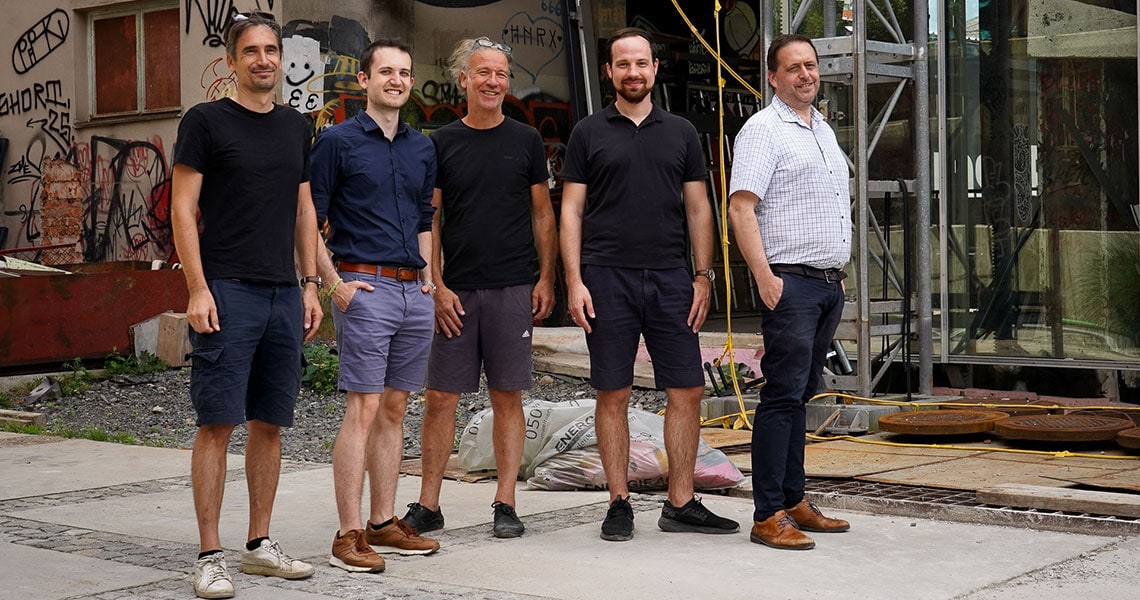
The EU project EXCESS, led by the LIFE Institute at JOANNEUM RESEARCH, provides an example of how ageing buildings can be converted into sustainable energy generators. Upgrading instead of demolition is the motto: resources are conserved, materials are recycled and old buildings are supplemented with new technologies. The aim of EXCESS is to use four buildings in four climate zones in Europe to demonstrate that buildings can produce more energy from renewable sources than they consume each year. In future, the remaining energy will be used to supply neighbouring buildings with green energy. Climate economist Andreas Türk is the overall project manager of the EU project with four demonstration buildings in Belgium, Finland, Spain and Graz.
A tower in the Taggerwerk is being converted to be energy-positive
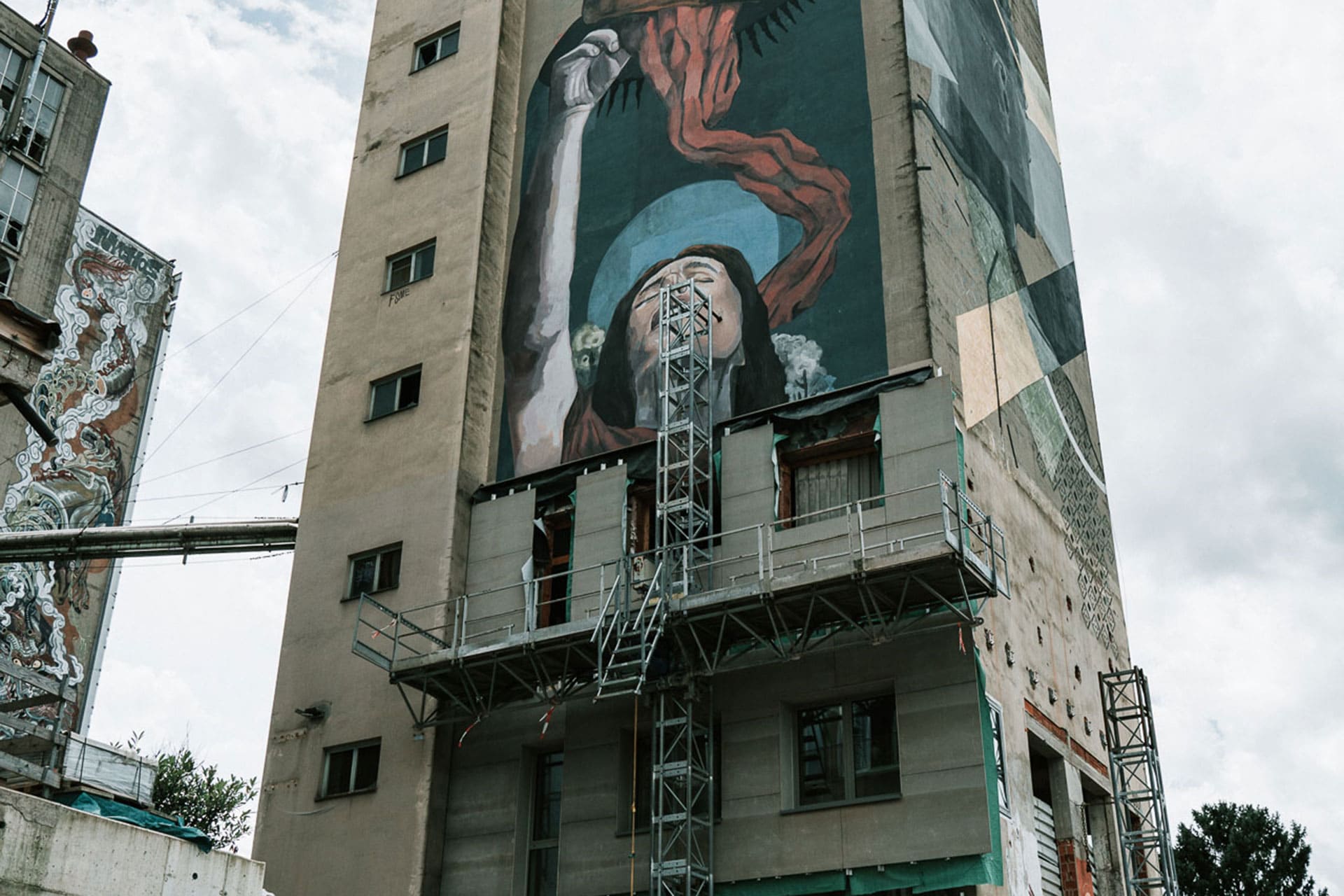
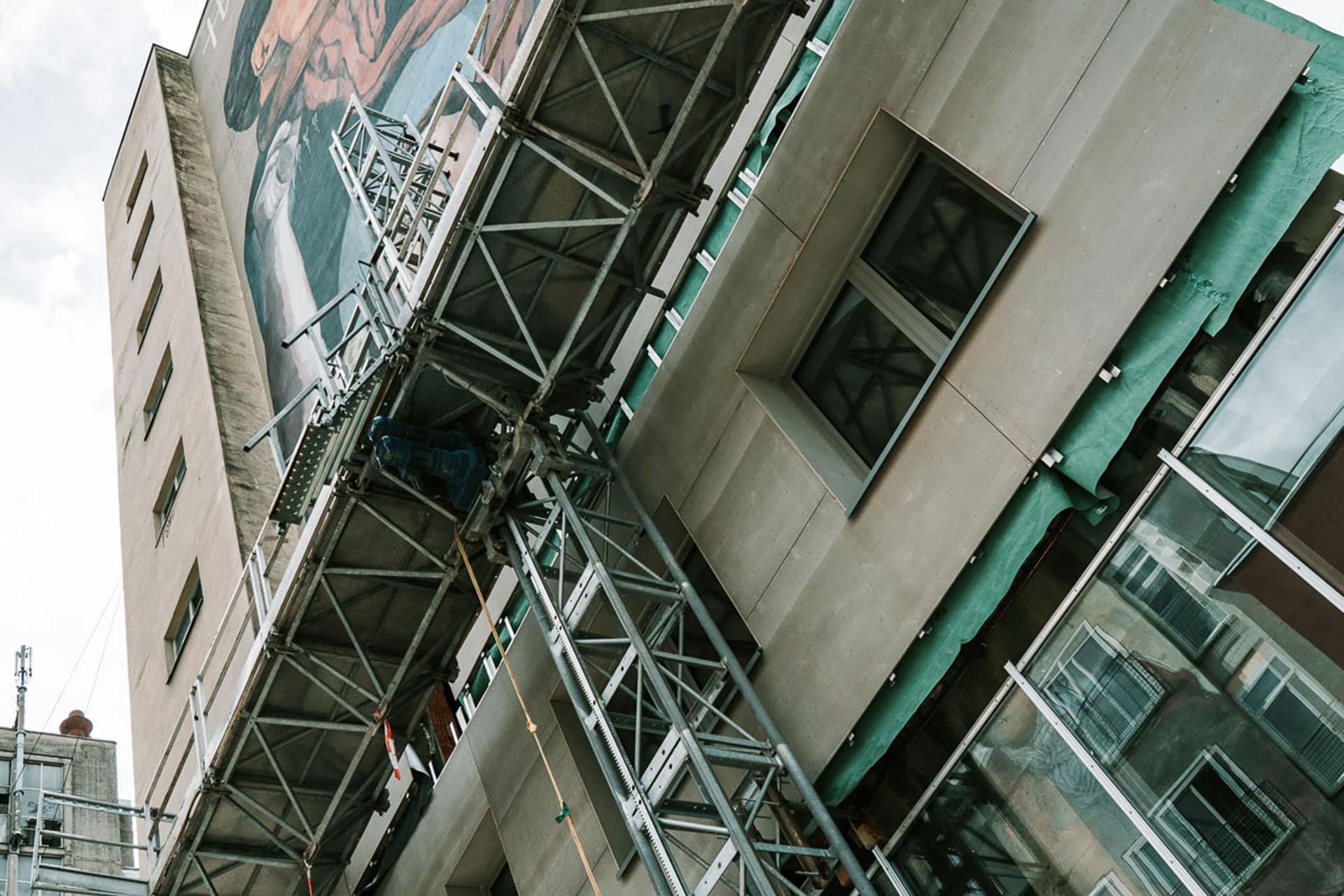
The demonstration building in Graz is a former feed silo made of reinforced concrete, which is located in a former industrial area in Puchstraße, the Taggerwerk. The so-called tower is being converted into an energy-positive building through component activation via the outer walls. To this end, our researchers worked with the AEE Institute for Sustainable Technologies (AEE INTEC) in Gleisdorf to develop a special façade, which was optimised as part of EXCESS and has already been installed on two floors. It contains heating pipes, insulation elements, façade elements and a photovoltaic surface. The special façade enables an economical, cost-saving system that cools the wall in summer and heats it in winter. The now market-ready technology has been in use since August and the system works in both cooling and heating mode.
Two major innovations in the Tagger area
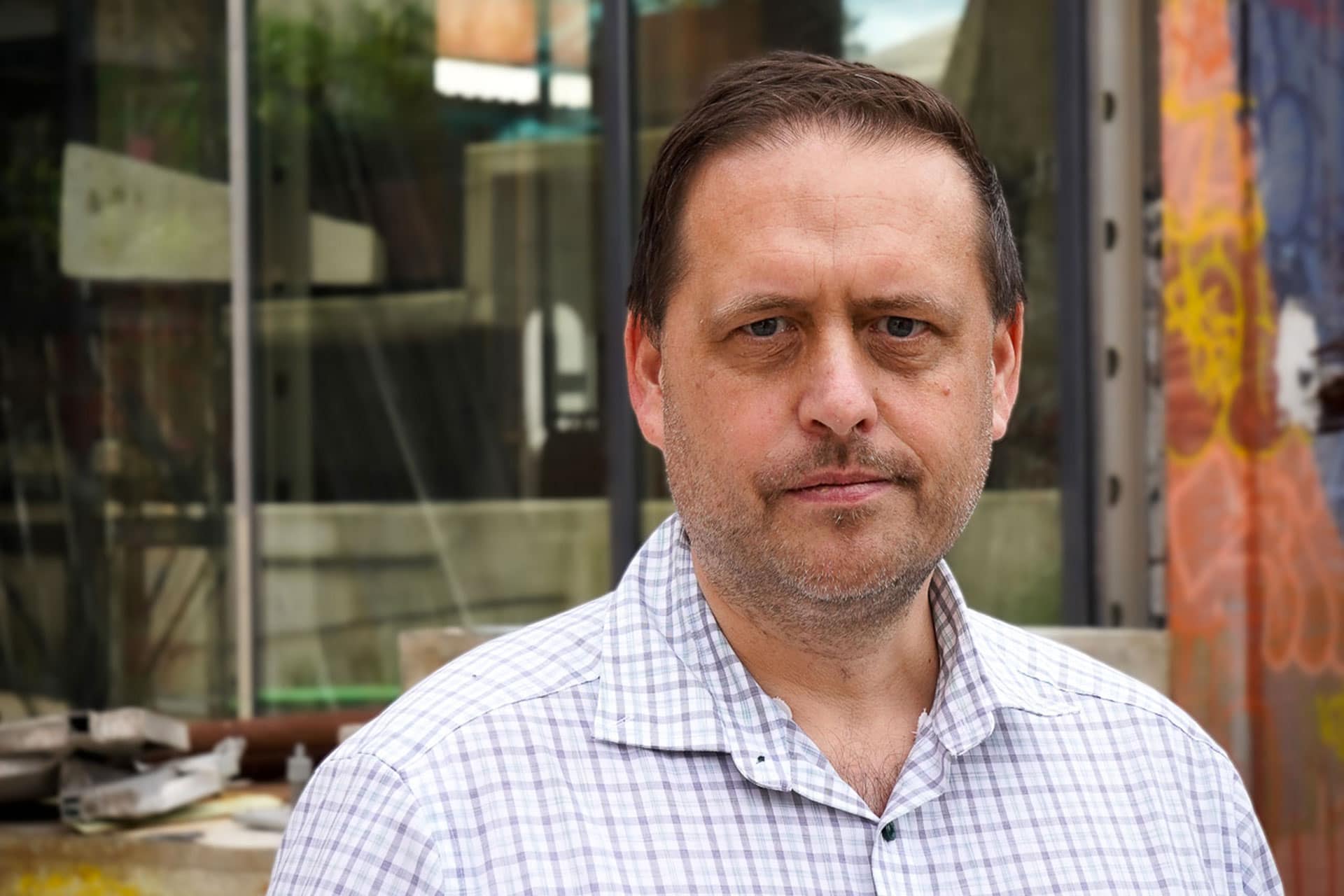
Andreas Türk, head of the International Climate Policy and Economics research group at the LIFE Institute: ‘My team carried out economic calculations in advance, as well as forecasts on solar radiation and energy use. We have moulded these findings into detailed work plans and created simulations, which we are now verifying with real data. As only two storeys have been fitted with the special façade so far, the energy generation and energy consumption of the rest of the tower is being simulated. As soon as we have the first real-time data, we can scale this to the entire tower using a simulation model from AEE INTEC. We have virtually determined and tested performance indicators in the design and simulation phase. The aim is to compare these with practice and see how well they can be achieved and where adjustments to the technologies are necessary.’
There are two major innovations on the site: technological and social. IT expert Thomas Schwarzl has developed an app (OBS: Objective benefit sharing) for energy users in the Tagger area to bring them together in an energy community in which they can generate benefits. He is the managing director of the IT company of the same name, has his office on site and will move into the tower as a test user in order to gather facts and feelings about the wall heating and wall cooling in real operation.
Thomas Schwarzl: ‘The app offers the opportunity to visualise the savings and possibilities in a community and to focus on working together towards the common goal of saving energy. The potential in such buildings is enormous in terms of CO2 and energy savings. The main problem in developing the app was the question of how to involve people in an unexciting topic such as energy technology. Accordingly, we started to develop an app that not only visualises data, but also gives people the opportunity to create incentives based on their own behavioural change or participation in renewable energies in the building. And ideally, these can be converted into food, drink or coffee at the Taggerwerk. As a community, you recognise the added value you have created by saving energy.’
Cooperation for climate friendliness
Researchers, building contractors and IT experts are working together with the owner of the Tagger site, Christian Kossegg. ‘The entire site is already energy self-sufficient, i.e. independent of gas,’ says project manager Andreas Türk enthusiastically. ‘A lot has been created where any other investor would have torn down,’ Türk is convinced. The project is currently in a test phase. Christian Kossegg: ‘Cooling was tested in the summer and heating will be tested from the autumn. We are currently testing the optimum condition for low temperatures with maximum yield and maximum benefit: What temperatures do I achieve indoors, at what outside temperatures and what flow temperatures?’ The idea is to heat and cool the area at low cost over the long term. The advantage for people is that operating and heating costs can be kept at a low level with this system.
The owner of the site, Christian Kossegg, who also played a key role in optimising the façade, is pursuing a social ideal in addition to the approach of saving resources: ‘It is important to me not only to operate a site where people work, but also for them to interact with each other. There will be a café on the ground floor of the tower and users of the energy community will use an app to pay for their help in saving energy.’ Collective action will subsequently be promoted in the area in order to reduce energy costs and achieve sustainable effects, for example activities such as waste avoidance, sharing and adapting the charging behaviour of electric cars.