


High-Tech Coating for Improved Compatibility
Das POLVAD-Kunstherz wurde von der polnischen Forschungseinrichtung FRK in Zusammenarbeit mit Industriepartnern entwickelt. Es unterstützt Patient*innen mit schwerer Herzinsuffizienz, indem es die Herzfunktion temporär übernimmt oder sogar vollständig ersetzt. Die pulsierenden Kammern des Systems ahmen die natürliche Pumpfunktion des Herzens nach. Eine Kammer enthält das zu pumpende Blut, während eine zweite Kammer durch eine Membran getrennt mit Druckluft gefüllt wird, um den Pumpmechanismus auszulösen.
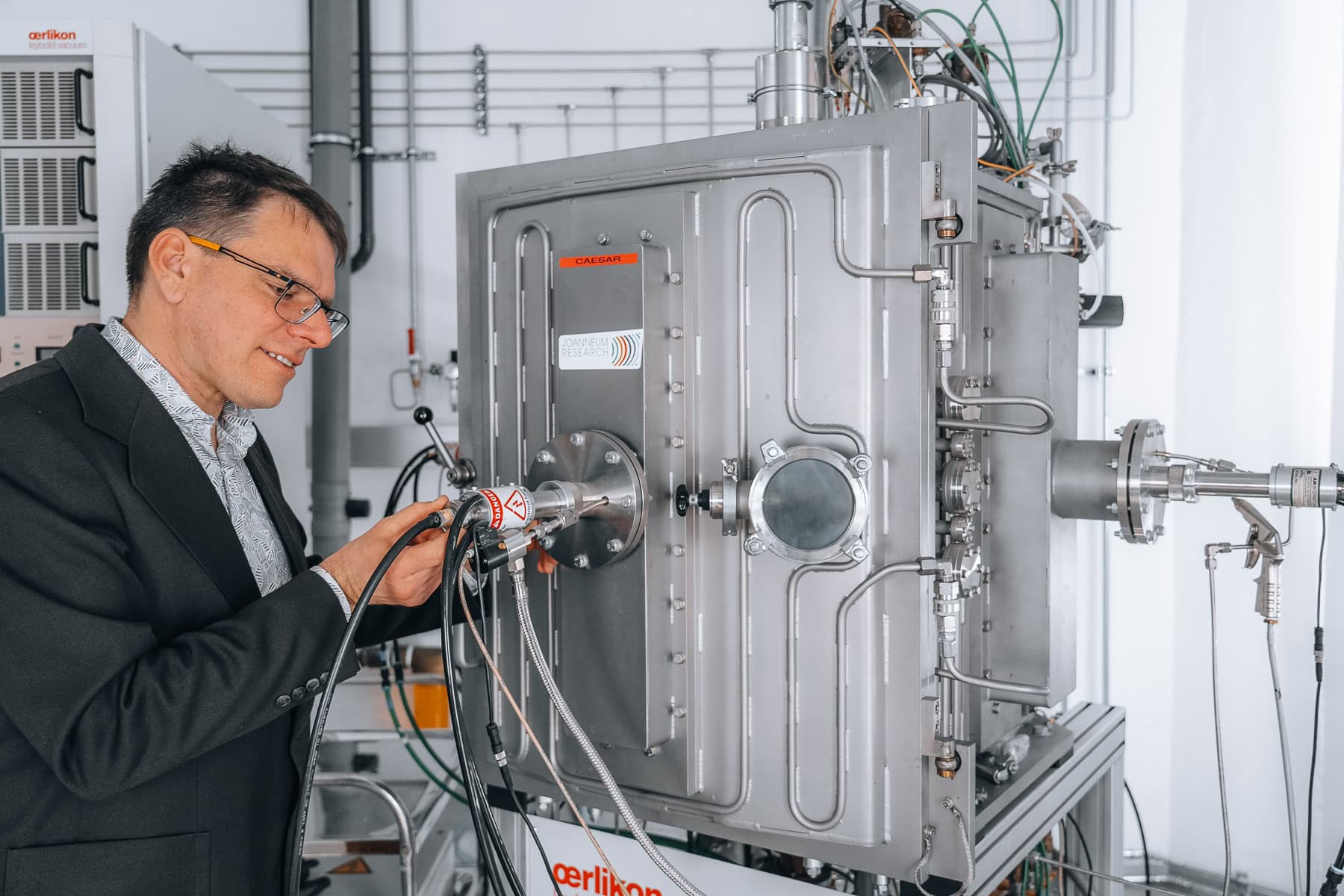
Ein zentrales Element ist die PVD-Beschichtung, die bei Joanneum Research in Niklasdorf A key innovation is the PVD coating, developed at Joanneum Research in Niklasdorf. These thin and flexible layers significantly enhance the blood compatibility of the artificial heart. Materials such as polyurethane and titanium alloys are coated with diamond-like carbon layers in a vacuum, improving blood flow and minimizing the risk of clot formation.
In addition to Joanneum Research and FRK, DISTECH GmbH from Kapfenberg is also involved. While Joanneum Research develops the PVD coatings, DISTECH manufactures key components of the artificial heart using high-precision 3D printing. Close collaboration with Polish partners ensures the continuous advancement of the POLVAD system.
Miniaturized Heart Pumps for Babies, Toddlers, and Adolescents
A promising future project is the KIDmicroBLOODpump, a miniaturized centrifugal pump developed within the framework of the EU program M.ERA.NET. The goal is to enable minimally invasive procedures and make the POLVAD system even more adaptable—especially for young patients.
Each year, approximately 40,000 newborns in Europe are born with heart defects, many of whom suffer from life-threatening complications. Conventional artificial hearts are often too large or pose risks such as blood clots due to suboptimal blood flow. This is where the KIDmicroBLOODpump comes in: it is only the size of half a small finger and can be implanted minimally invasively through a small vascular access. Its shape has been specially optimized, and it is manufactured using 3D printing followed by surface coating.
“This project represents a significant breakthrough in pediatric heart surgery. In the medium term, this technology could not only save the lives of newborns but also improve the quality of life for many adults,” explains project leader Lackner.
Auch der ORF hat bereits darüber berichtet: Der ORF-Beitrag ist bis 28.3. auf ORFon verfügbar.