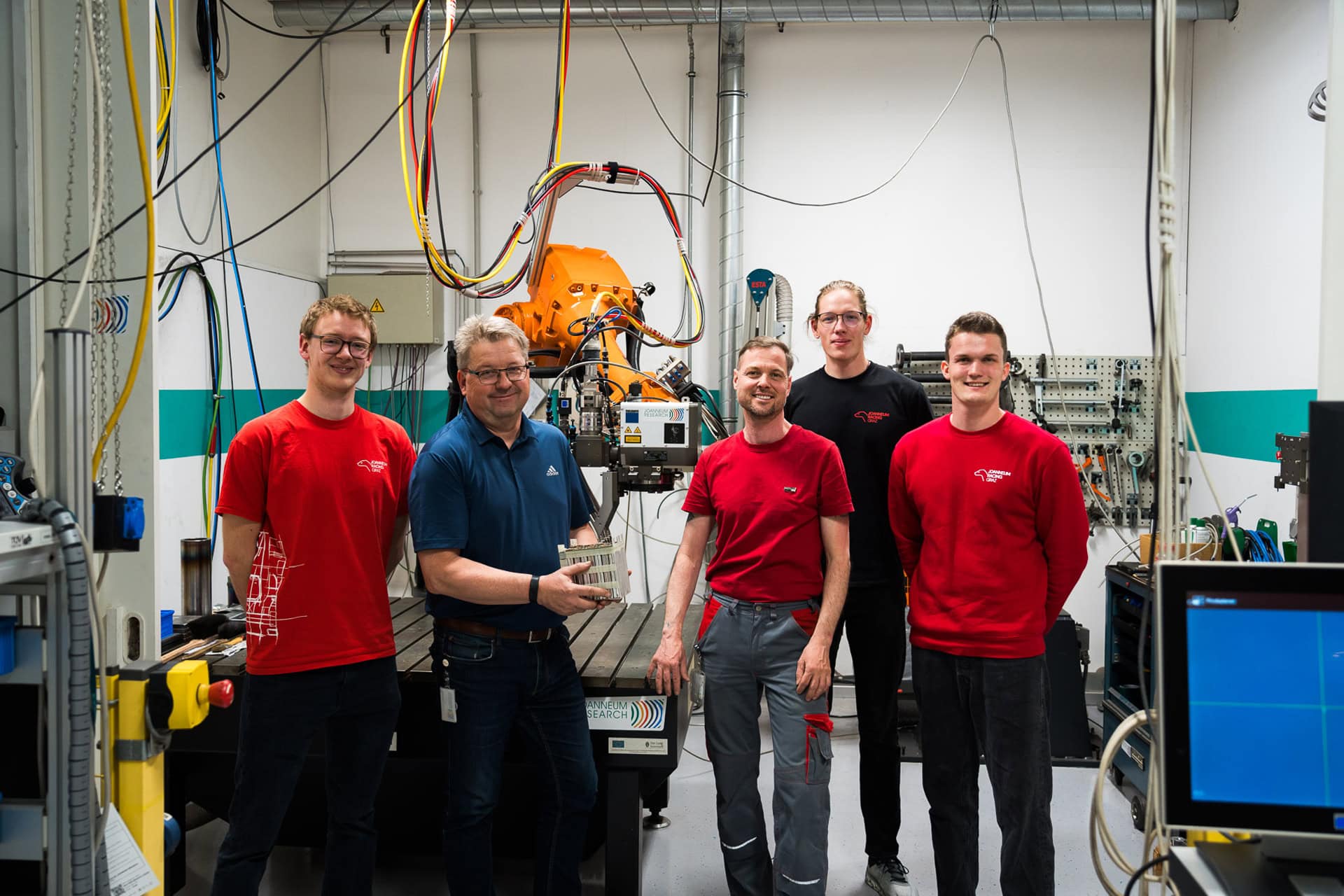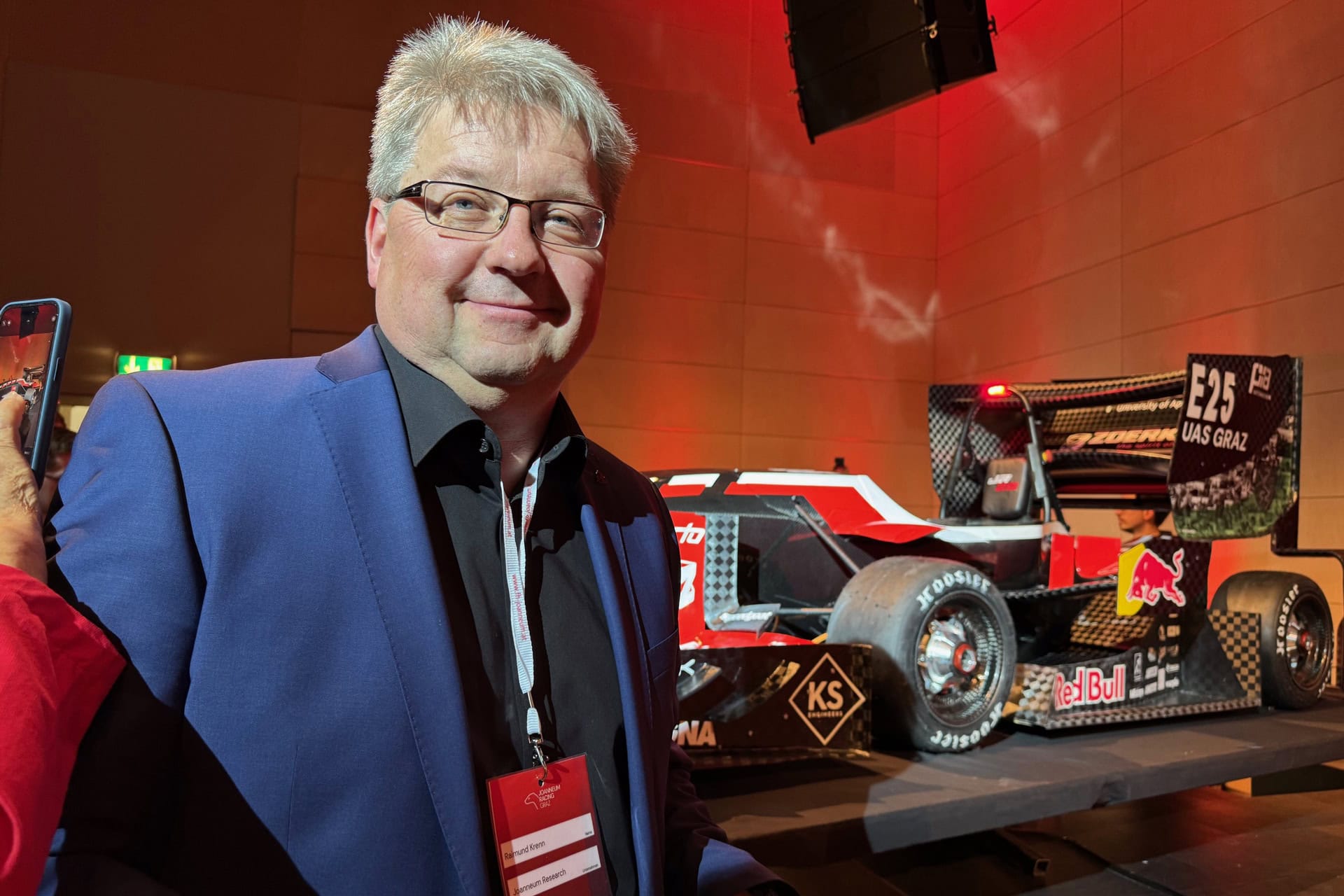


Racing cars with cutting-edge technology: The Laser and Plasma Technologies research group at JOANNEUM RESEARCH MATERIALS in Niklasdorf once again supported the students of Joanneum Racing Graz, the Formula Student team at FH Joanneum Graz, with its technology and expertise.
Laser welding of battery contacts
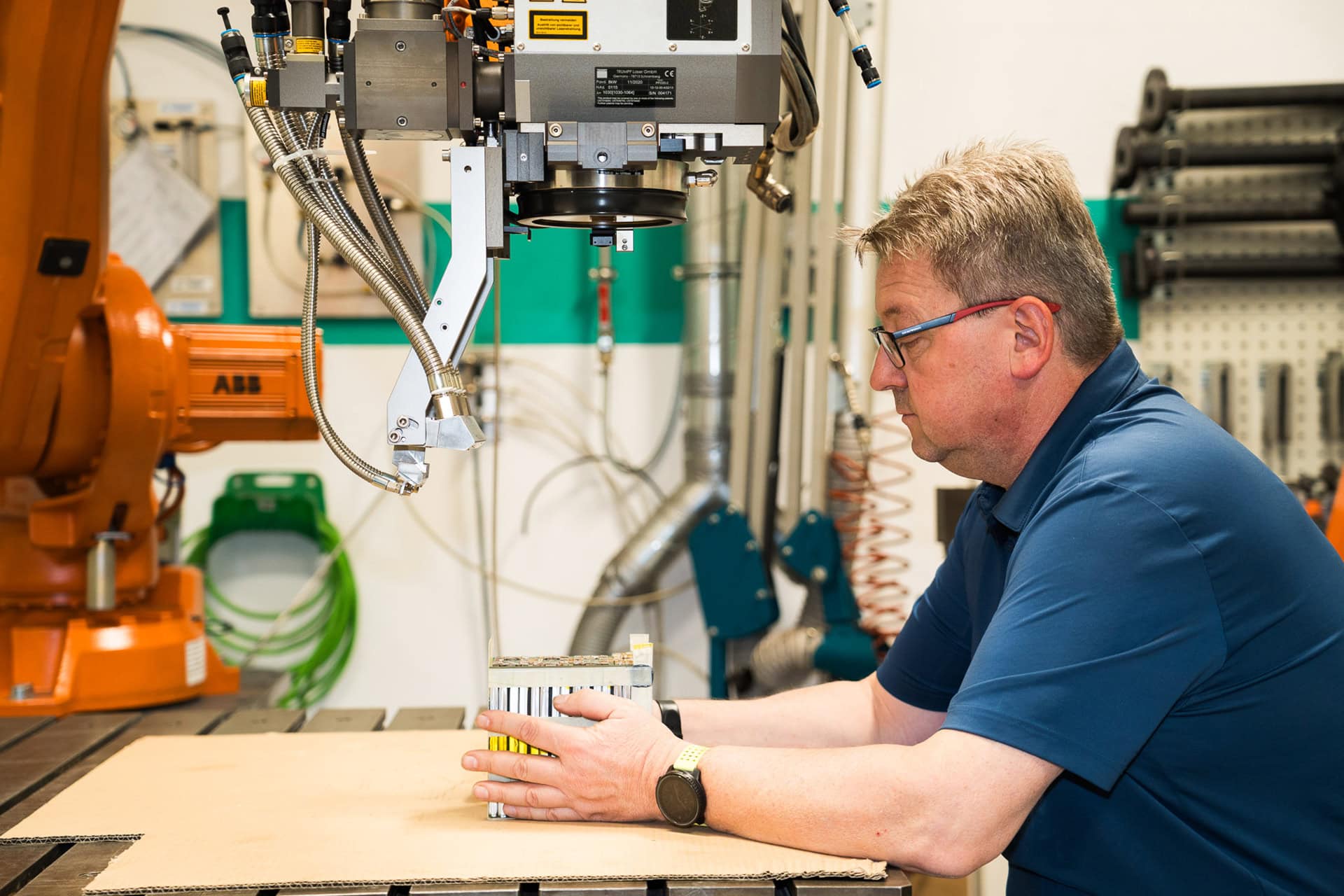
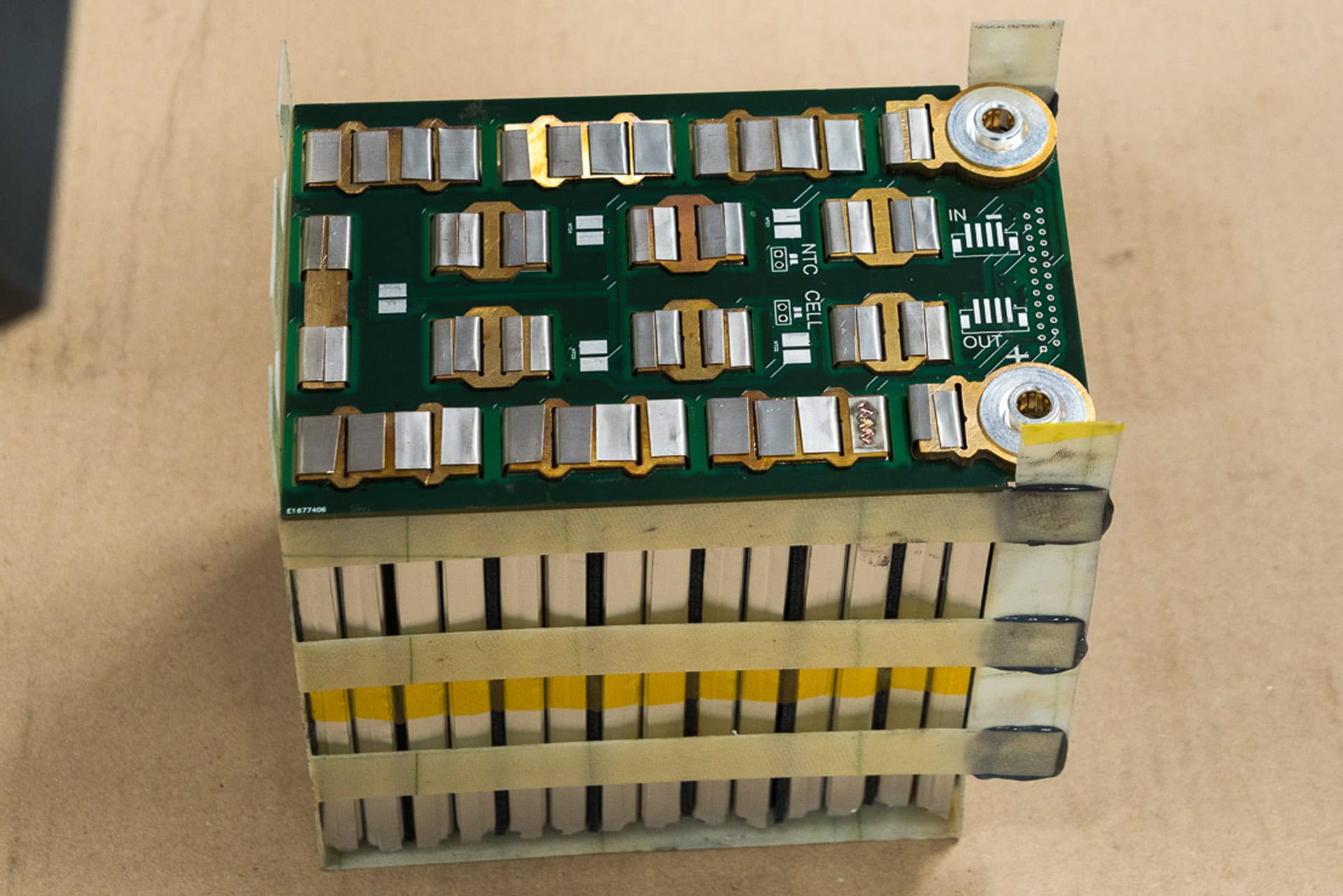
Raimund Krenn and his team are contributing their expertise to the completion of the batteries for the racing car that will compete in the 2025 Formula Student season: in each individual battery cell, a 0.2 mm thin copper sheet, through which the current will flow, has been connected to a battery terminal using a laser. For the total of 10 batteries installed in the vehicle, this means 28 cells with a total of 280 laser-welded contacts, each of which must function flawlessly. ‘Long durability and low resistance are essential for success,’ says Krenn. Since Joanneum Racing Graz switched to the electric class in 2022, the batteries have been welded at MATERIALS every year.
Motor housing from the 3D printer
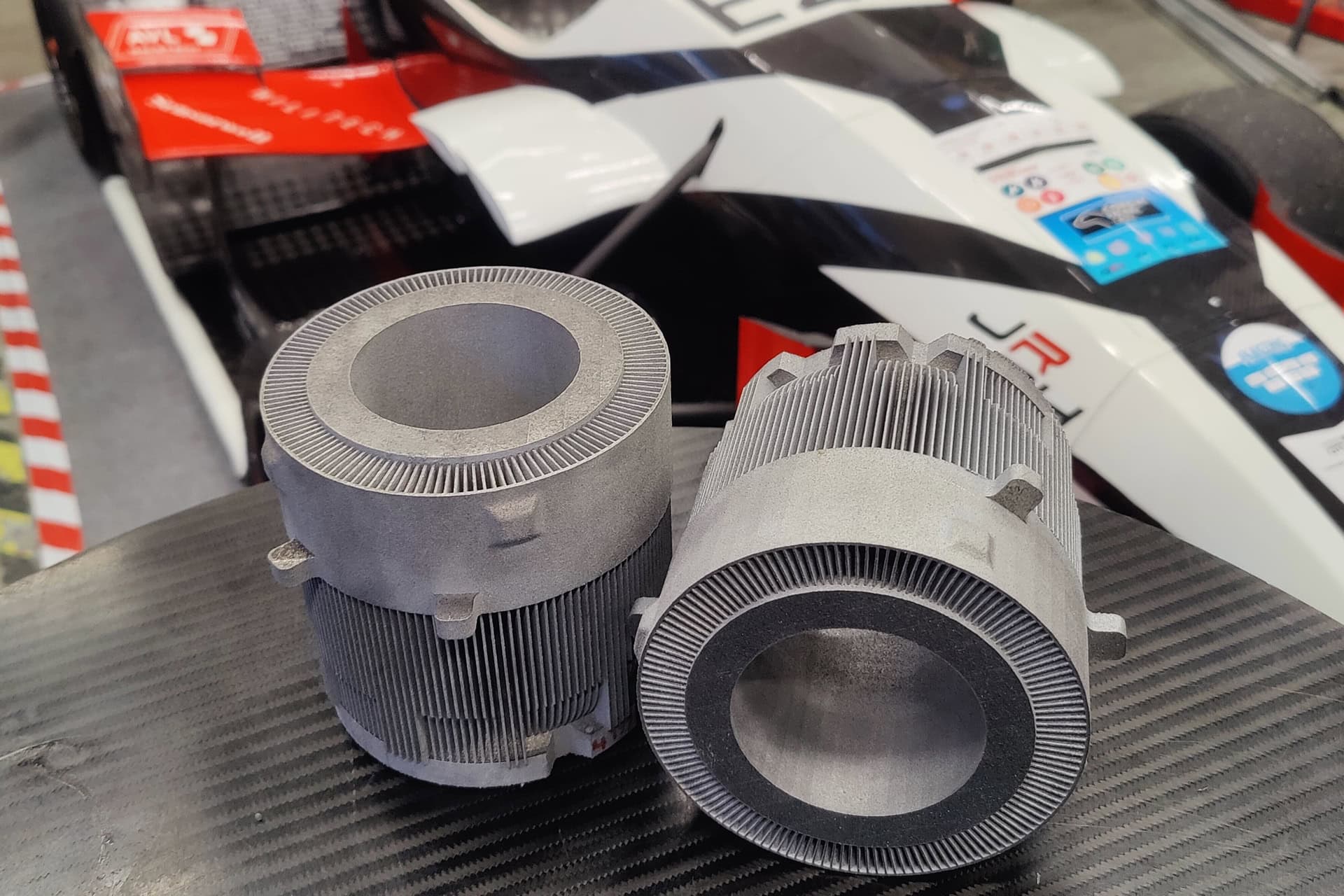
This year, the housing for the air-cooled engine of the racing car was also manufactured in Niklasdorf for the first time. The complex structure comes from a 3D printer. A special process (laser power bed fusion) is used to print from an aluminium alloy. The material is lightweight yet stable and has good mechanical properties. 3D printing has several advantages over conventional manufacturing processes: "Complex geometries and structures such as this engine housing are difficult to produce using turning, milling, casting or moulding. 3D printing also enables the production of small quantities and the integration of internal channels and cavities, which are used for sensor mounts, for example," says Tin Palcevski from the Laser and Plasma Processing Research Group.
Joanneum Racing Graz
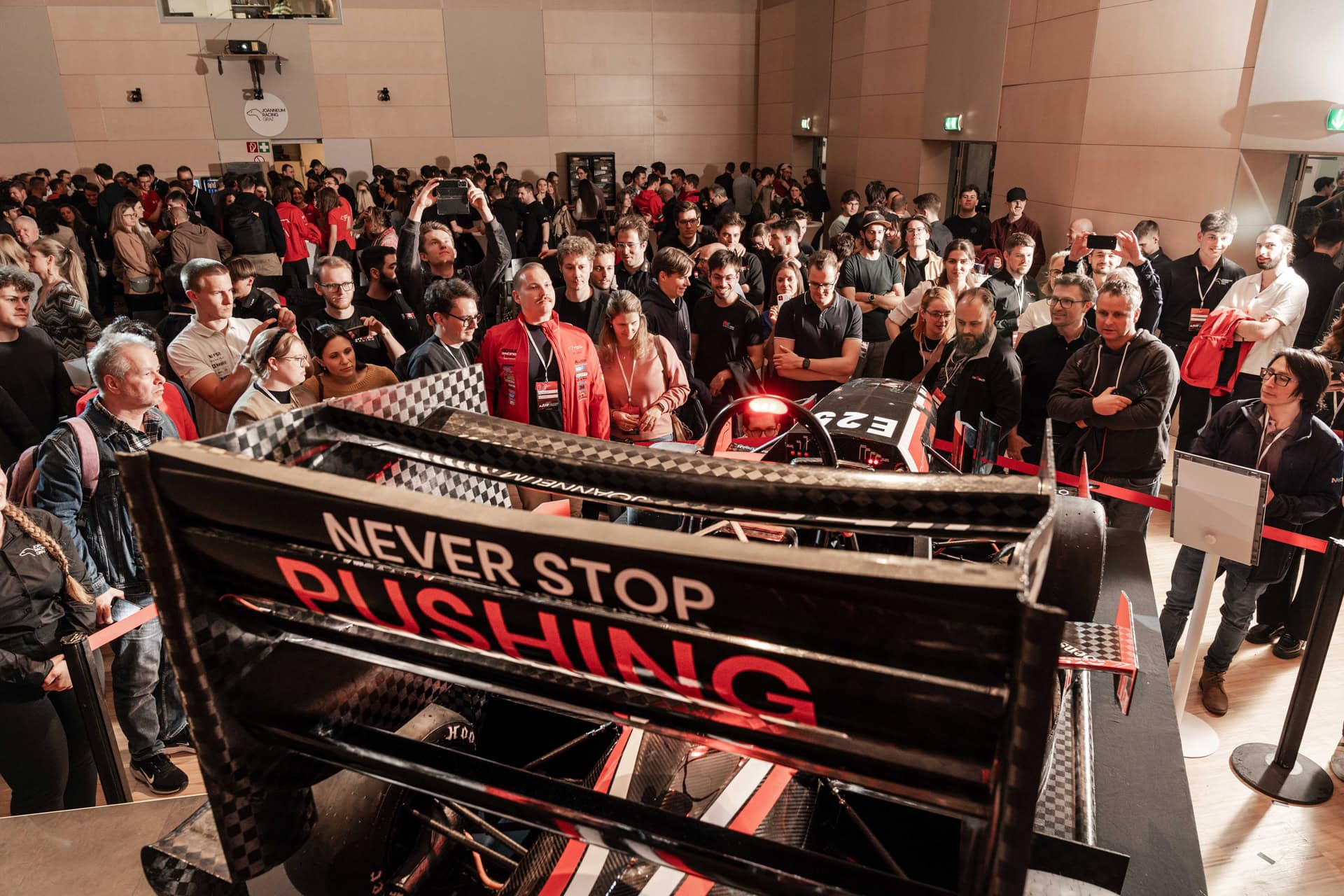
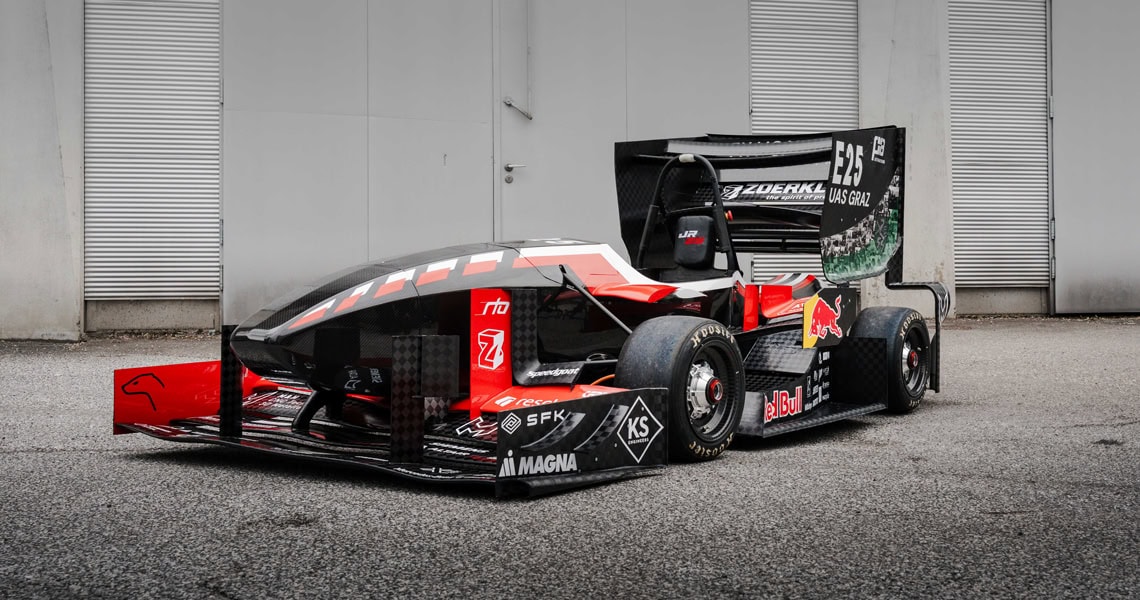
In the 2024 racing season, the Joanneum Racing Graz team achieved an outstanding second place in the Formula Student Electric world rankings. This year, the Weasles – as the FH Joanneum racing team calls itself – will be competing in three Formula Student competitions: in Assen (Netherlands), at the Spielbergring (Austria) and in Most (Czech Republic). The race car for the 2025 season was unveiled at FH Joanneum on 9 May. It is the fourth electric race car built independently by Joanneum Racing Graz. Technically, it differs from its predecessor with a new battery and an advanced aerodynamic design.
Since its foundation in 2003, Joanneum Racing Graz has been one of the largest student projects at FH JOANNEUM. The team is reconstituted each year and consists of students from the Bachelor's and Master's programmes in Automotive Engineering as well as other programmes who take on tasks in areas such as electronics, manufacturing, public relations and design. Within one year, a racing car must be designed, engineered and built in accordance with the Formula Student regulations. The team enters this racing car in the Formula Student design competition, in which over 700 teams compete annually on various race tracks around the world.