


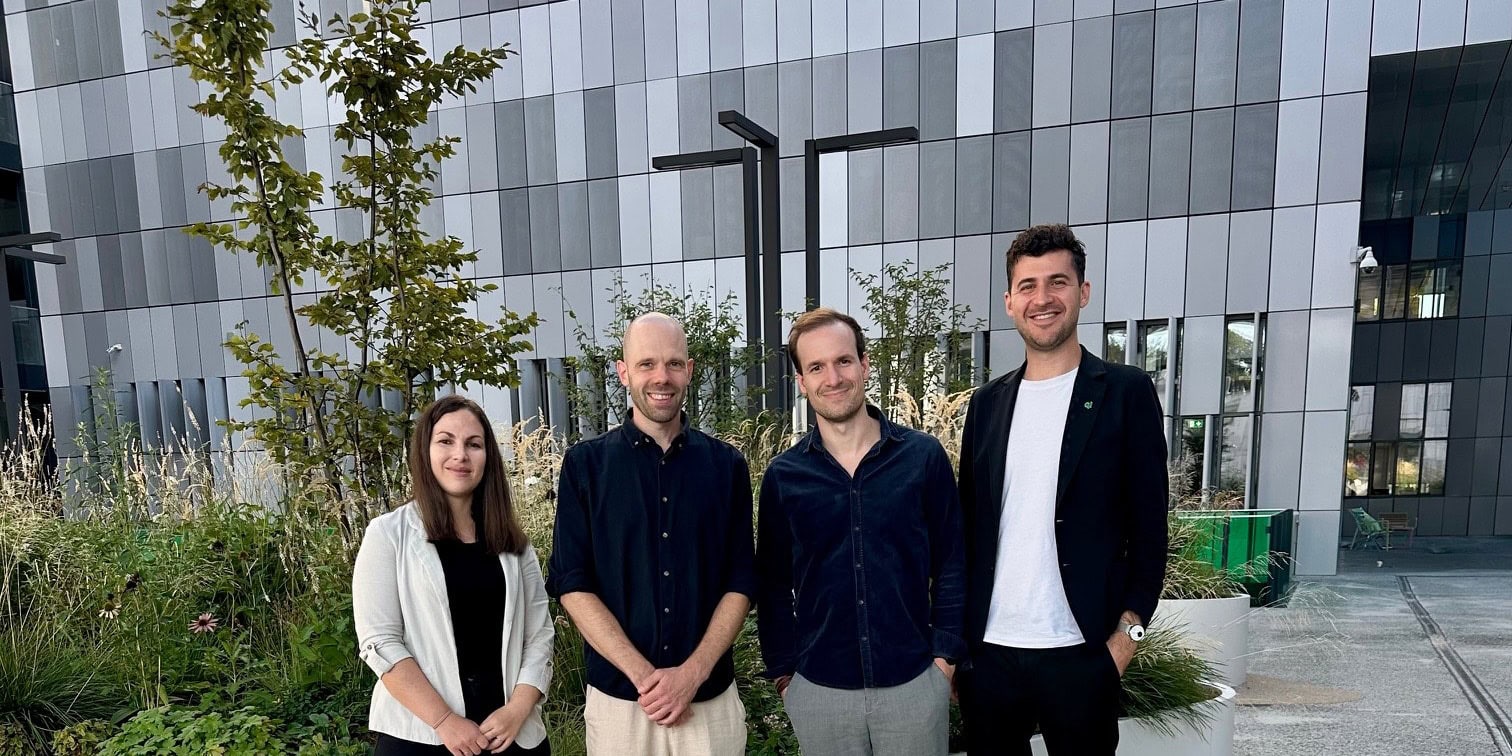
The LinkCompanion kick-off meeting took place recently. During the meeting, the project partners laid the foundations for their collaboration over the next two years and agreed on the next steps for development, piloting and scientific evaluation. The project manager on behalf of JOANNEUM RESEARCH HEALTH is Stefan Hochwarter.
The project stems from a specific gap in care: around one in five consultations in Austrian primary care has a psychosocial or emotional cause. These include, for example, loneliness or financial pressures. This is where Social Prescribing comes in. The approach complements medical care by connecting patients with suitable non-medical services in their local area, such as counselling centres, organisations or neighbourhood initiatives.
Digital support for link workers
So-called ‘link workers’ play a key role. Together with patients, they identify their needs and goals and refer them to suitable services. In practice, however, this work involves a considerable amount of organisational effort. Building networks, managing contacts and keeping records can take up a large proportion of their working time, particularly in the initial phase.
LinkCompanion is designed to address precisely this issue. The planned platform is intended to support the monitoring of objectives and continuity of care, to record and document regional services in a semi-automated manner, and to facilitate collaboration between those involved.
Digital support is explicitly intended to complement face-to-face support. In semi-automated processes, human oversight remains a key feature. This principle is known as ‘human-in-the-loop’: digital systems support work processes, but decisions are still reviewed or made by people.
Development in collaboration with practitioners
The platform is being developed in collaboration with its future users. Link workers, healthcare professionals, patients and their relatives are being involved in the development and testing process. A pilot scheme is planned across three to five primary care units.
From a scientific perspective, the project combines qualitative methods such as workshops and interviews with quantitative approaches. These include usage data as well as validated assessment tools, such as the UCLA Loneliness Scale. Among other things, the project is investigating the organisational, professional and technical conditions under which a digitally supported social prescribing model can be established on a long-term basis within the Austrian primary care system.
Issues relating to digital inclusion, data protection and the varying organisational requirements at the participating sites are also taken into account from the outset.
National and international expertise in the project
LinkCompanion receives scientific support from the Academy for Ageing Research at the Haus der Barmherzigkeit and the Centre for Public Health at the Medical University of Vienna. A project advisory board also contributes national and international perspectives. Plans include collaboration with the Karolinska Institutet in Sweden and the Norwegian Centre for E-health Research.
From a pilot scheme to a transferable model
By September 2028, a tried-and-tested digital companion platform, an implementation guide and a knowledge transfer network are to be established. The findings should not be limited to the participating pilot sites. A key research objective is therefore to determine which elements of the model can be transferred to other regions and primary care units, and what adjustments are required to achieve this.
Learn more
With Maximilian Schwarz and Ian Langner of Gesundheit Österreich GmbH (GÖG)
LinkCompanion is funded by the EU and is being implemented on behalf of Gesundheit Österreich GmbH (GÖG) as part of the call for practice-oriented applied research projects within primary care research networks. It will run from October 2026 to September 2028.