- About us
- Research fields
- DIGITAL – Institut für Digitale Technologien
- MATERIALS – Institut für Sensorik, Photonik und Fertigungstechnologien
- ROBOTICS – Institut für Robotik und Flexible Produktion
- COREMED – Zentrum für Regenerative Medizin und Präzisionsmedizin
- HEALTH – Institut für Biomedizinische Forschung und Technologien
- LIFE – Institut für Klima, Energiesysteme und Gesellschaft
- POLICIES – Institut für Wirtschafts-, Sozial und Innovationsforschung
- Business areas
- Products & services
- Research infrastructure
- Beteiligungen
- Career
- Aktuelles
- Publications
- Kontakt zu uns



LeddsResycl
RUNNING TIME:
01/2025
—
06/2025
Total project duration:
6 months
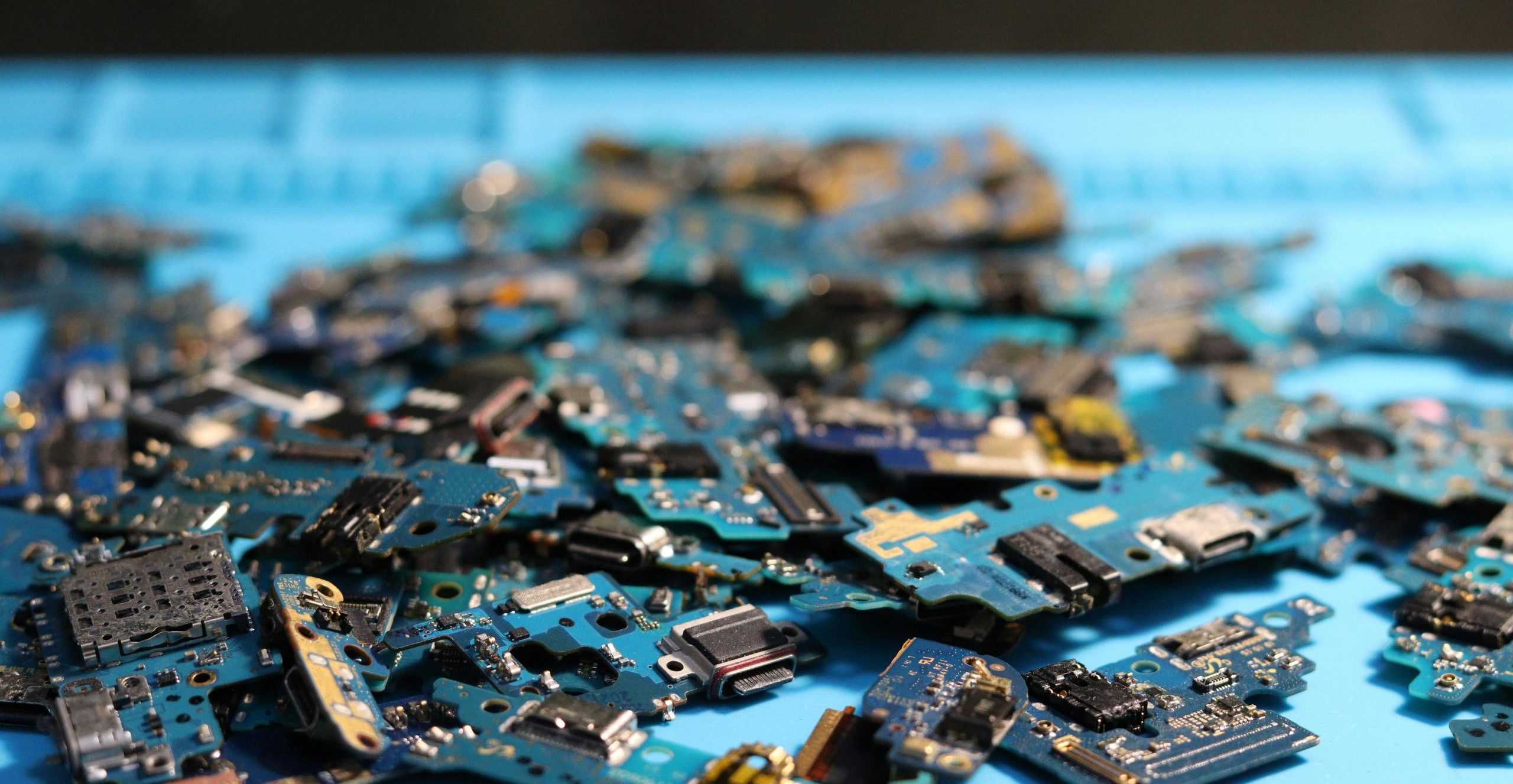
Example image of second-hand printed circuit boards. Photo: pexels/Vlad
The project
The LeddsResycl project developed an AI-based solution for detecting components on printed circuit boards and classifying defects and reusability. This is a crucial contribution to reducing electronics waste and foster circularity. The innovative approach combines two methods: the precise detection of rare defects with little training data (few-shot learning) and the use of synthetically generated training data for underrepresented defects.
Tests have shown that the use of synthetic data improves the distinction between damaged and intact components. AI-based detection also supports the identification of incorrect or unannotated data. Possible areas of application range from recycling to industrial quality control. LeddsResycl thus makes a concrete contribution to the circular economy, the conservation of resources and Europe's technological sovereignty.
Our activities in the project
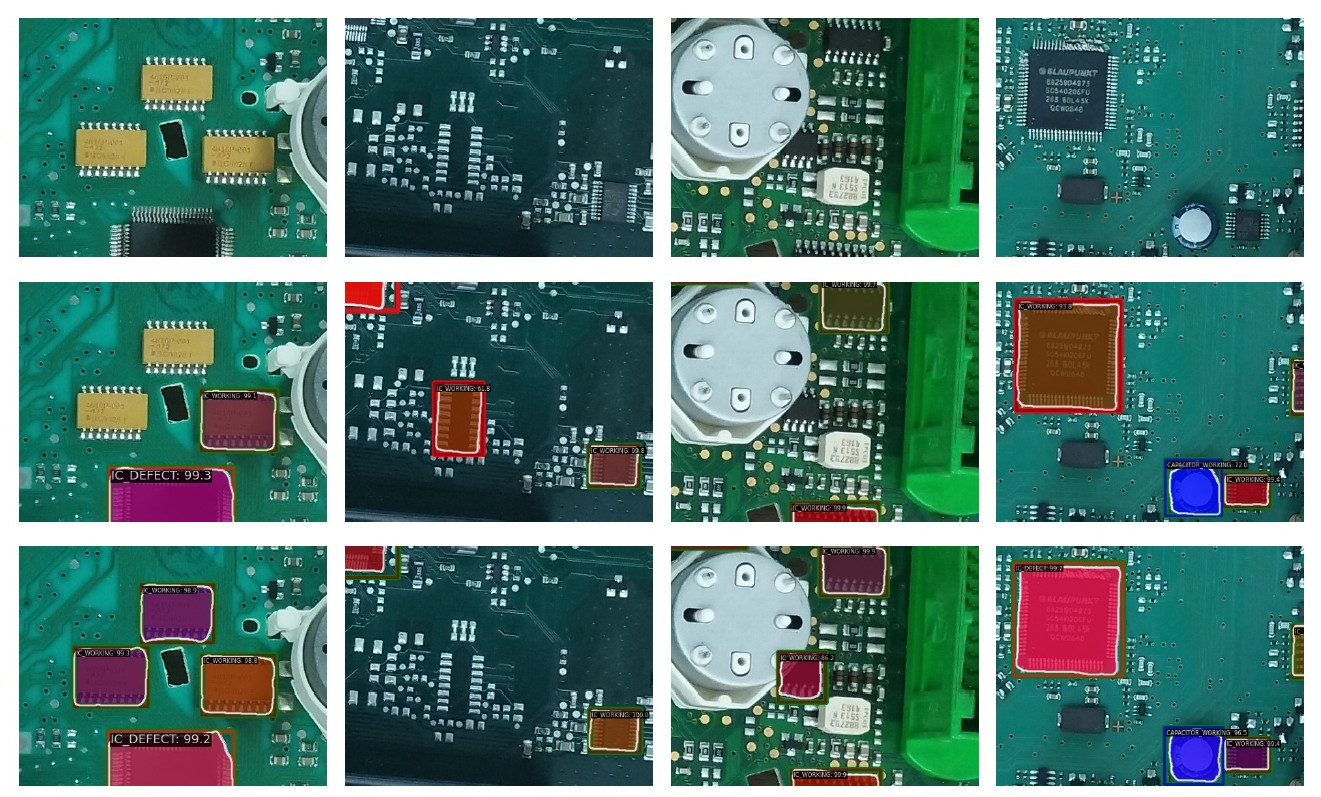
JOANNEUM RESEARCH has developed methods for detecting electronic components in images and classifying them according to defects. Our experts are working with a dataset for printed circuit board inspection provided by the ENFIELD project, which contains a number of burnt ICs with visible black spots on their surfaces, as well as a number of ICs with broken and fused pins. The synthetic defects result in dark burn marks on the ICs and cause pin deformations. The copy-and-paste extension requires cropping – for example, of a single IC from a new image – annotating it and saving it to the library. Furthermore, annotation using pre-cropped content can be carried out efficiently using models such as SegmentAnything.

Research groups
Downloads
Customers
European Commission (ENFIELD Project Cascading Grant)
Project partners
Project details
LeddsResycl addresses the use case of printed circuit boards (PCBs) being disassembled at the end of their useful life in order to recover reusable components from the boards while discarding defective parts. This requires a system for identification and classification of PCB components, which is a classical object detection problem, except that there are only very few samples of defective parts available for training.
Training samples of defects are typically rare and often defects of the same component type often exhibit significantly different appearances. There are even fewer samples for any given failure mode. In the project we developed and evaluated two data augmentation techniques to deal with low-volume datasets in the application of printed circuit board inspection. The first approach automatically synthesizes defects on annotated instances of intact objects, the second is a variant of copy-paste augmentation, which enables continuous improvement of the model with little effort.
Using the above data augmentation steps in training improves the performance in all cases. The copy-paste augmentation shows some weak gains, even if mainly the challenging samples from the training set are repeated. However, with additional out-of-distribution samples pasted into existing training images, further significant gains can be achieved, indicating that this is indeed a viable way of extending the training data via online feedback. Overall, the augmentation strategies manage to improve the already strong mAP scores from 78.4 to 89.1 on the dataset of the ENFIELD project, thus making the automatic PCB inspection system a viable approach in the intended use case.
Funding organisation

The LEarning Defect Detection from Samples with REduced size and SYnthetiC Labelled data (LeddsResycl) has received funding from the European Union, via the oc1-2024-TIS-01 issued and implemented by the ENFIELD project, under the grant agreement No 101120657.
Projektbeteiligte
Related projects
SHAPING THE FUTURE, TOGETHER
JOANNEUM RESEARCH provides innovation and technology services in the field of applied research. As a research company working on behalf of various federal provinces and regions in Austria, our expertise shapes the development of our modern society and economy – sustainably, and always with a focus on people. As a multidisciplinary team working in a flexible set-up that fosters innovation, we always live up to the highest social and scientific standards.