



Defect.AI Defect.AI researched basic technologies for data-efficient training of visual defect detection methods. They use recent advances in machine learning such as foundation models, which are pre-trained in a self-supervised manner on large unannotated data sets and are then adjusted to a specific task using transfer learning. The work confirms the suitability of foundation models (like SWIN or other vision transformers) for defect detection tasks, especially in small dataset scenarios. An important aspect in media use cases is the capability of multi-image detection. Robustness of defect detection can be massively increased by using multiple consecutive images of a film or a video during the training and the inference process. By this approach temporal properties of defects can be taken directly into consideration by the model.
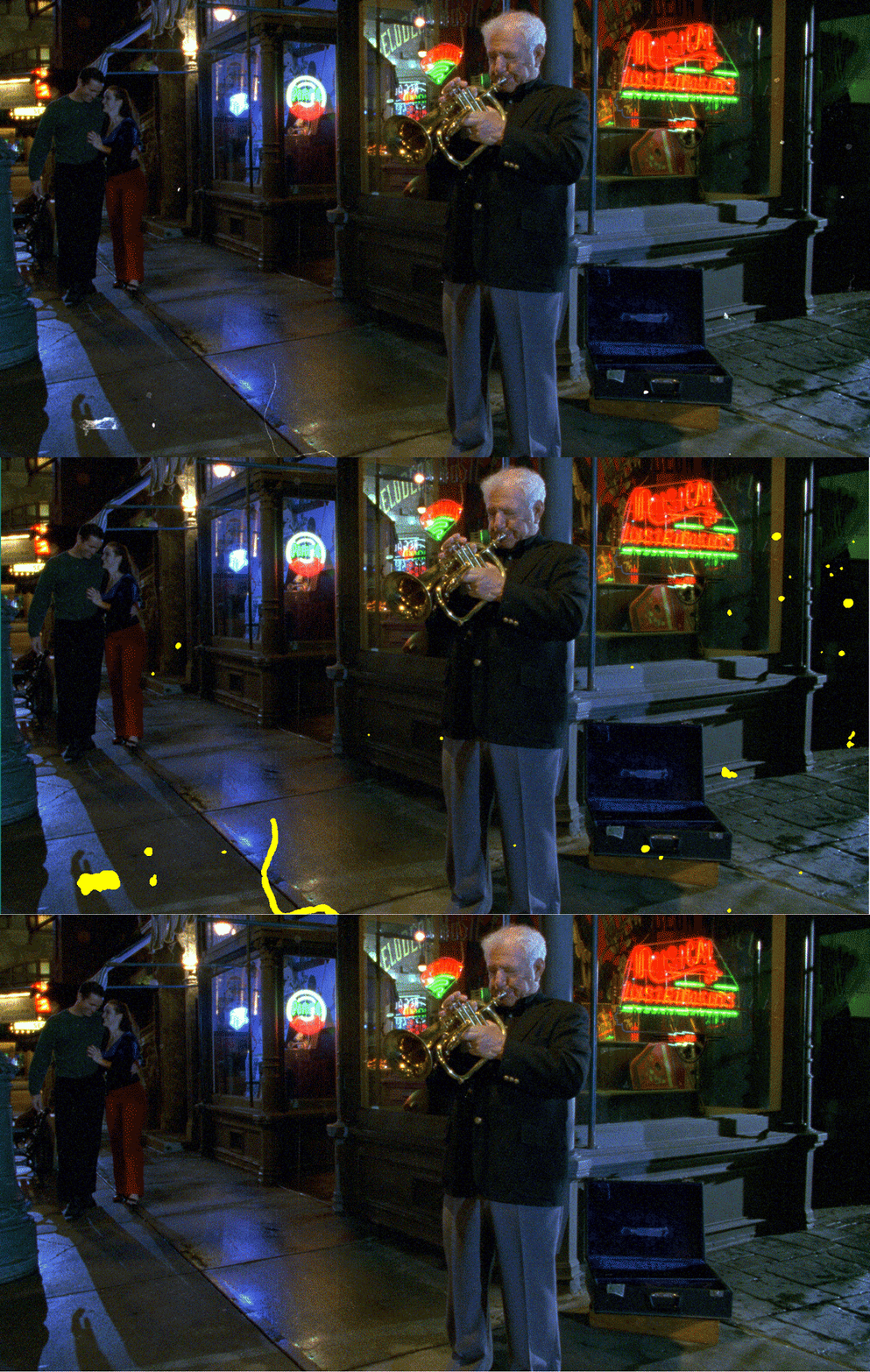
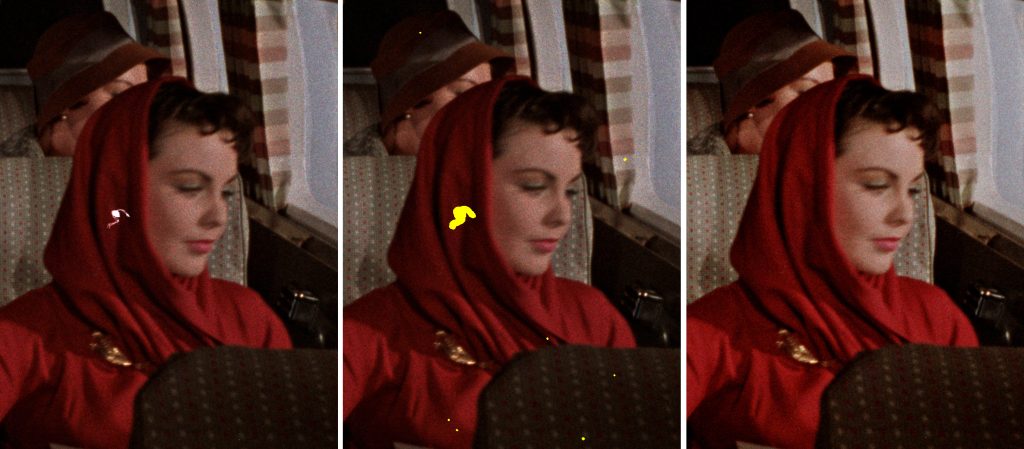
The following images show an example of single frame defects originating from dust and dirt on film (original image on the left), where defect detection (the detected defect region is shown in the middle) is the first and crucial step for subsequent digital film restoration (restored image is shown on the right).
Another important aspect is to capture the expert knowledge embedded in existing handcrafted detectors. Knowledge distillation is used to learn this specific knowledge, at scale and without requiring manual annotation. This legacy knowledge captured in a detection model can then be fine tuned with expert annotated, high-quality knowledge, where only a very low amount of expert annotated samples is required.
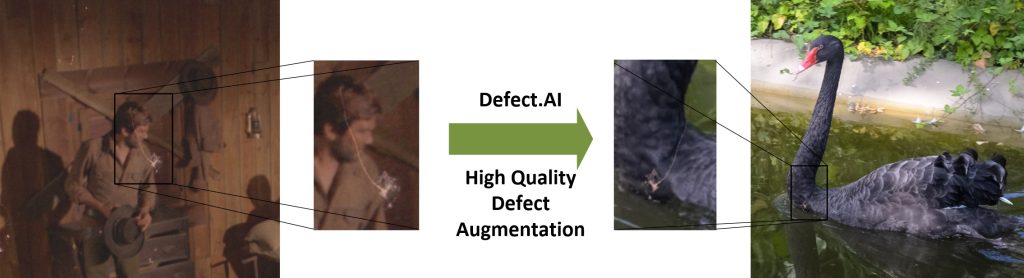
When there are only a few examples available, it is important to be able to supplement the data with high-quality examples. For this we researched methods to extract defect samples from an original image into an intermediate defect’s representation, and to generate from them a high number of defect samples on target images with various relevant content properties (like various motions, luminance…) and various other defect properties (e.g. different film grain noise), while at the same time preserving the original appearance of the defect. The following pictures show the original image with a defect contained the extracted defect sample area, the augmented high quality target defect area and the entire target image containing the augmented defect. Augmented defect samples are extremely helpful to train or fine tune a defect detection model for cases where only a small set of original defect samples or content properties is available.
The researched methods incorporating fine-tuning of foundation models with a multi-image approach and highest quality defect augmentation is a very efficient solution for defect detection, especially in small dataset scenarios.