



• Menu menu
  • menu Menü öffnen
Projects -  
Digital

WETSAFE

RUNNING TIME:

10/2024

11/2025

Total project duration:

14 months

Effective detection of hazardous sections on motorways during heavy rainfall events
Überschwemmung Autobahn A2

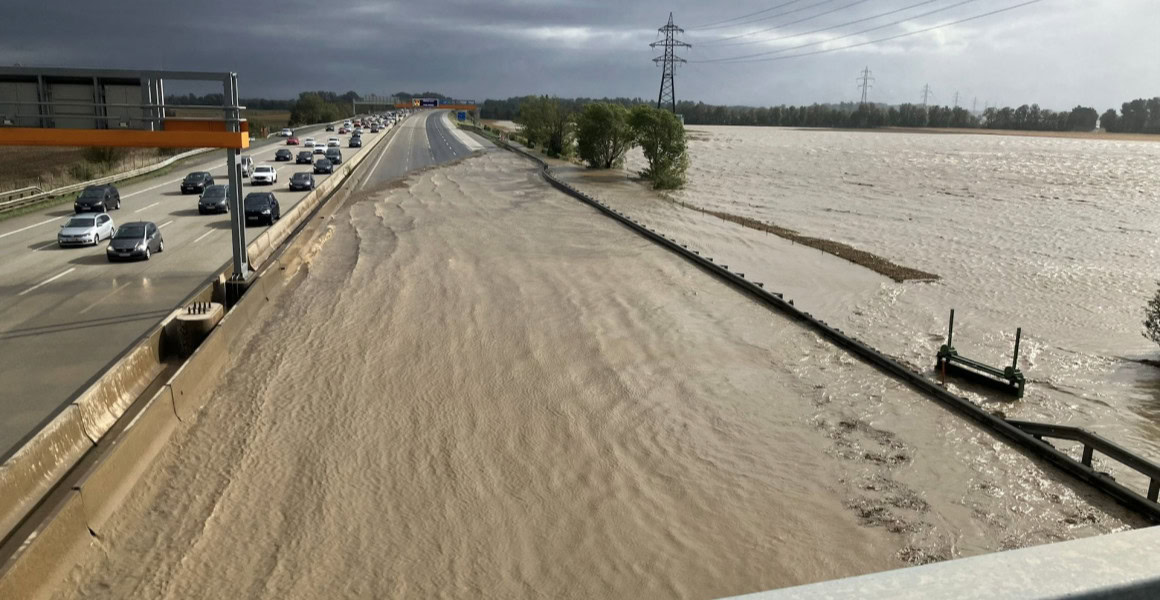
Flooding on the A2 between the Guntramsdorf and Wiener Neudorf junctions, in the direction of Graz. Photographer: Laxenburg Volunteer Fire Brigade.

The project

As a result of climate change, heavy rainfall events pose a growing challenge to road safety and the availability of high-grade road infrastructure. On motorways in particular, where speeds are high, localised water accumulation, aquaplaning and unexpected water flow patterns can lead to safety-critical situations. The WETSAFE project aims to develop an effective and robust methodology for identifying and assessing hazard spots during heavy rainfall events, as well as for supporting appropriate behaviour on the part of road users and (partially) automated vehicles.

Our activities in the project

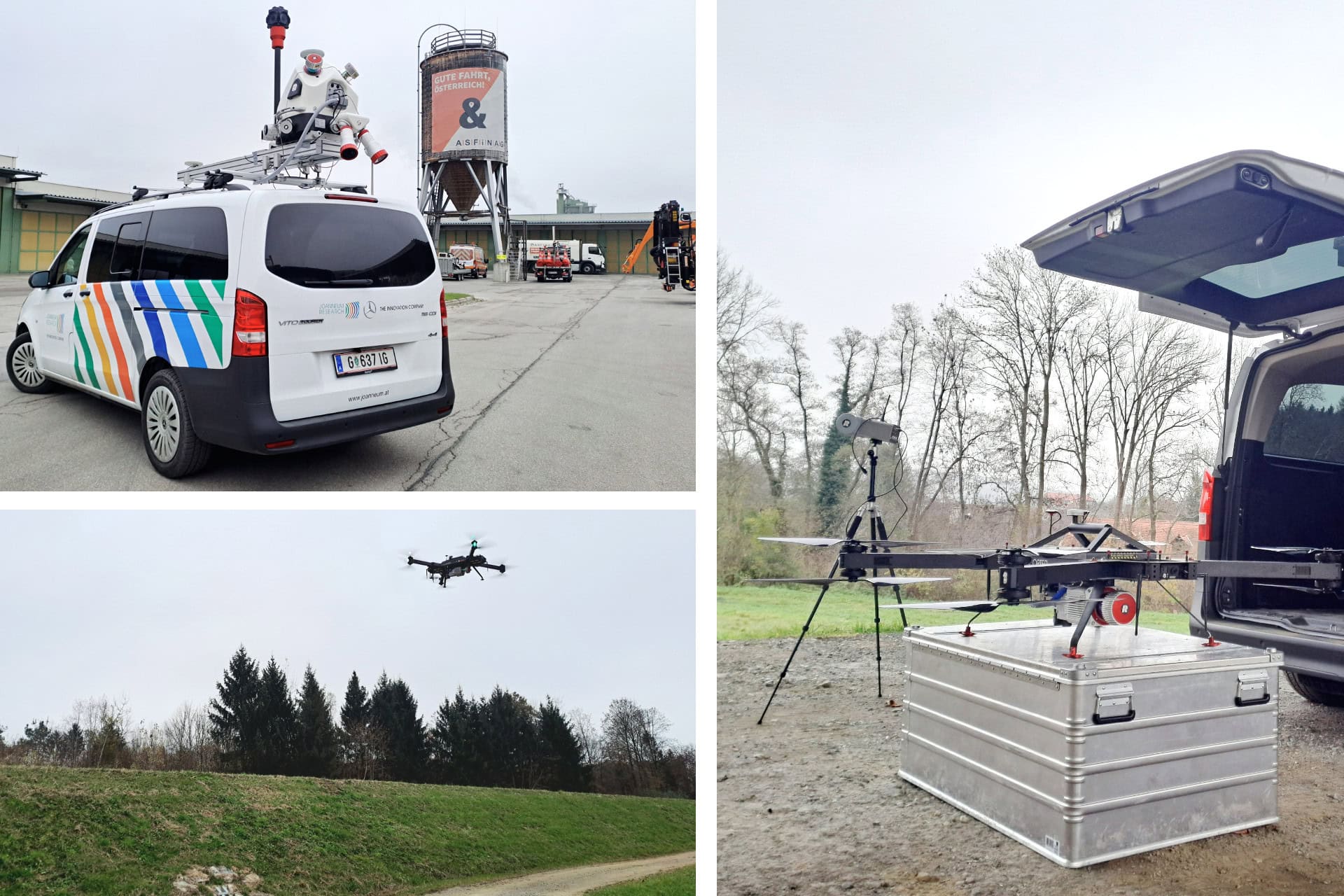
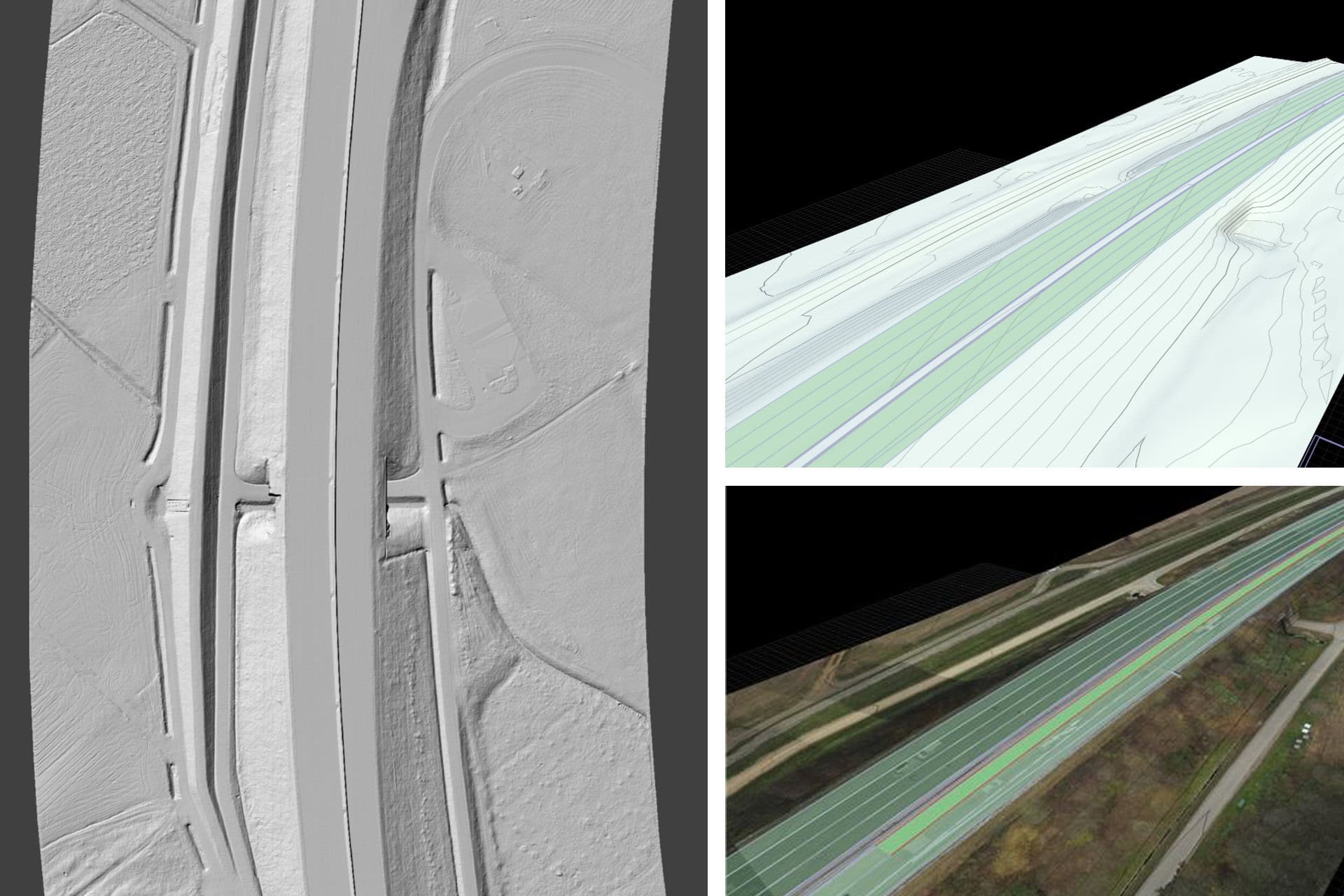
As part of the WETSAFE project, JOANNEUM RESEARCH’s Digital Twin Lab took on the role of consortium leader and carried out high-precision 3D scanning of a motorway section defined by ASFINAG and its surroundings using airborne and mobile laser scanning. Based on a detailed survey plan and taking into account hydraulically relevant structures such as carriageways, crash barriers and terrain features, a high-resolution, simulation-ready spatial digital twin was created.

In addition to processing the point cloud, the measurement data was used to generate a digital terrain model, orthophotos and OpenDRIVE data for the roadways, which were then prepared for subsequent simulations.

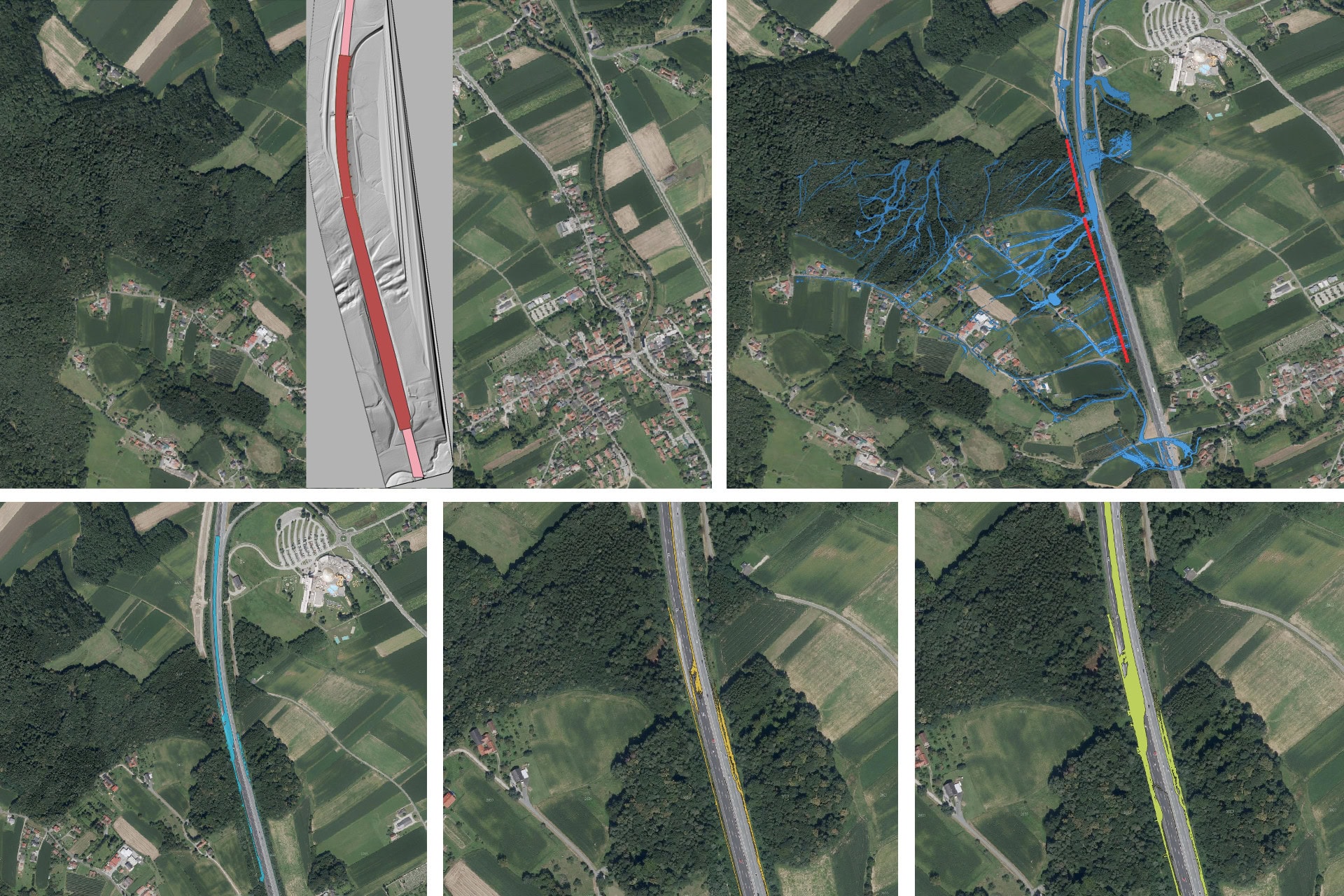
The combination of this high-resolution digital twin with hydrological and hydraulic models made it possible, for the first time, to carry out a realistic analysis of rainfall events, taking into account surface runoff as well as inflows and outflows from the surrounding terrain.

Dieses Projekt wurde im Rahmen des Programms Verkehrsinfrastrukturforschung 2023 (VIF 2023) durch die Österreichische Forschungsförderungsgesellschaft (FFG) gefördert (Projektnummer: 5124407). Auftraggeber: Bundesministerium für Innovation, Mobilität und Infrastruktur (BMIMI) und Autobahnen- und Schnellstraßen-Finanzierungs-Aktiengesellschaft (ASFINAG).

GeoSphere Austria
flussbau IC GmbH
Salzburg Research Forschungsgesellschaft mbH

Project details

The WETSAFE project developed an effective and robust methodology for the early detection and assessment of safety-critical hazard spots on motorways resulting from heavy rainfall events. The aim was to support road safety and the availability of high-priority road infrastructure, even in the face of increasing climate-related extreme events. The focus was particularly on local risks such as aquaplaning, water accumulation and unexpected flow paths, which are often not immediately apparent to road users or vehicle systems.
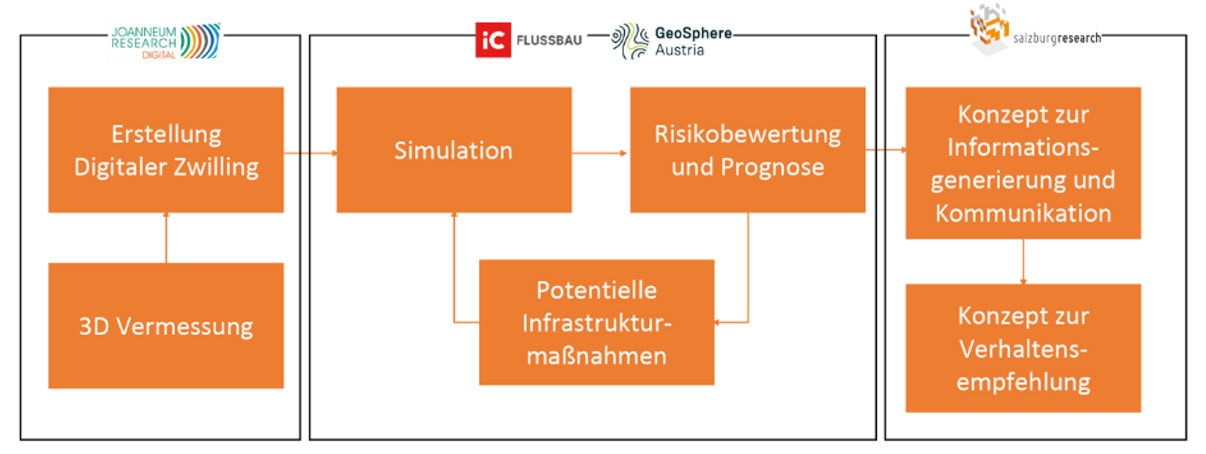
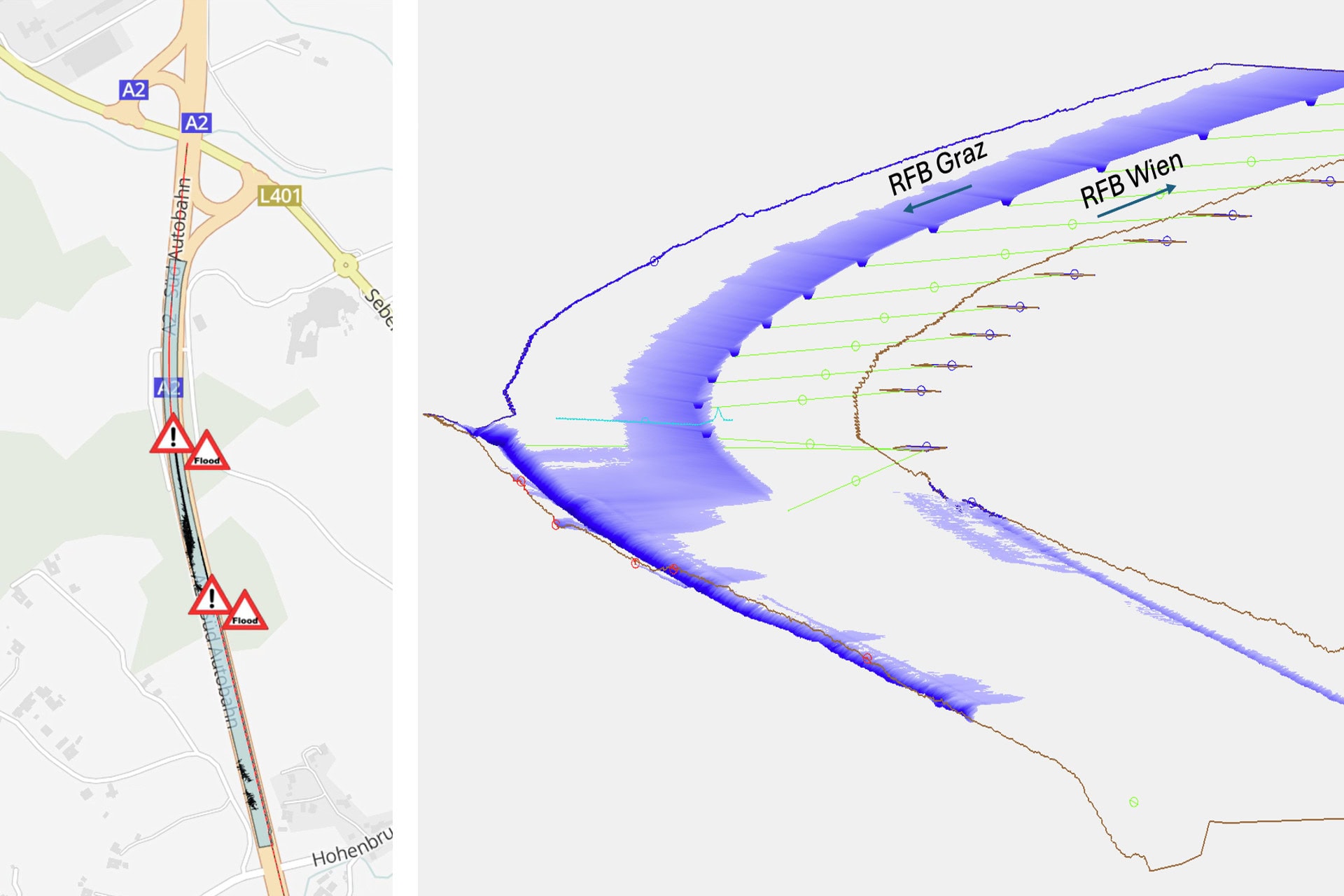
At the heart of the project is the combination of a high-resolution digital twin of the motorway and its surrounding area with hydrological and hydraulic simulations. This has made it possible, for the first time, to realistically account not only for the effects of rainfall on the carriageway itself, but also for inflows and outflows from the adjacent terrain. The simulations showed that critical hazard points arise primarily from the interplay of several factors and are often highly localised. Using the methodology developed, these hazards can be identified down to the level of individual lanes or road sections; within the project, they were consolidated into reliable, section-specific risk zones, which form a robust basis for warning and decision-making processes.

Based on the simulation results, the study also examined how warnings about specific road conditions can be integrated into existing information and communication systems (C-ITS). It emerged that warnings about water on the carriageway or unexpected water flow paths are particularly effective, whilst general heavy rain warnings offer only limited added value. The project results demonstrate that suitable message types and parameters are already available in principle within existing standards and can be utilised for operational implementation.




Funding organisation

Dieses Projekt wurde im Rahmen des Programms Verkehrsinfrastrukturforschung 2023 (VIF 2023) durch die Österreichische Forschungsförderungsgesellschaft (FFG) gefördert (Projektnummer: 5124407). Auftraggeber: Bundesministerium für Innovation, Mobilität und Infrastruktur (BMIMI) und Autobahnen- und Schnellstraßen-Finanzierungs-Aktiengesellschaft (ASFINAG).

Projektbeteiligte

Related projects

Skip to content
