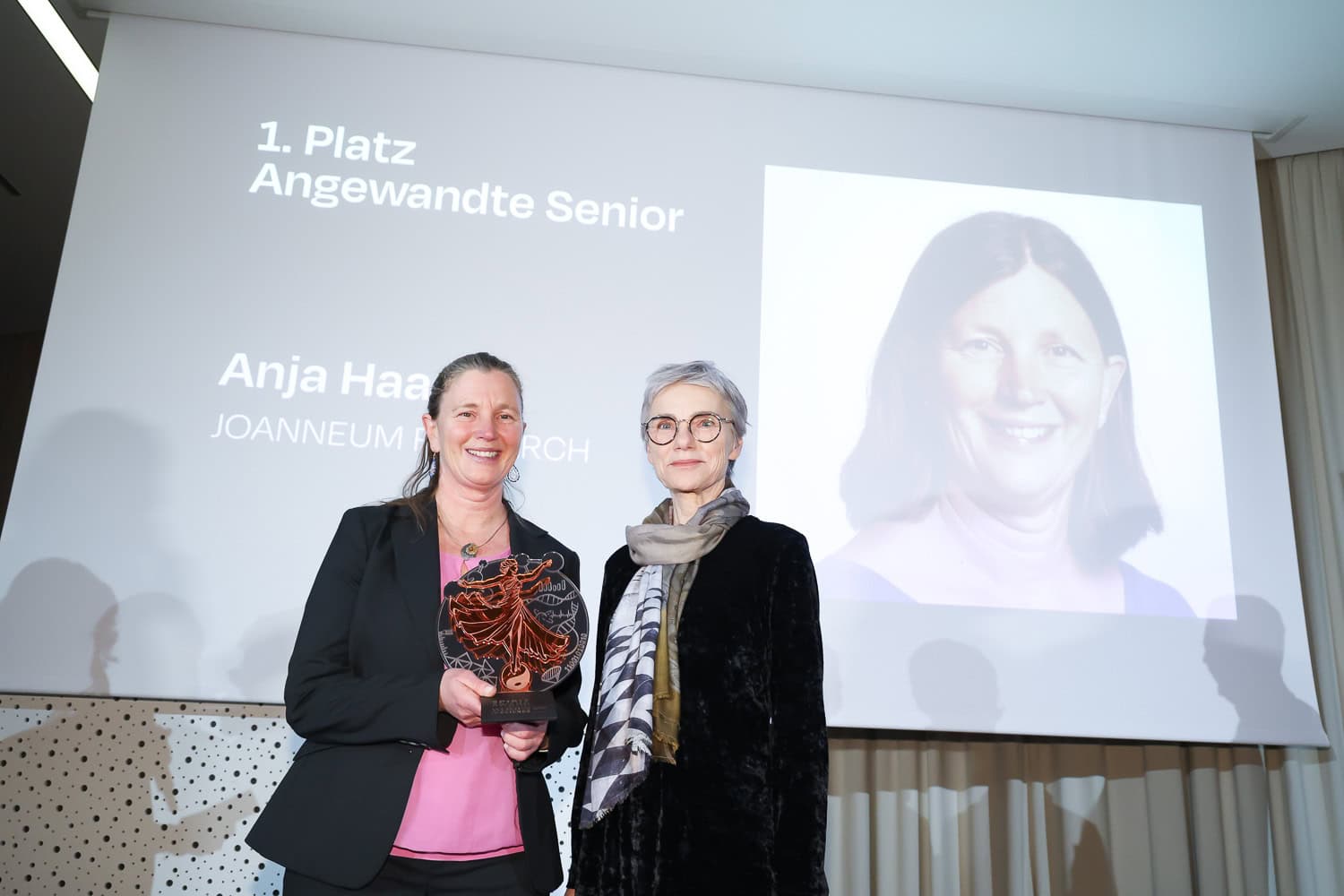


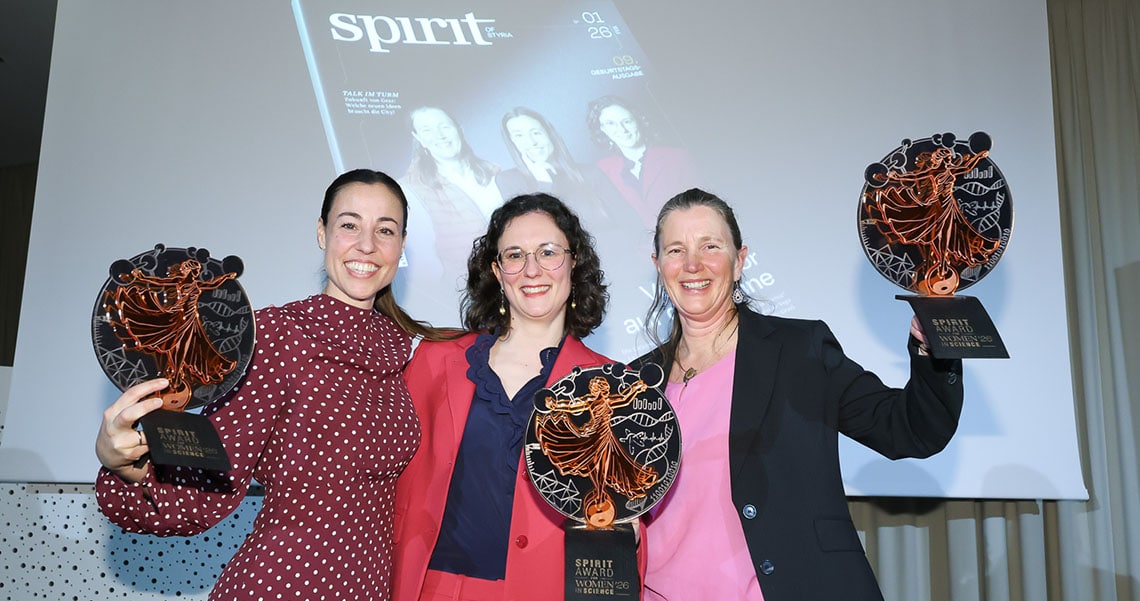
Anja Haase of MATERIALS received the award for developing a novel diagnostic system that enables laboratory tests to be carried out directly on site with patients – without electricity, without cumbersome equipment, without laboratory infrastructure.
The future of diagnostics: fast, mobile, precise
As part of the EU project FORTIFIEDx an international consortium involving three Styrian research institutions is working on a microfluidic patch that enables precise on-site diagnostics. The system detects sexually transmitted and highly infectious diseases such as HIV or syphilis without the need for laboratory equipment. A finger prick is all it takes to trigger the test: capillary blood is painlessly collected and automatically directed through a closed channel system for analysis.
Diagnostics made in Styria: production technology from Weiz
The microfluidic chips are manufactured at the Weiz site using a roll-to-roll process. JOANNEUM RESEARCH relies on UV nanoimprint lithography, an efficient technology for producing diagnostic components on a large scale, cost-effectively and with high precision. ‘We integrate biofunctionalisation and sealing of the parts directly into the manufacturing process,’ explains Anja Haase. ‘This makes the solution industrially scalable and allows the diagnostic system to be put into use quickly.’
Mobile diagnostics with social added value
The mobile diagnostic platform is designed to function reliably even in remote regions or crisis areas. It is currently being validated for several infectious diseases and can be used both in everyday situations and in emergencies. The project also covers ecological aspects: in a life cycle analysis, the LIFE institute of JOANNEUM RESEARCH evaluates the environmental impact of the system – another step towards sustainable diagnostics.
Scientific success with exemplary effect
The SPIRIT-Award for Women in Science honours Styrian researchers for their contributions to basic research and applied science. The award for Anja Haase shows how important innovations in diagnostics are for the future of healthcare – both locally and globally. The combination of technology, sustainability and social relevance makes her work a showcase project for applied research.