


An international research consortium is currently developing a novel diagnostic platform that will enable blood tests to be carried out directly on patients – without laboratory equipment, without a power supply and with a high degree of precision. Three research institutions in Styria are involved in the EU project FORTIFIEDx: JOANNEUM RESEARCH, the Montanuniversität Leoben and the Polymer Competence Centre Leoben.
The core component of this innovative diagnostic procedure is a microfluidic test strip that is activated with a simple finger press and automatically doses, processes and analyses capillary blood.
The researchers' idea is that blood samples are taken using tiny needles that penetrate the skin painlessly and extract a defined amount of capillary blood. This is precisely dosed, mixed and directed to various detection zones in a closed microchannel system. Valves inside the test system control the flow purely mechanically – without any external pump or power supply. This makes the system particularly robust and mobile.
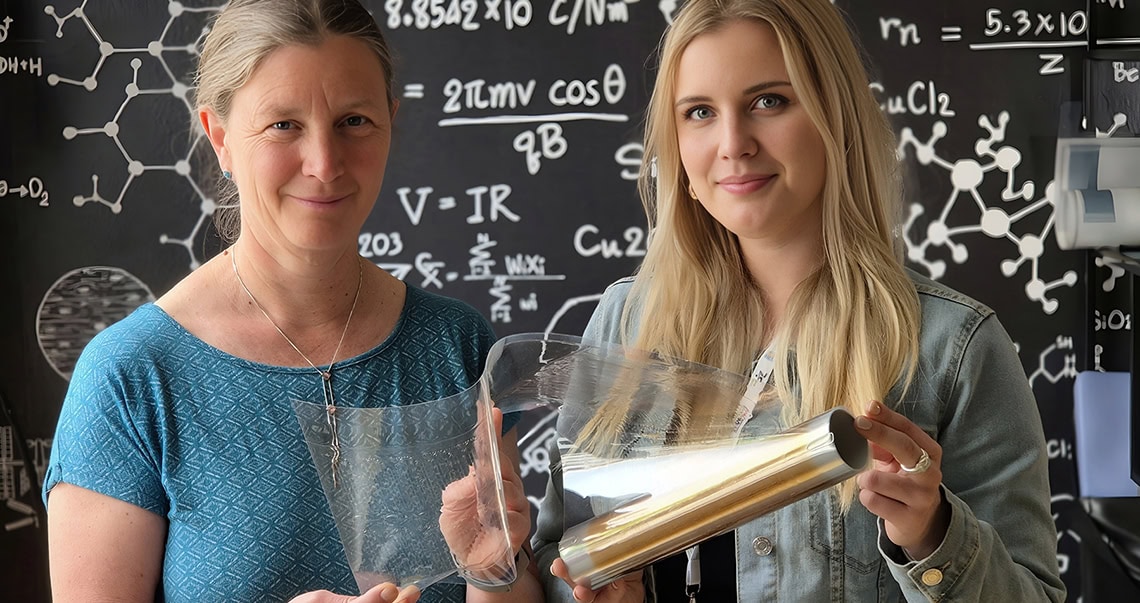
The rapid test is manufactured using a roll-to-roll process involving UV nanoimprint lithography. JOANNEUM RESEARCH in Weiz (MATERIALS – Institute for Sensors, Photonics and Production Technologies) specialises in this field.
Anja HaaseAnja Haase, project manager at JOANNEUM RESEARCH, explains the advantages: ‘This process enables parallel micro- and nanostructuring over large areas, with a high throughput rate and low unit costs. We can integrate biofunctionalisation and sealing of the parts directly into the process. This makes industrial production efficient and the innovation scalable as a product.’
HIV, Syphilis, Ebola and Lassa
The system is currently being validated with tests for highly infectious and sexually transmitted diseases (e.g. HIV, syphilis, Ebola and Lassa). The intended scope of application ranges from daily routine diagnostics to crisis response in the event of outbreaks or in regions without laboratory infrastructure.
The COVID-19 pandemic has demonstrated how much diagnostic solutions are needed outside of central laboratories. With its portable, self-sufficient system, this project closes a diagnostic gap – both in public health care and in global emergency situations. At the same time, it strengthens European expertise in research and mass production of medical technology solutions. LIFE, the Institute for Climate, Energy Systems and Society at JOANNEUM RESEARCH, is conducting a life cycle analysis to calculate the environmental impact of the new rapid tests.
Consortium
KU Leuven (Coordinator), JOANNEUM RESEARCH (MATERIALS, LIFE), Montanuniversität Leoben, Polymer Competence Center Leoben, Instituut voor Tropische Geneeskunde, University College Cork – Nationael University of Ireland, Temicon, Zdalny Serwis, Centre National de Formation et de Recherche en Sante Rurale de Maferinyah