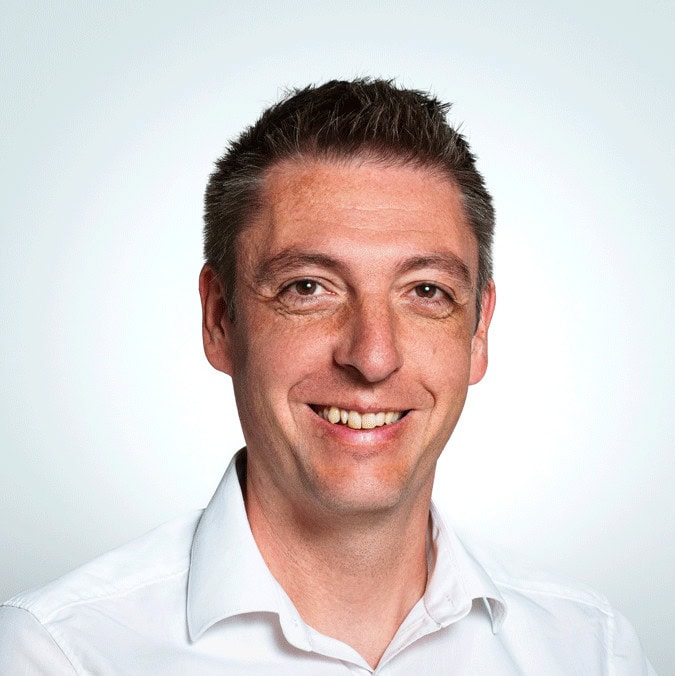



What does the HEALTH Institute do?
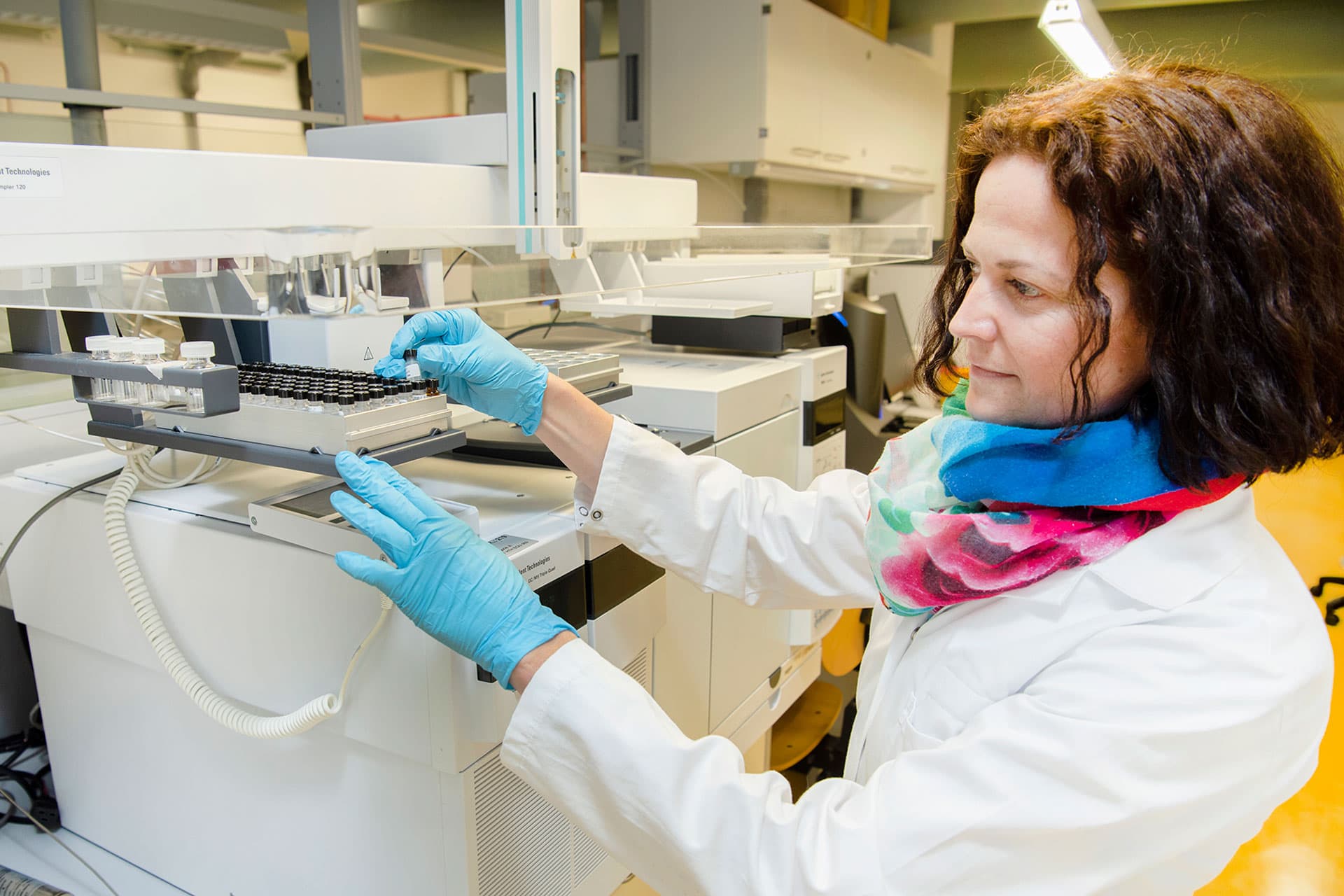
Feichtner: We are mainly involved in the development of methods for testing drugs and methods for testing biological processes. We carry out clinical and preclinical studies and develop analytical methods and biological models. And then we also have a smaller area in which we deal with the topic of ‘digitalisation in medicine and care’.
What are the trends in the field of biomedical research?
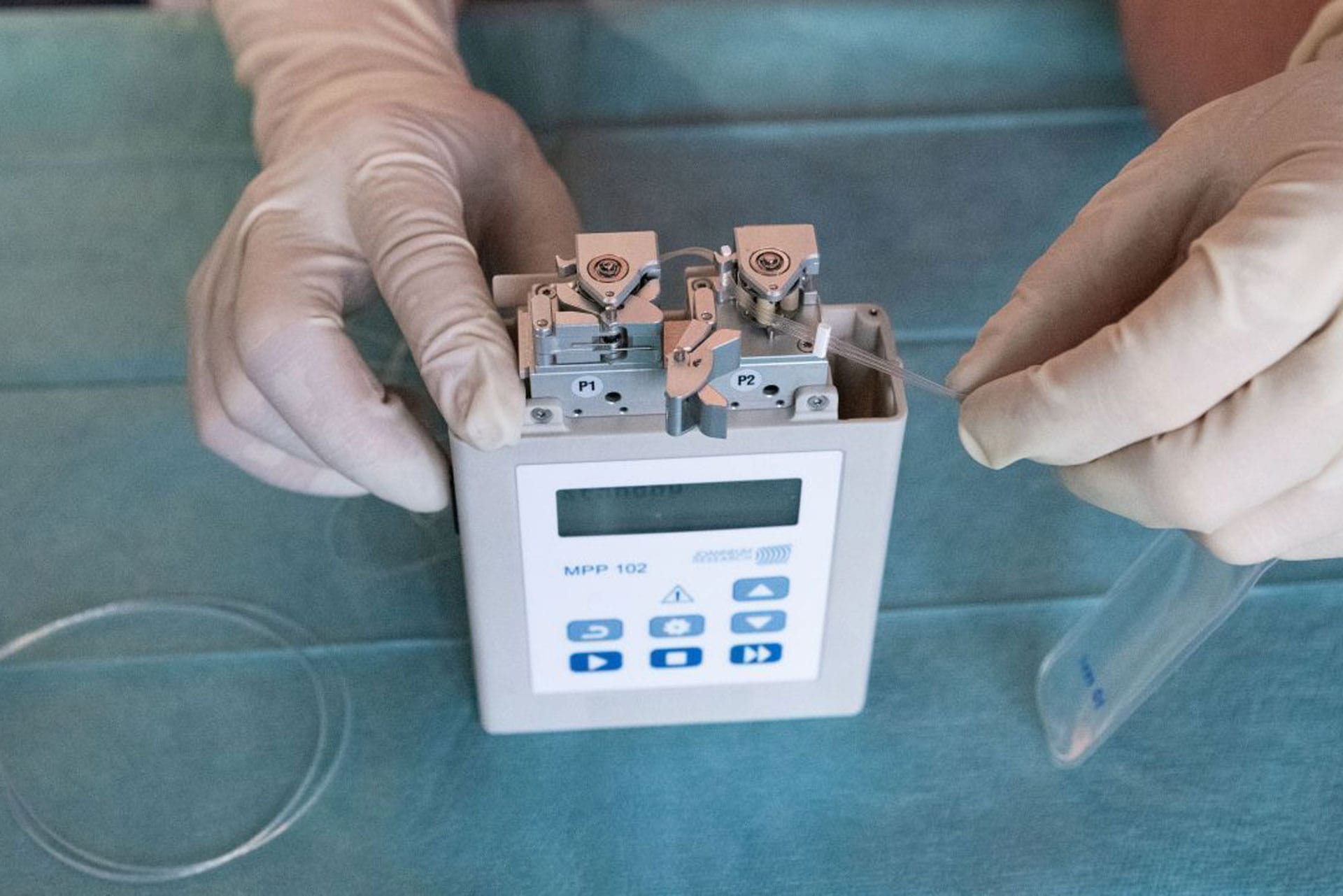
Feichtner: There are numerous trends, but one that we are also working on is making the administration of medicines more patient-friendly. An injection, for example, is not pleasant. That's why we are looking for alternatives that can be administered orally, for example. However, this requires overcoming a natural barrier: the gastrointestinal tract. There are now ingenious new methods to overcome this barrier. Active ingredients are encapsulated in nanoparticles and transport systems are developed in this way. We are researching whether the active ingredients actually arrive, what effect they have there and we are researching methods to prove the so-called pay-load of the particles, i.e. to determine how much active ingredient is encapsulated in the particle after production. Quality assurance is particularly important here, because in the end you need to know exactly how much active ingredient actually reaches the target, how the drug is released and what it does in the body. We can test these three stages at the institute using our various analytical or biomedical methods.
People are getting older and older and this is leading to new challenges for the healthcare system. To what extent is this a topic at HEALTH?
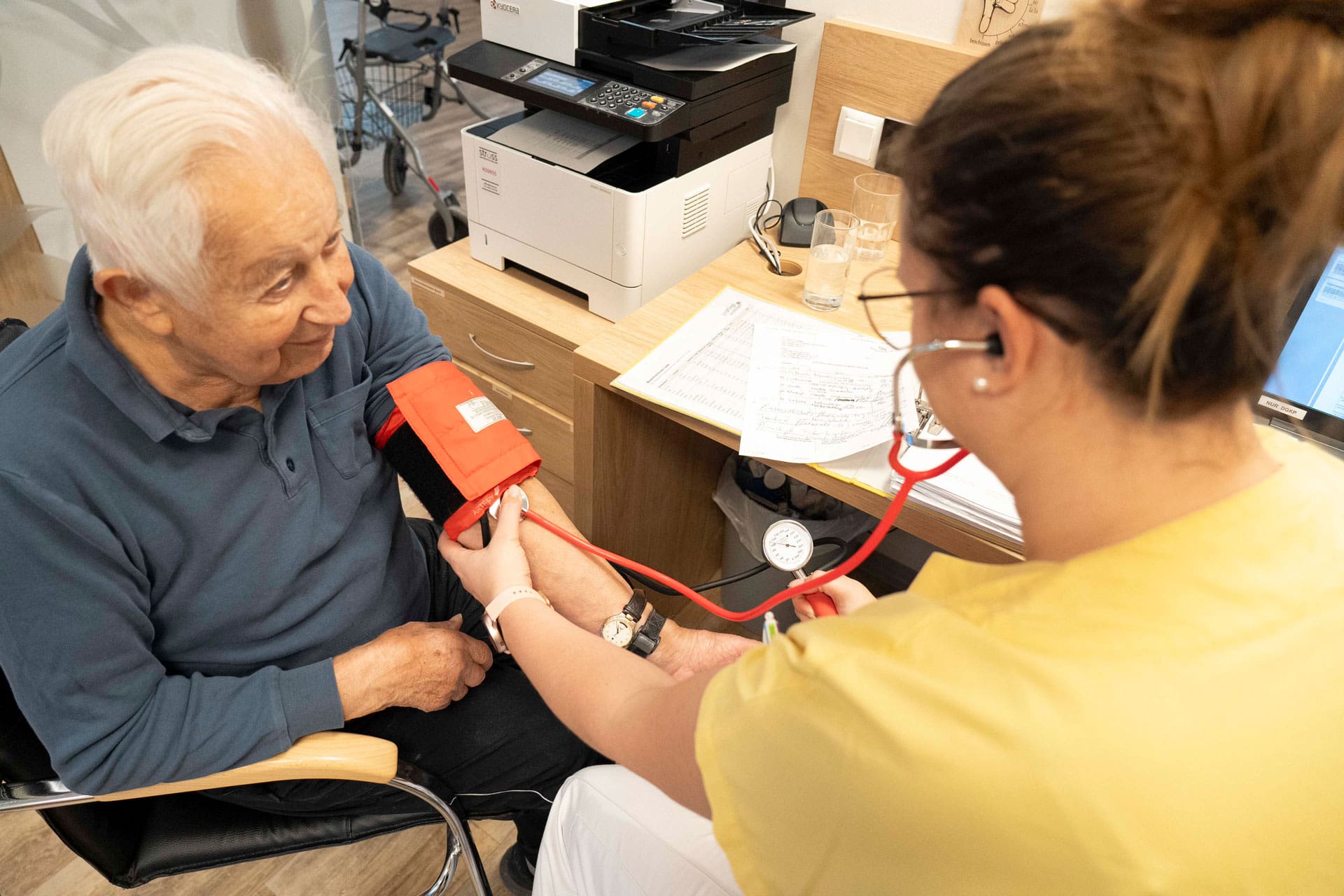
Feichtner: We are involved in various research projects on the subject of ageing. Ageing is often associated with neurodegenerative diseases. On the one hand, we support basic university research with our instruments in identifying mechanisms that are decisive for the occurrence of neurodegenerative diseases. On the other hand, we use these methods to support industry by determining whether drugs for neurodegenerative diseases actually reach the brain and what effect they have there. We are also addressing the issue of digitalisation in care: care is a very demanding, physically intensive job that requires a great deal of empathy. People work in care because they enjoy it and because they see their fulfilment in interacting with people. However, many nursing staff are frustrated in their working environment because they have to fulfil a lot of organisational, administrative and quality assurance measures that are stressful for them. And this is precisely what we are currently looking at in a project together with KAGes (Steiermärkische Krankenanstaltengesellschaft) and the long-term care facility Gepflegt Wohnen. The aim is to determine which of these measures are actually necessary and how digital solutions can simplify processes and support nurses so that they have more time for their work with people. In this way, we want to make a contribution to improving the quality of care, preventing people from leaving this profession and making the job more attractive again.
What are the strengths of the institute, what are the advantages for customers and business partners?
Feichtner: In comparison to universities, we are more concerned with the utilisation of basic research for application. We understand the requirements of industry, know the regulatory requirements and are also certified according to these. On the other hand, there are so-called contract research organisations (CROs), which are pure contract research institutes in the pharmaceutical industry and often have very well-timed and standardised processes. In contrast to these organisations, it is easier for us to take the special needs of our customers into consideration and to be able to act more flexibly. To a certain extent, we stand in the middle between pure basic research and industrial ‘high-throughput research’, but we know both worlds and that is one of our greatest advantages. The institute's greatest strength lies in the expertise of its employees and also in its ability to react very quickly to changing conditions.
What are your plans for the institute?
Feichtner: My primary goal is to lead the institute into a financially stable and professionally exciting, but still market-orientated future. In principle, I would like to proceed according to the principle of ‘strengthening strengths’. We have strengths in the laboratory, in biomedical research and in digitalisation, and I want to build on these. And where there is a use case in industry. In concrete terms: As I mentioned, there is currently a strong trend in the area of encapsulation processes for new active ingredients, as well as in increasing the bioavailability of active ingredients - for example in antibody therapies. These are future topics that will initially occupy us in funded research projects. We are trying to develop business models from this, which we can then offer as contract research projects together with our partners from the network. It is fundamentally important for me to further strengthen the Institute's position in our relevant academic and industrial networks in order to achieve a balanced mix of funded and contract research projects in the funding structure.
You have already mentioned digitalisation as an important trend. Are there any other examples of this from the institute?
Feichtner: Our expertise lies in the digitalisation of care processes in the healthcare sector, in the use of AI for decision support and also in prevention, which will play an increasingly important role in the Austrian healthcare system. One very exciting topic that we are working on intensively is the use of AI to identify risks and support decision-making. In a recently completed project, for example, we used data from healthcare facilities to predict individual, patient-related risks for falls, malnutrition or swallowing disorders. Digital assistance systems for medical or nursing decisions were and are topics that we deal with. For example, we have developed GlucoTab as a product to support decision-making in diabetes therapy. A new topic for us is now decision support in pain therapy. However, an important and major global trend is certainly ‘hospital at home’: this involves transferring certain processes from the hospital to resident doctors or completely to the home so that patients no longer have to go to hospital so often. This begins, for example, with the care for chronic patients who frequently travel to outpatient clinics for check-ups. With intelligent telemedicine systems, some check-up visits can be eliminated, along with the associated journeys, waiting times and risks of infection, etc. At a national level, the Austrian Ministry of Health, the health insurance fund and social insurance are currently working on the topic of ‘App on prescription’: a digital, medically prescribed health application on a smartphone. The aim is to offer the population additional digital solutions for prevention, therapy or diagnostics that are relevant to care, effective and make sense from a health economics perspective.
Let's look into the future - where will we be in 10 years' time?
Feichtner: As far as healthcare is concerned, I hope that digitalisation and the use of AI will be much more pervasive than they are today. I see AI as a tool that supports decision-making. A major topic that will occupy the whole of Europe is the European Health Data Space. The EU law requires that all health data of EU citizens must be accessible in every EU country. In addition, research institutions are to be given access to various data - in anonymised form. This will make it possible to determine, for example, how many people across Europe are currently affected by a particular disease. In pharmacy, development will move even more strongly towards personalised medicine: Every body is different. This is evident in cancer treatment, for example. Some people respond well to certain therapeutic agents, others do not. This is because each type of cancer manifests itself differently in different bodies and develops its own fingerprints, so to speak, which need to be targeted in very different ways on the drug side. We are currently working with CBmed on cultivating and characterising tumour cells from an actual patient in the laboratory and treating them with different chemotherapeutic agents. The vision is to use those active substances in therapy that are best suited for this in cell culture.
Interview: Petra Mravlak
More Information
- HEALTH Institute
- Virtual tour through the laboratory
- ZWT (Center for Knowledge and Technology Transfer in Medicine in der Medizin)
- CBmed
- Gepflegt Wohnen
- KAGes
- GlucoTab