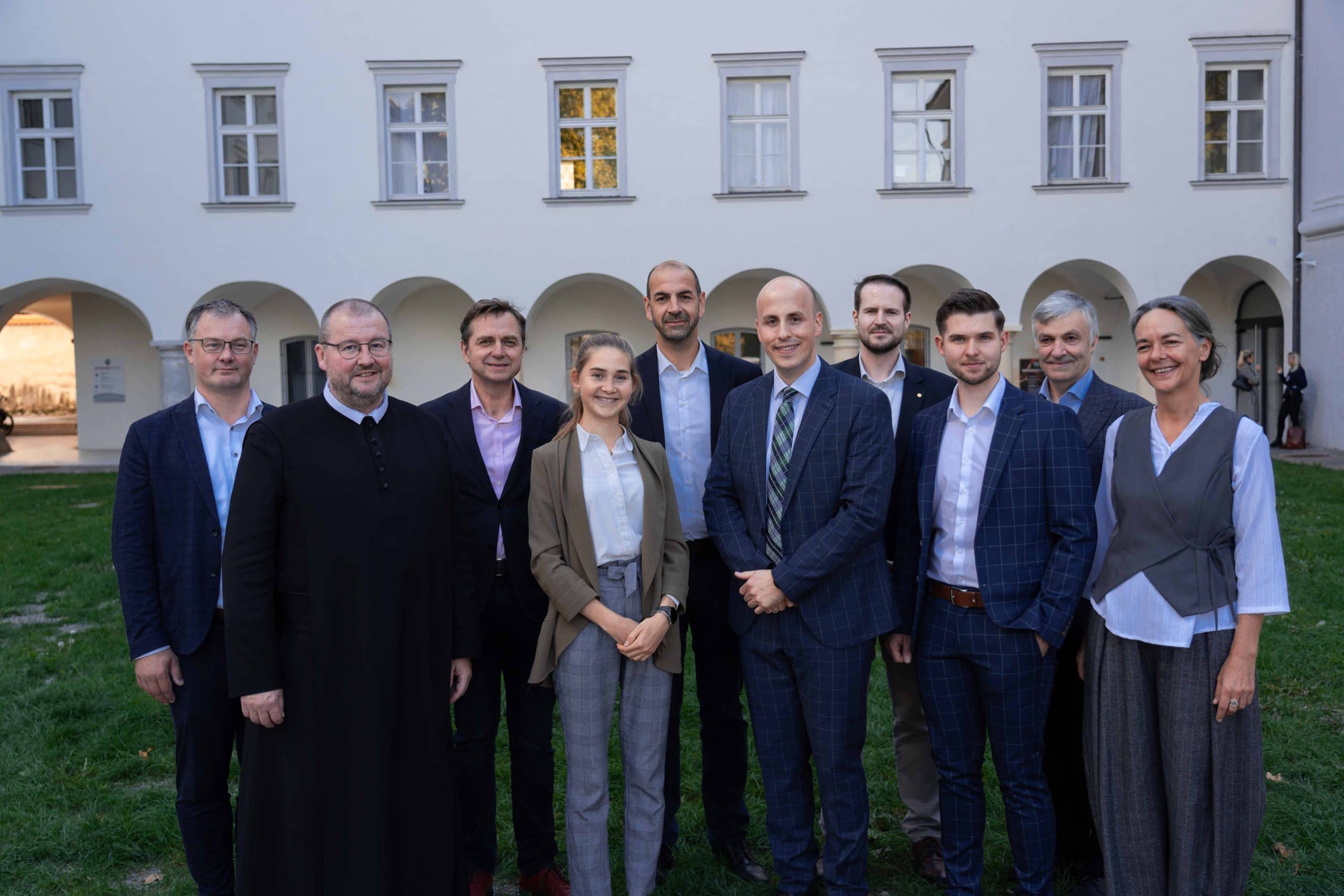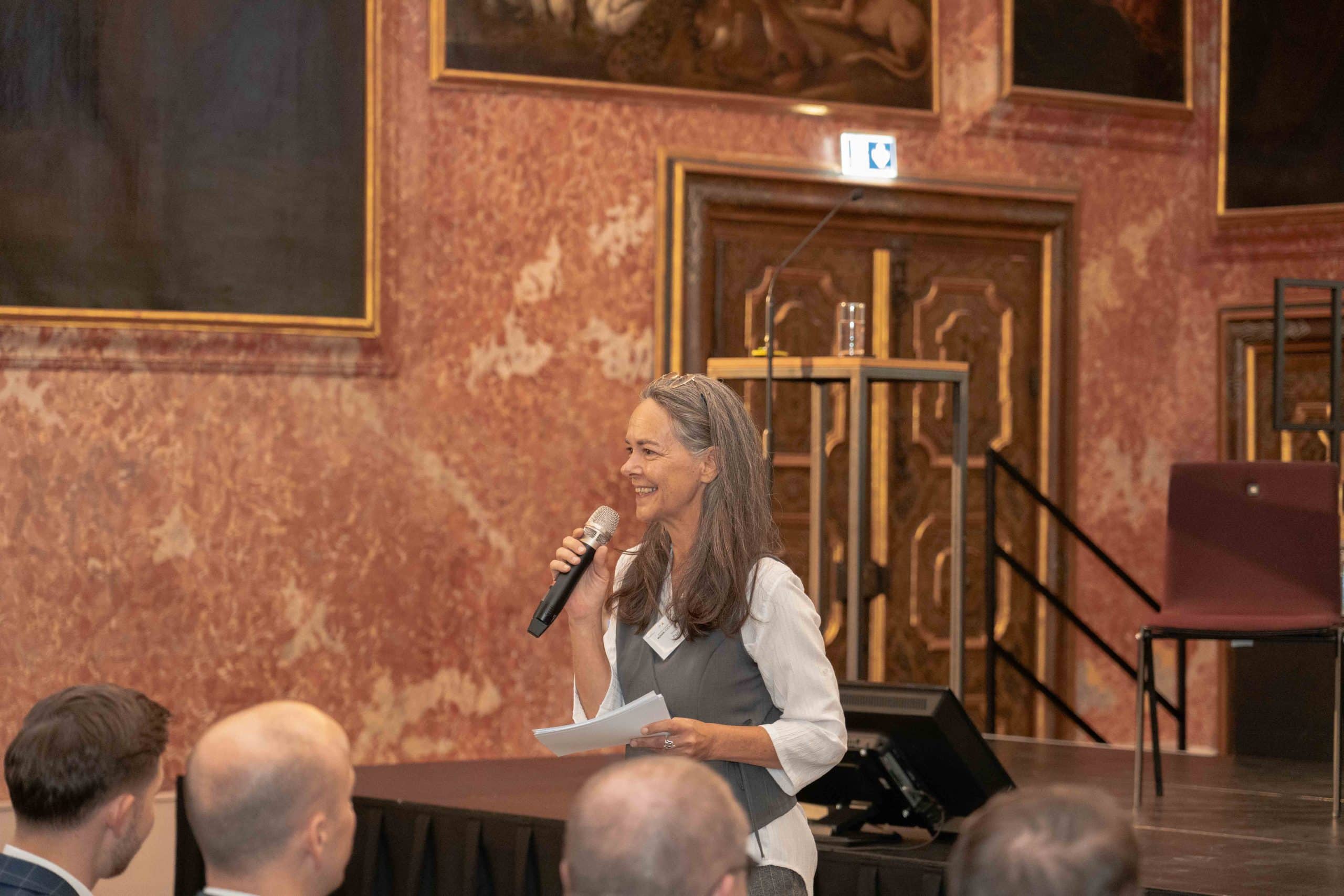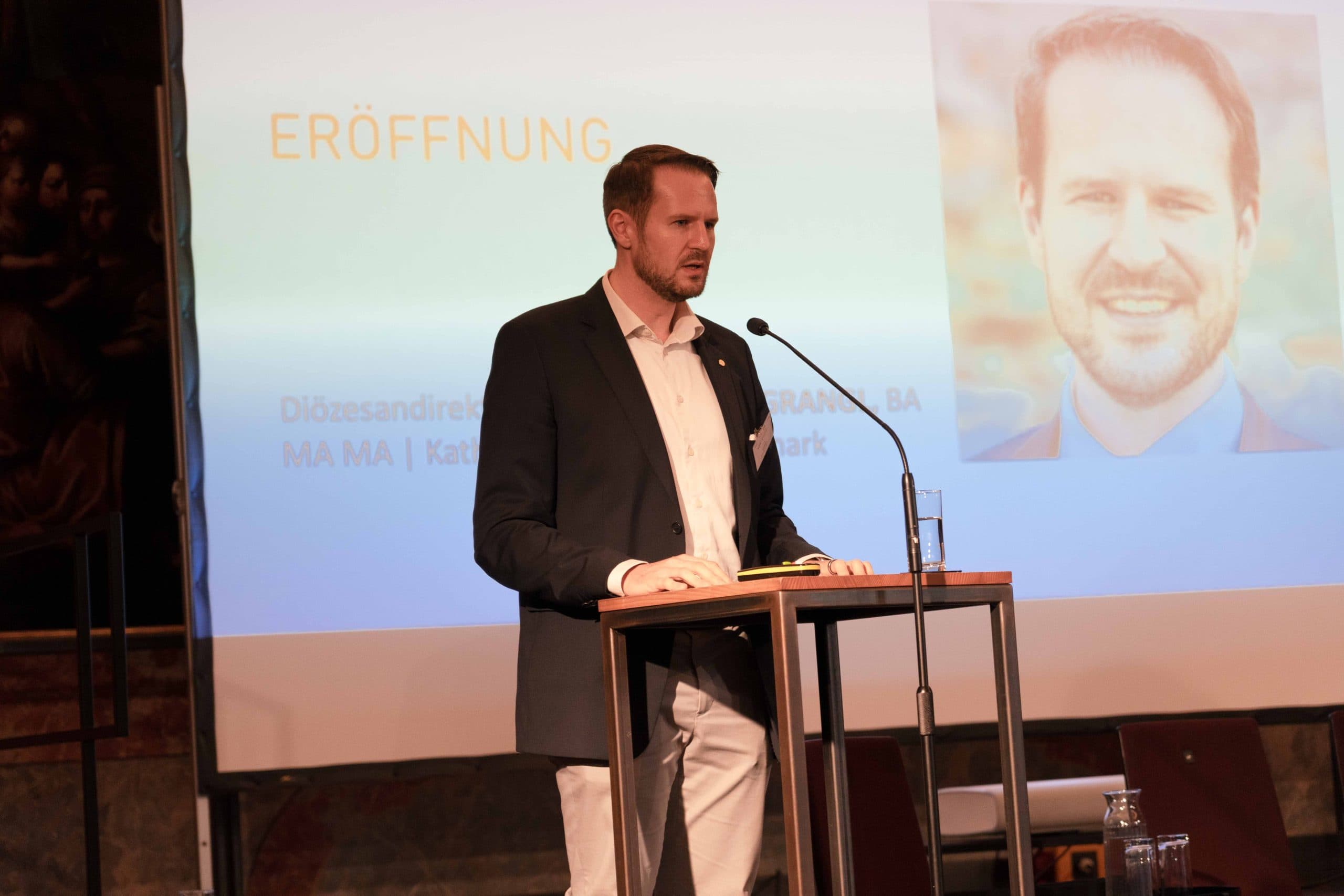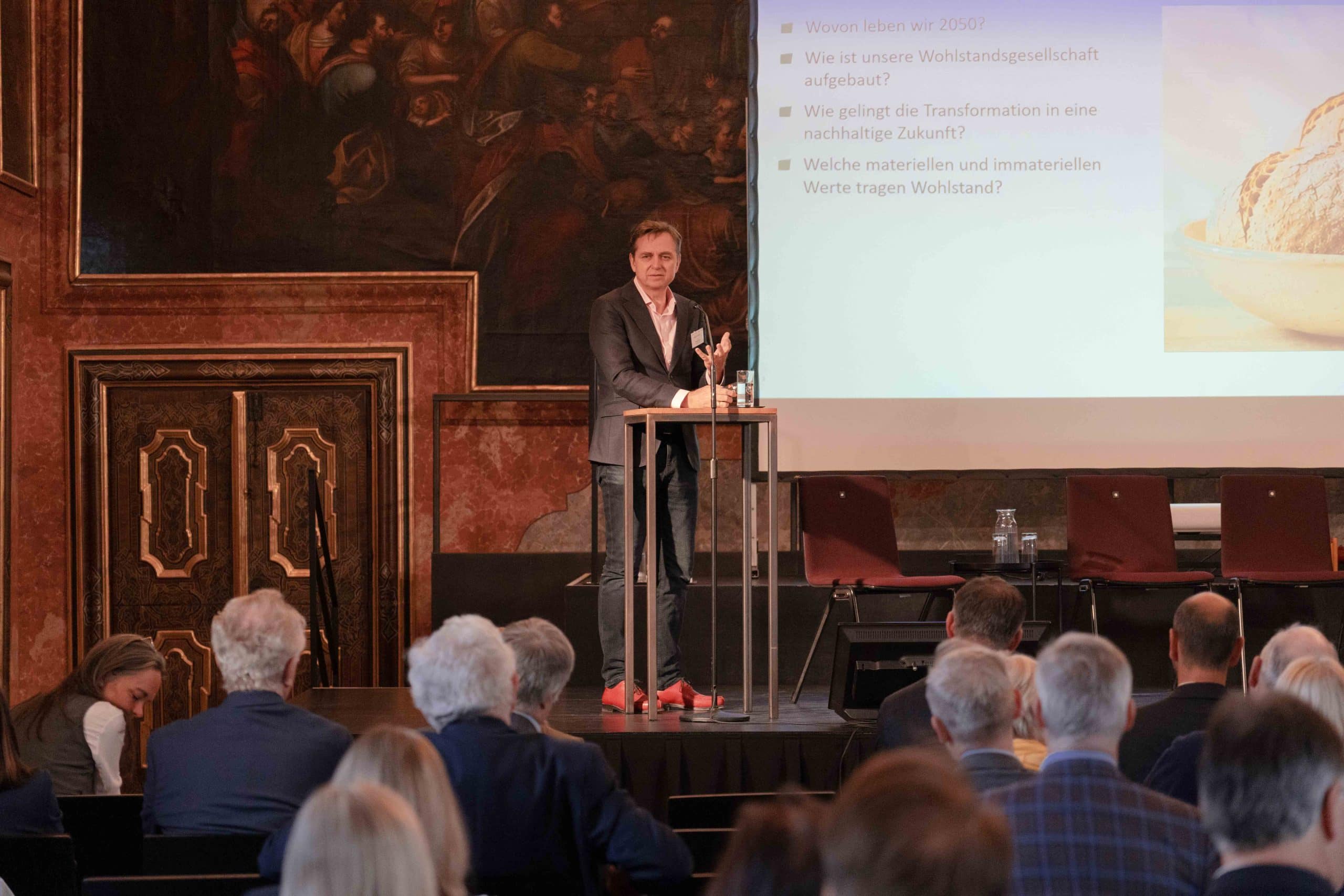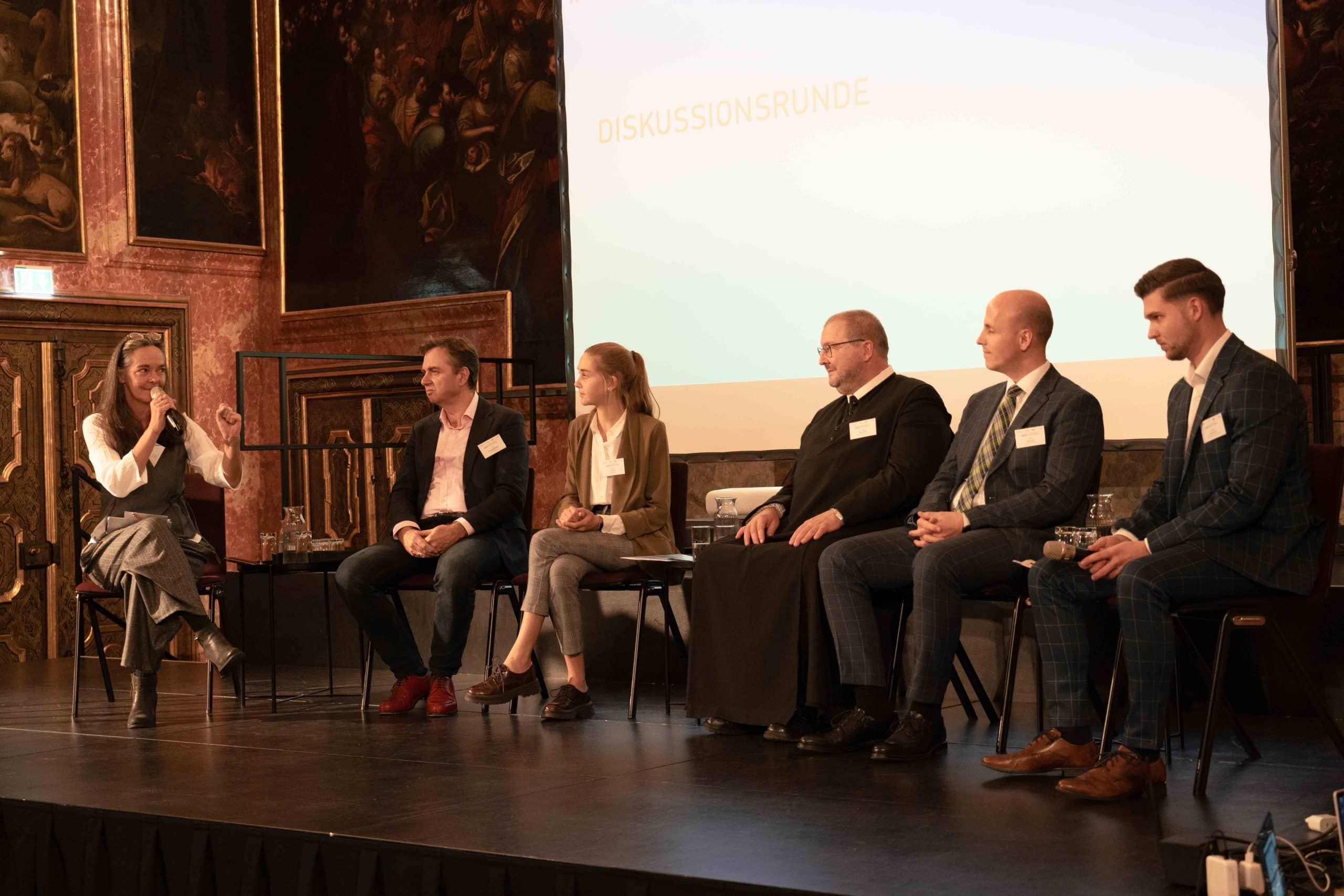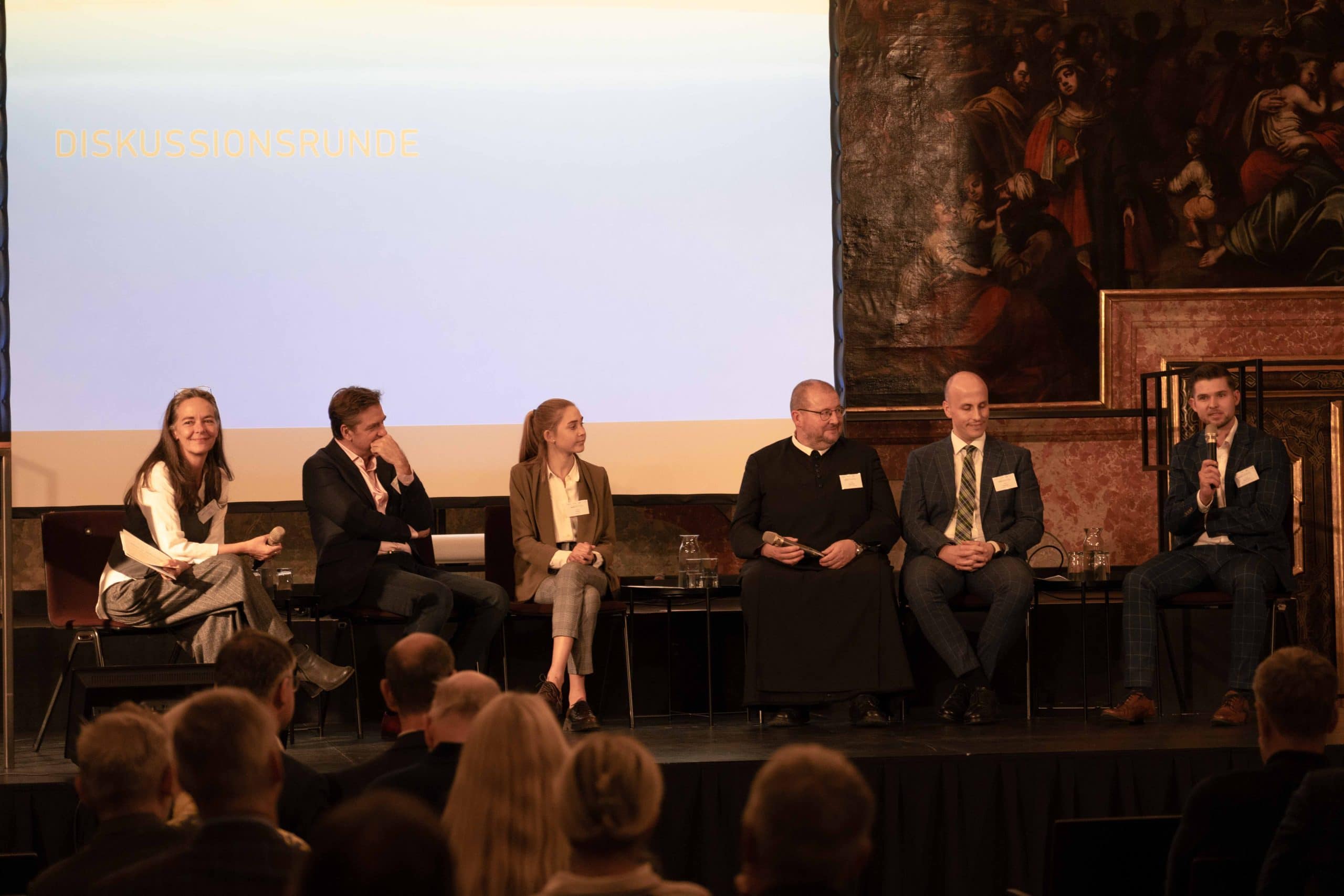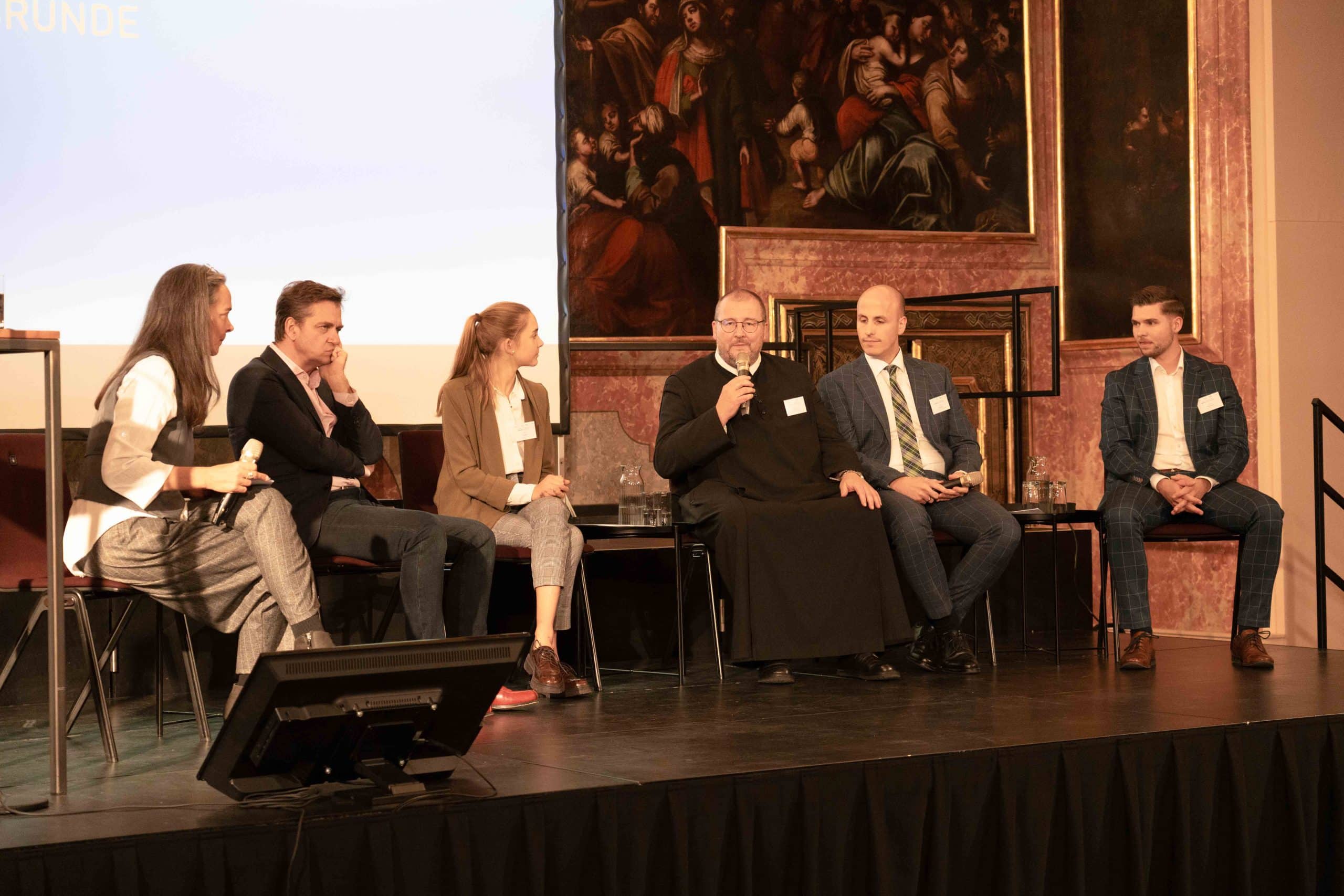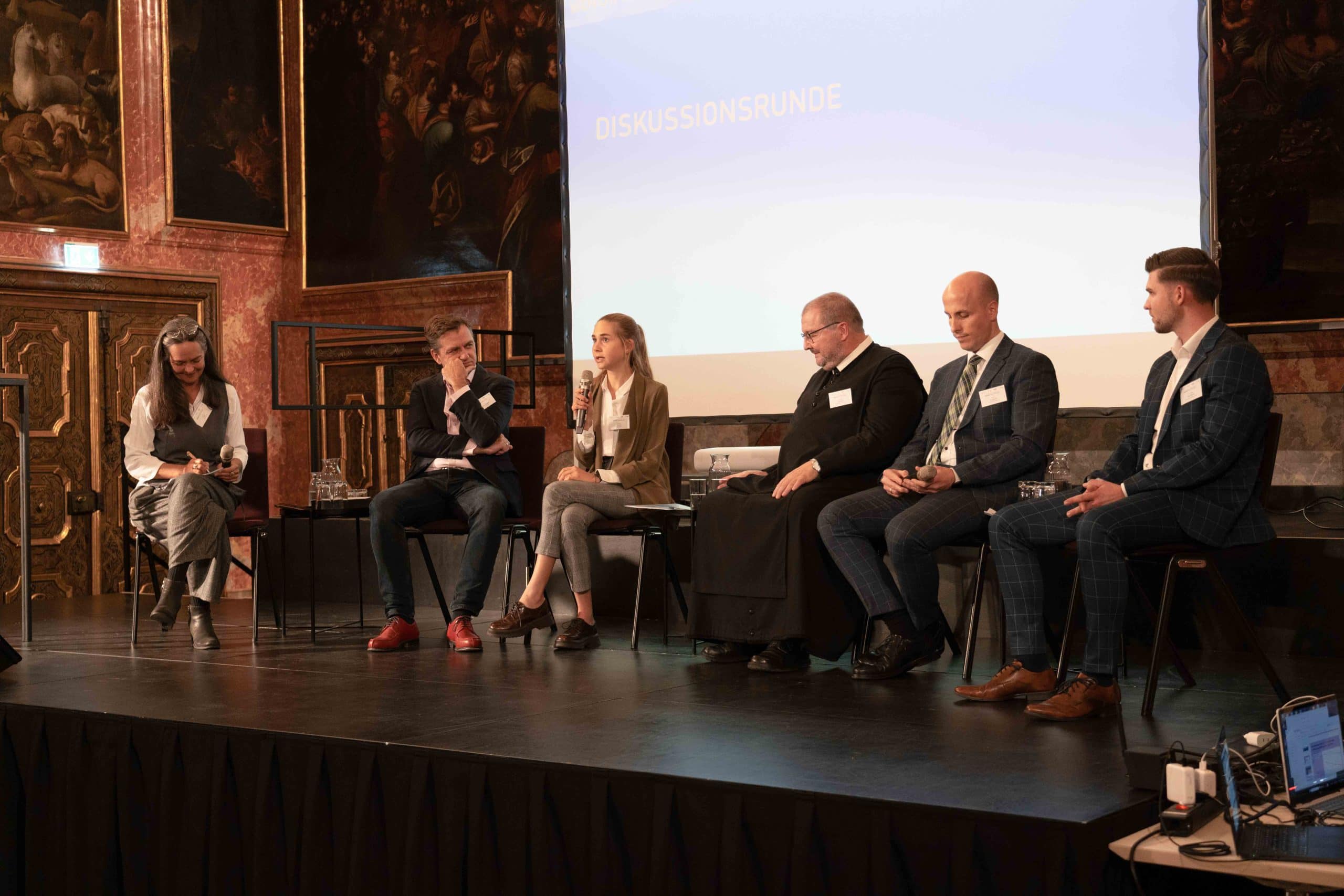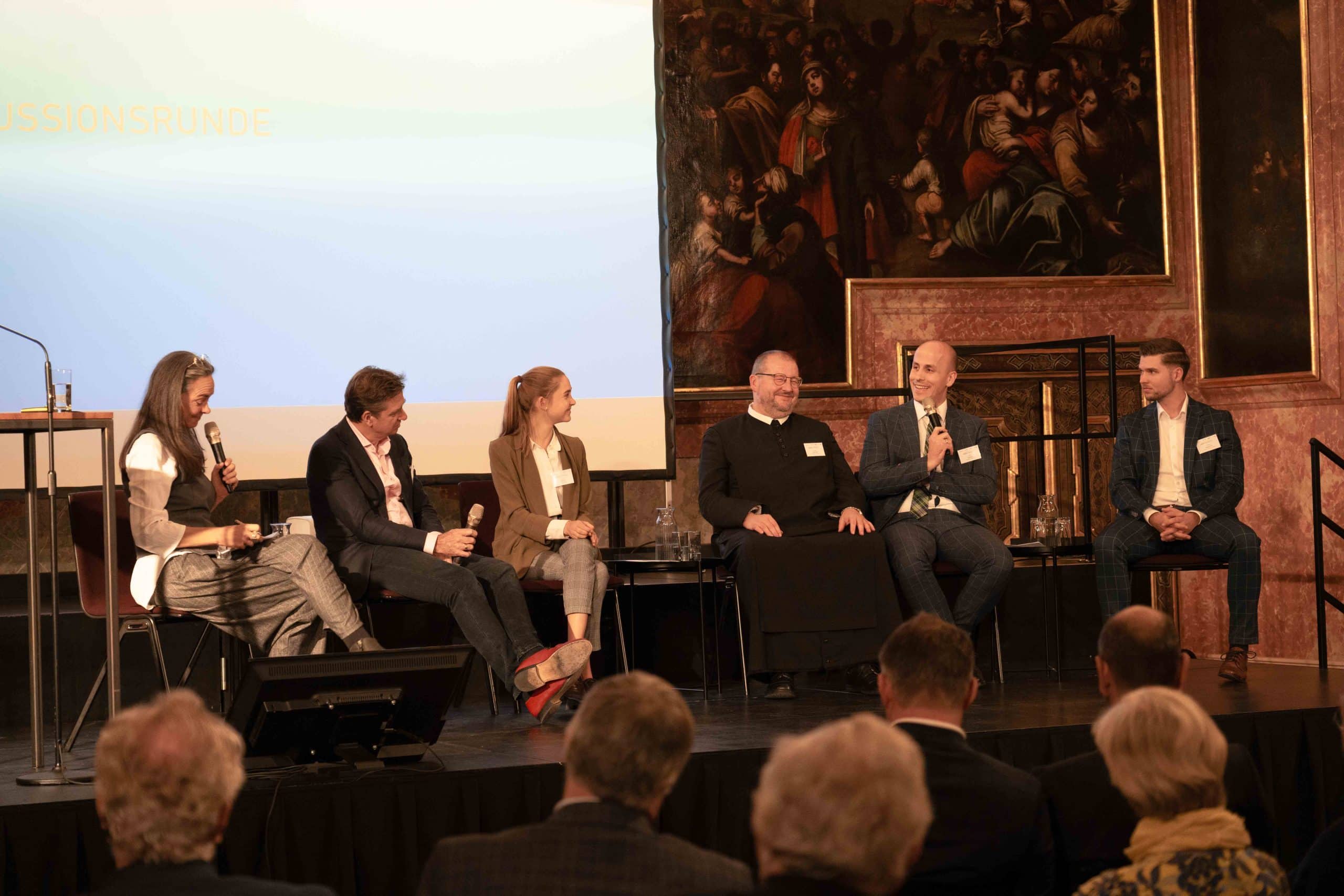


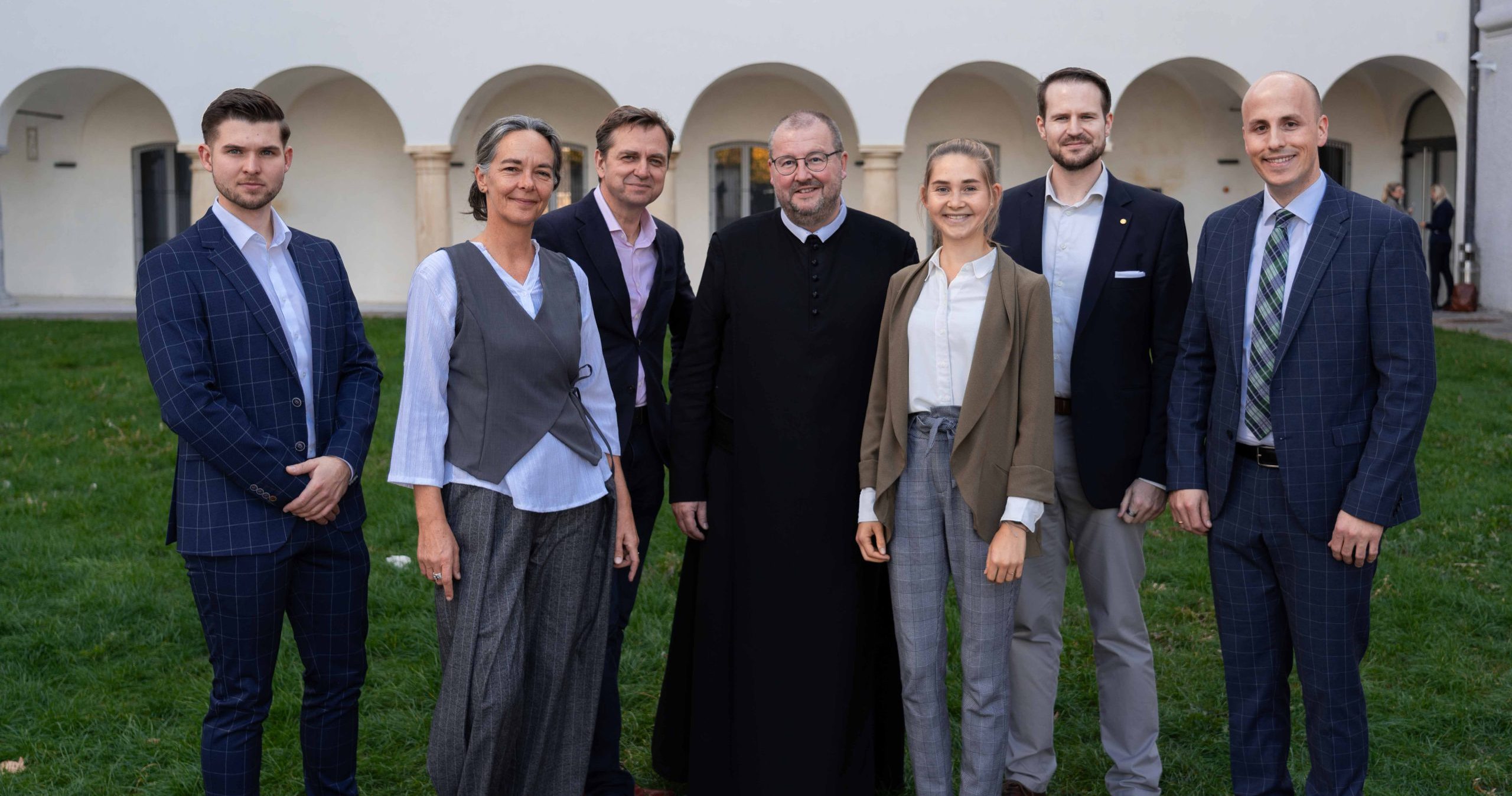
What makes a society prosperous? Are economic growth, productivity and income enough to ensure prosperity? And what role do social security, social cohesion and personal quality of life play? These questions took centre stage on 13 October at the first ‘Balancing Act: Prosperity – What will we live on in 2050?’, held at the Minoritenzentrum in Graz. Organised by JOANNEUM RESEARCH, the Catholic Church of Styria, the University of Graz/Wegener Centre and the Styrian Chamber of Labour, and moderated by Shenja Paar of Caritas Styria, the event examined the economic, social and ethical foundations of our future prosperity.
“A society does not secure its prosperity simply by generating more wealth, but also by remaining capable of acting collectively,” emphasised Lukas Grangl, Diocesan Director of the Catholic Church in Styria, at the opening. Income, productivity and employment are important indicators of prosperity, he said, but they do not tell the whole story. Equally important, he said, are health, education, social security, social participation, a healthy natural environment and the prospect that people’s efforts have meaning.
Prosperity between the market and the welfare state
Franz Prettenthaler, Director LIFE – Institute for Climate, Energy Systems and Society at JOANNEUM RESEARCH, highlighted the importance of prosperity and the role of the welfare state. “It is the individual’s own aspirations and life goals that matter,” he explained, referring to the philosophical foundations of the liberal affluent society. Markets and competition contribute to the creation of prosperity. At the same time, he argued, there is a need for a state that corrects market failures, provides protection against social risks and ensures fair opportunities in life.
Prettenthaler pointed out the limitations of individual decision-making: “We humans are not very good at assessing risks accurately. And if we did not have compulsory unemployment insurance or compulsory pension insurance, there would be a great deal of poverty.” Compulsory social insurance schemes and state protection measures are therefore necessary to safeguard people even when they underestimate risks or make the wrong decisions.
With a view to the economic and environmental changes expected by 2050, Prettenthaler raised the question of how prosperity can be secured in the long term whilst ensuring it is distributed fairly. Fair distribution will also be the focus of the follow-up event on 2 February 2027.
Austria’s competitiveness under pressure
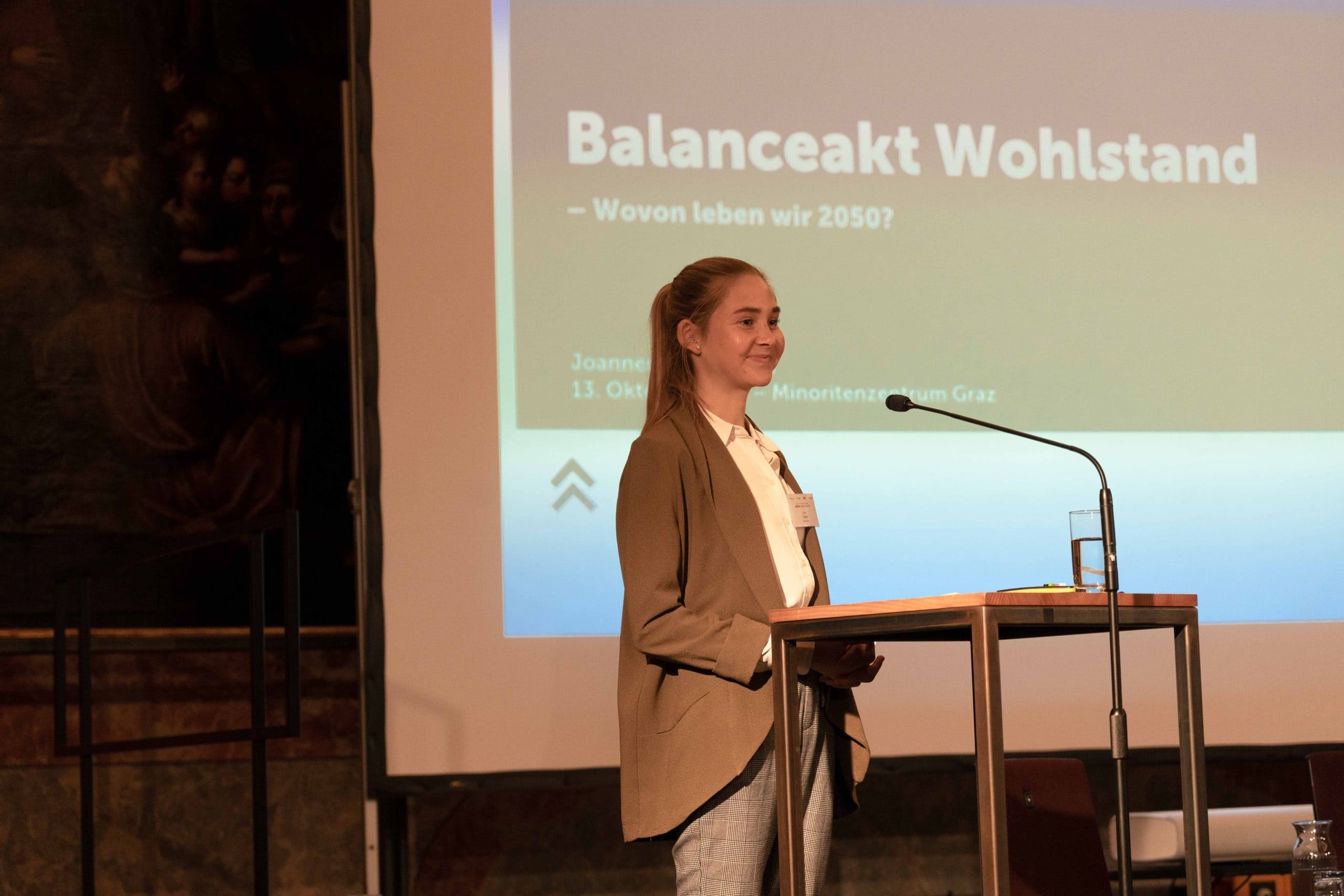
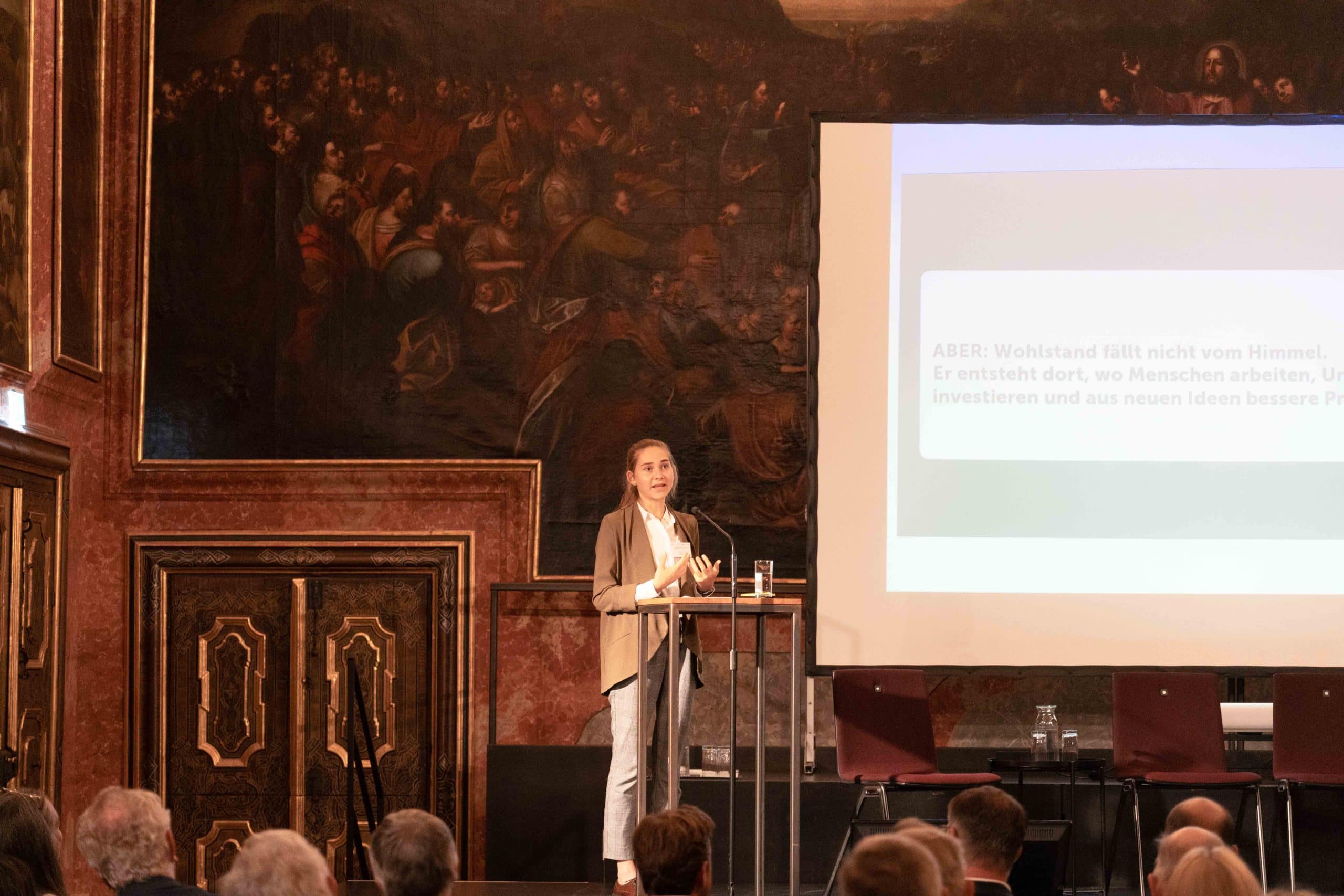
Carmen Treml, an economist at Agenda Austria, highlighted the economic challenges facing Austria. With a gross domestic product of around 55,700 euros per capita, Austria ranks among the five wealthiest countries in the European Union. However, real per capita economic output and productivity growth are stagnating. Business investment is also below 2019 levels. At the same time, social spending and the debt of the federal states are rising, whilst the population is ageing.
Treml sees a particular need for action when it comes to the tax burden and incentives to work: “Austria makes it too unattractive to create prosperity in the first place, because work, performance and investment are taxed too heavily. The most important resource in a prosperous society is the confidence that hard work pays off.” She highlighted the high tax and social security burden on labour in Austria and called for more take-home pay, more efficient public spending and better conditions for investment and innovation. Her appeal: “We need a change in mindset to prevent further losses in competitiveness.” The aim, she said, must be to maintain Austria’s high standard of living in the long term.
The welfare state must protect people from poverty
Philipp Suppan from the Styrian Chamber of Labour offered a different perspective. He asked whether the welfare state could actually guarantee prosperity. According to the data presented, around 1.44 million people in Austria – or 15.9 per cent of the population – were at risk of poverty in 2025. Around 148,000 people were living in absolute poverty. The long-term unemployed, single parents and pensioners living alone were said to be particularly affected.
Admittedly, the Austrian pension system can largely safeguard one’s standard of living following a full working life. However, social benefits such as unemployment benefit, emergency assistance or the compensatory allowance often fall below the at-risk-of-poverty threshold of 1,827 euros net per month, calculated over twelve months. Suppan’s conclusion: “If the welfare state is to maintain prosperity in 2050, it must commit itself today to tackling the potential risks of poverty.”
Prosperity means living well together
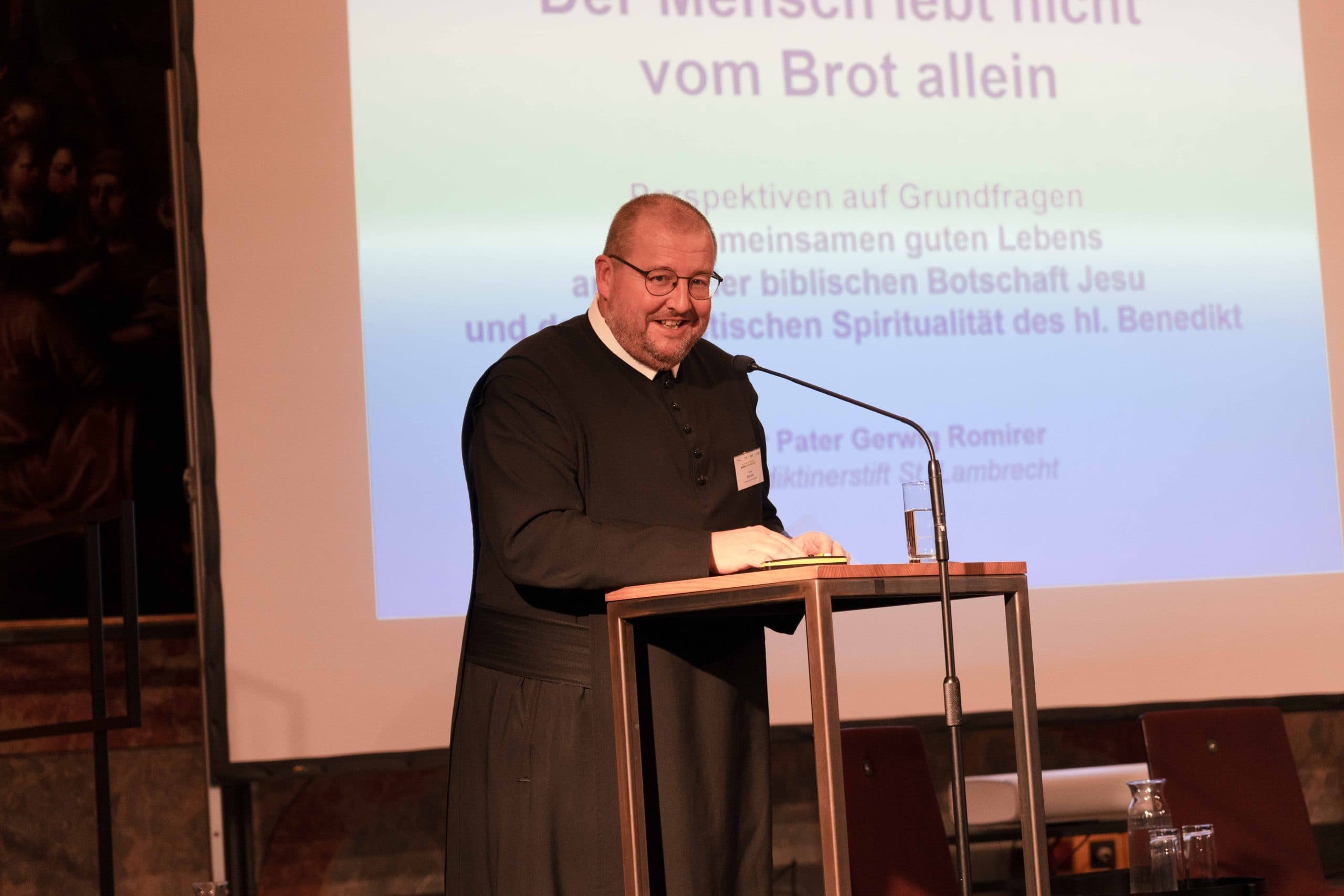
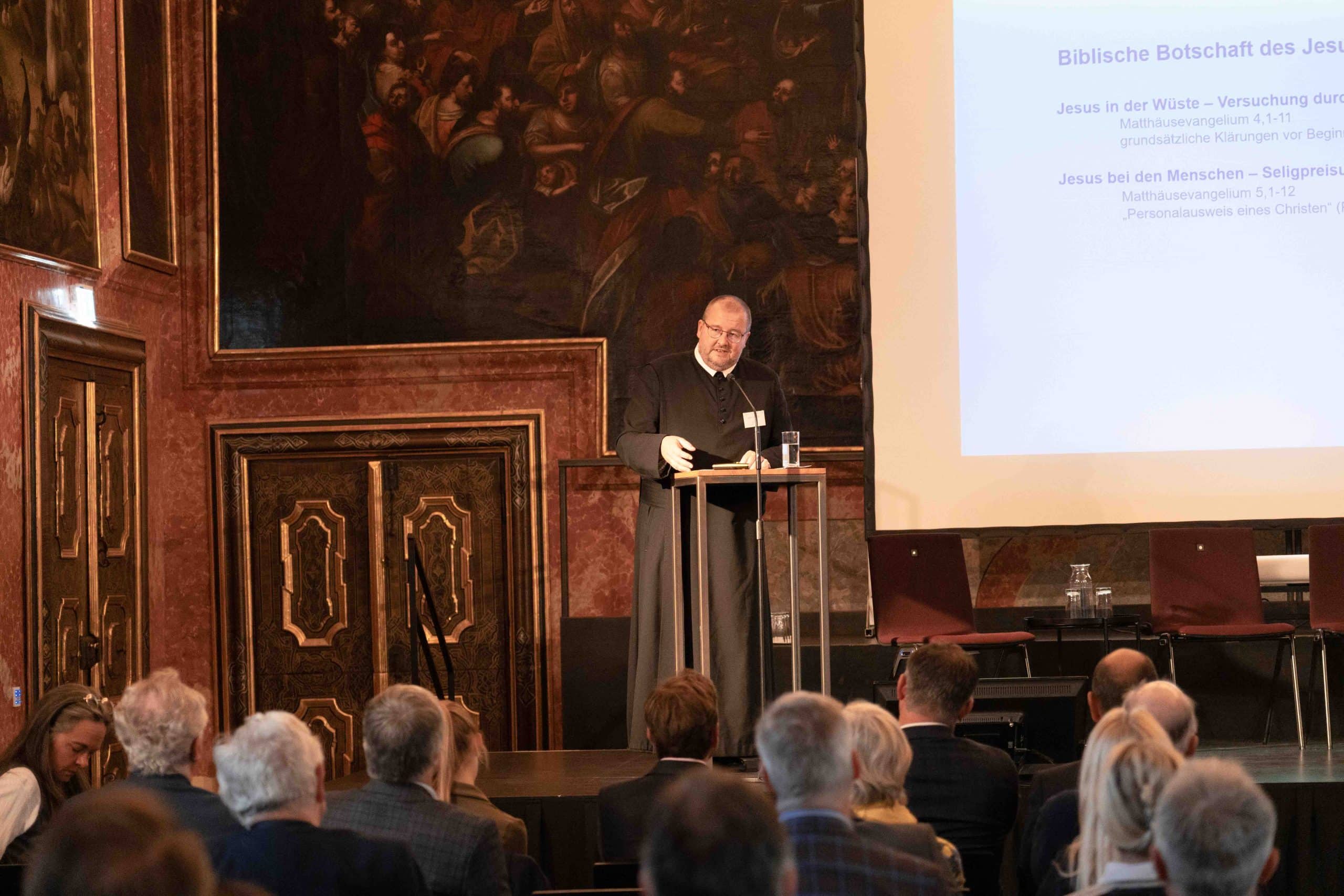
Father Gerwig Romirer, Prior of the Benedictine Abbey of St Lambrecht, broadened the discussion to include the spiritual and social dimensions of prosperity. Under the title ‘Man does not live by bread alone’, he described prosperity in three words: ‘Living well together.’ Whilst material security is an important foundation, he argued, a fulfilling life requires more than that. “What else nourishes us as human beings?” asked Romirer, highlighting the importance of meaning, community and personal values.
Drawing on the Benedictine tradition, he identified four principles for a good life: practising moderation, distinguishing the important from the unimportant, finding a rhythm to life, and being mindful. Moderation, in particular, is also relevant to today’s affluent society: “What do I really need? What is enough? What is too much?” In doing so, Romirer also questioned an economic model based on constant growth: “How do we deal with the fact that something only seems to work if there is ever more of it?”
Drawing on the Benedictine guiding principle ‘Pray, work and read’ (Ora et labora et lege), he also emphasised that work, personal development and spirituality are not separate spheres of life. Rather, the aim is to strike a good balance between these dimensions. Romirer put his wish for 2050 as follows: “It would be wonderful if, by 2050, we had succeeded in ensuring that everyone can participate in social life in the way they would like to.”
The younger generation is calling for opportunities
Andreas Paulitsch, a works council member and apprentice trainer at TDK Electronics in Deutschlandsberg, illustrated how prosperity manifests itself in the everyday lives of young people. He cited his own example: the desire to own a home, which is becoming increasingly difficult to finance on an average income. For him, training, secure jobs, fair pay and a guaranteed pension are crucial prerequisites for being able to live well in 2050 as well. In view of the rising cost of living, young employees are faced with the question of what future prospects their work actually offers them.
Conclusion: What will we live on in 2050?
The presentations and the discussion made it clear that prosperity depends on several factors. Economic performance, productivity and gainful employment provide the material basis. Social security systems offer protection against life’s risks and poverty. Education, health, social participation and the responsible use of natural resources all play a part in determining how well people can live.
Wovon leben wir also 2050? Von unserer Arbeit, von Innovationen und einer leistungsfähigen Wirtschaft – aber ebenso von sozialer Sicherheit, gesellschaftlichem Zusammenhalt und intakten Lebensgrundlagen. Entscheidend wird sein, wie Österreich den wirtschaftlichen und ökologischen Wandel bewältigt, Armut bekämpft und auch künftigen Generationen ein selbstbestimmtes Leben ermöglicht.
Presentations in German only
Einleitung | Franz Prettenthaler, Direktor Institut LIFE, JOANNEUM RESEARCH
Der Mensch lebt nicht vom Brot allein | Pater Gerwig Romirer, Katholische Kirche Steiermark
Wohlfahrtsstaat als Garant für Wohlstand | Philipp Suppan, Arbeiterkammer Steiermark
Wie sichern wir den Wohlstand von morgen? | Carmen Treml, Agenda Austria
About „Balanceakt“
Following four events on the topic of The CO₂ balancing act, is now turning its attention to the foundations and future of our prosperity.
The ‘Balancing Act: Prosperity’ series of events continues the dialogue on the future of our affluent society. The next instalment will focus in particular on the issue of distributive justice.