


Nanoparticles play an important role in medicine and the pharmaceutical industry. However, not all particles are the same: rare, particularly large particles or aggregates can affect the safety, efficacy and stability of medicines. In the case of LDL particles, too, their size and chemical composition can provide insights into disease processes such as atherosclerosis.
The project LIPOTRACE, funded by the FFG as part of the Bridge Programme, is therefore developing a novel analytical platform that combines two types of information that were previously separate: the size of individual nanoparticles and their chemical composition.
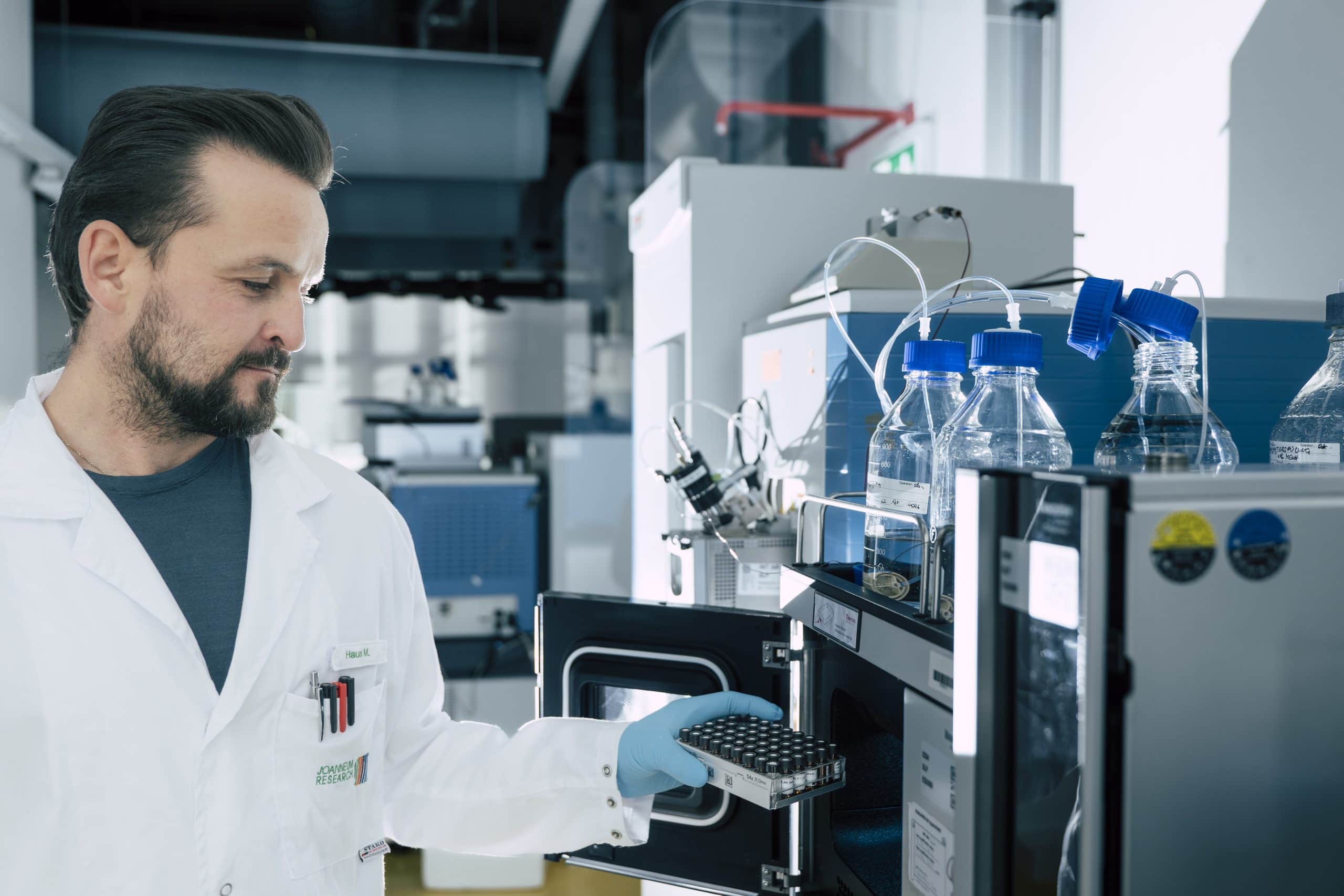
To this end, the project combines the patented OF2i® technology from BRAVE Analytics with high-resolution mass spectrometry. A team from the HEALTH Institute contributes expertise in mass spectrometry, BRAVE Analytics provides the OF2i® technology, and the Medical University of Graz supplies medically relevant samples and medical expertise.
Partnership wins over the cluster community
This collaboration was recognised this summer at the Cluster Connections 2026: LIPOTRACE won the CLAUS – Cluster Award for Unique Synergy from the Human.Technology Styria Cluster. Six collaborative projects were shortlisted for the final, and the cluster community voted LIPOTRACE into first place.
The project was presented by Reingard Raml, overall project manager at JOANNEUM RESEARCH HEALTH, and Karin Kornmüller from the Medical University of Graz, who also accepted the award.
Success at the site
This success highlights one of LIPOTRACE’s key strengths: three complementary areas of expertise come together at a single research site. Short lines of communication and direct coordination link fundamental research with industrial application.