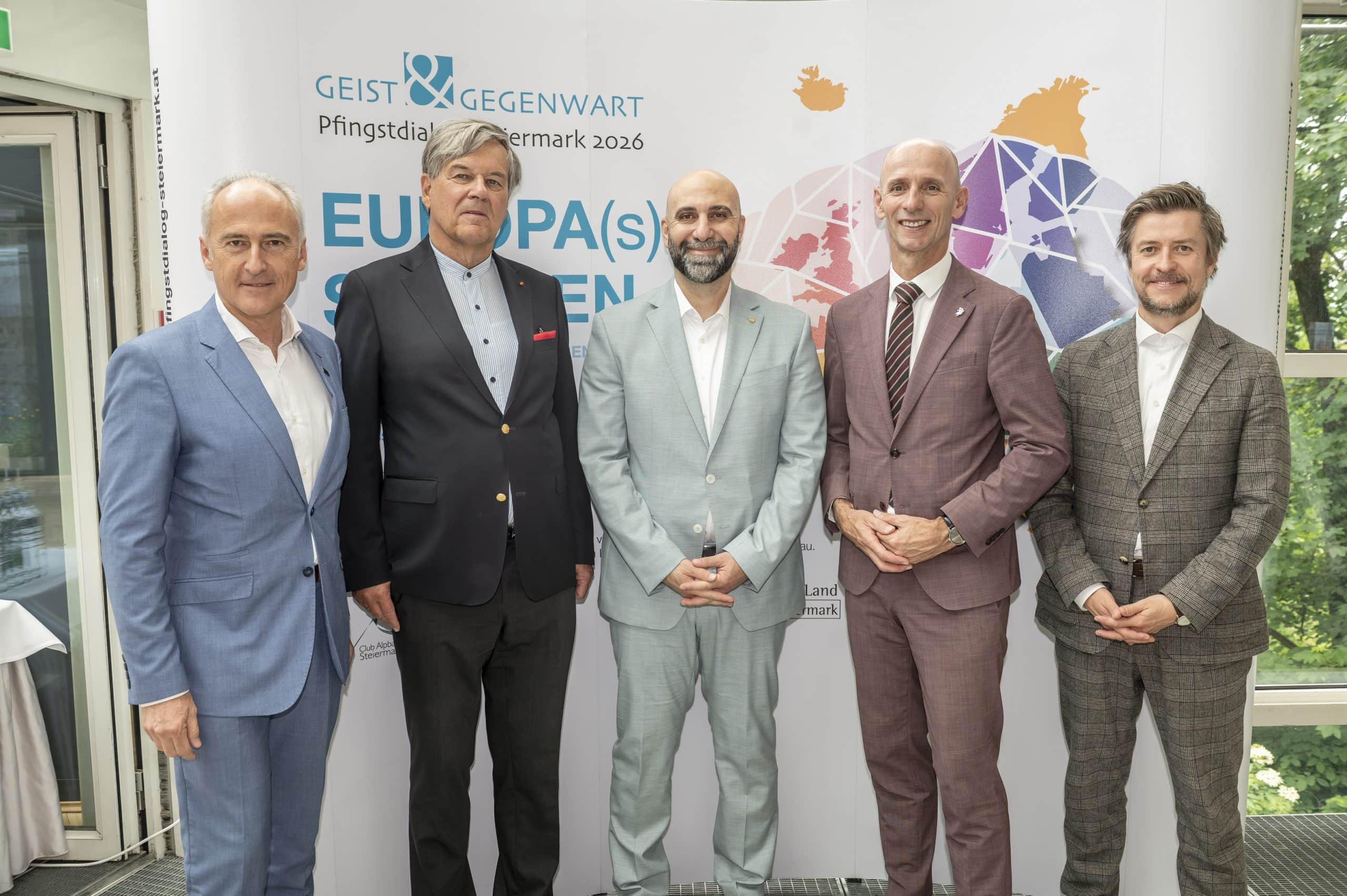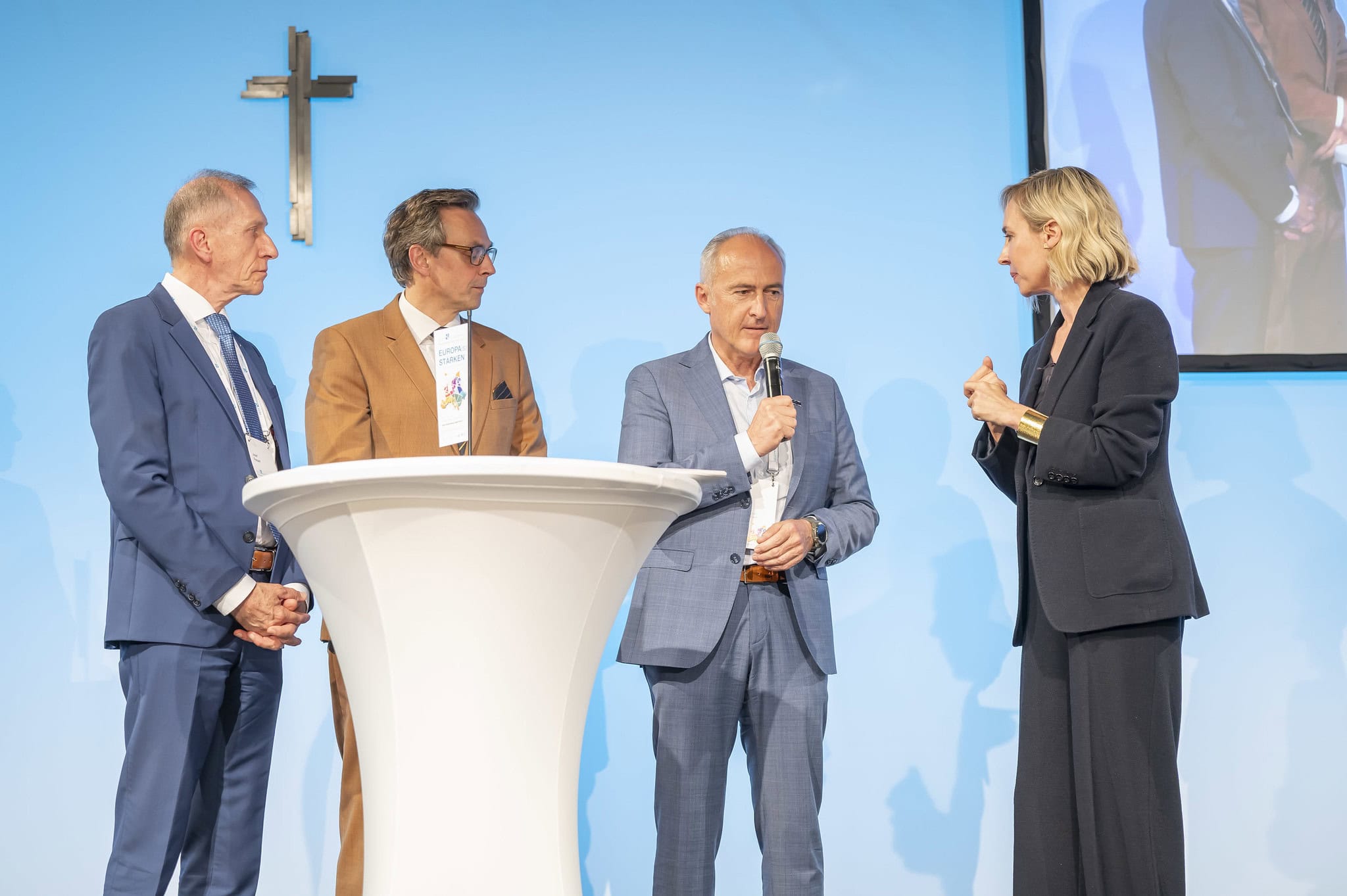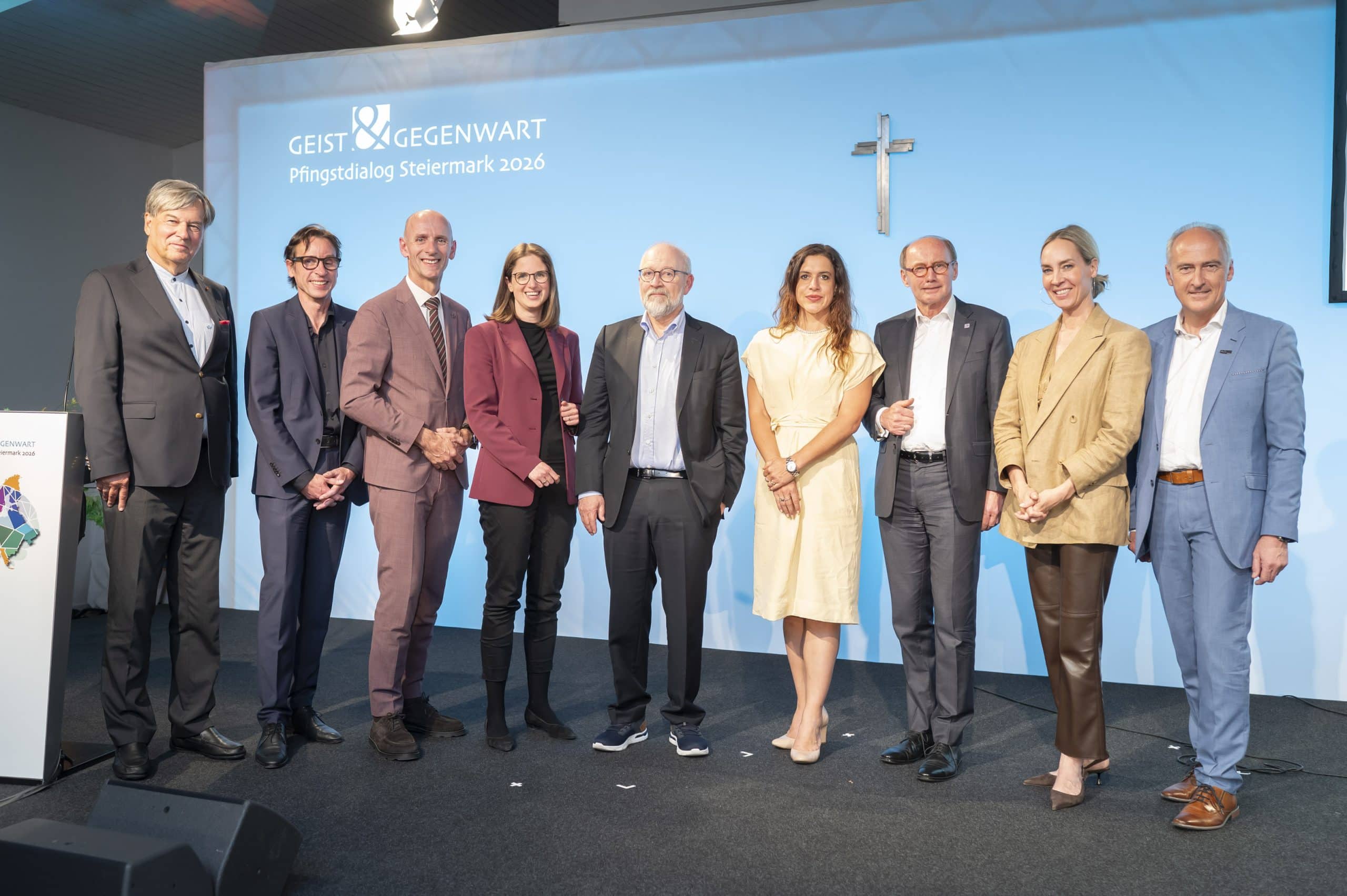


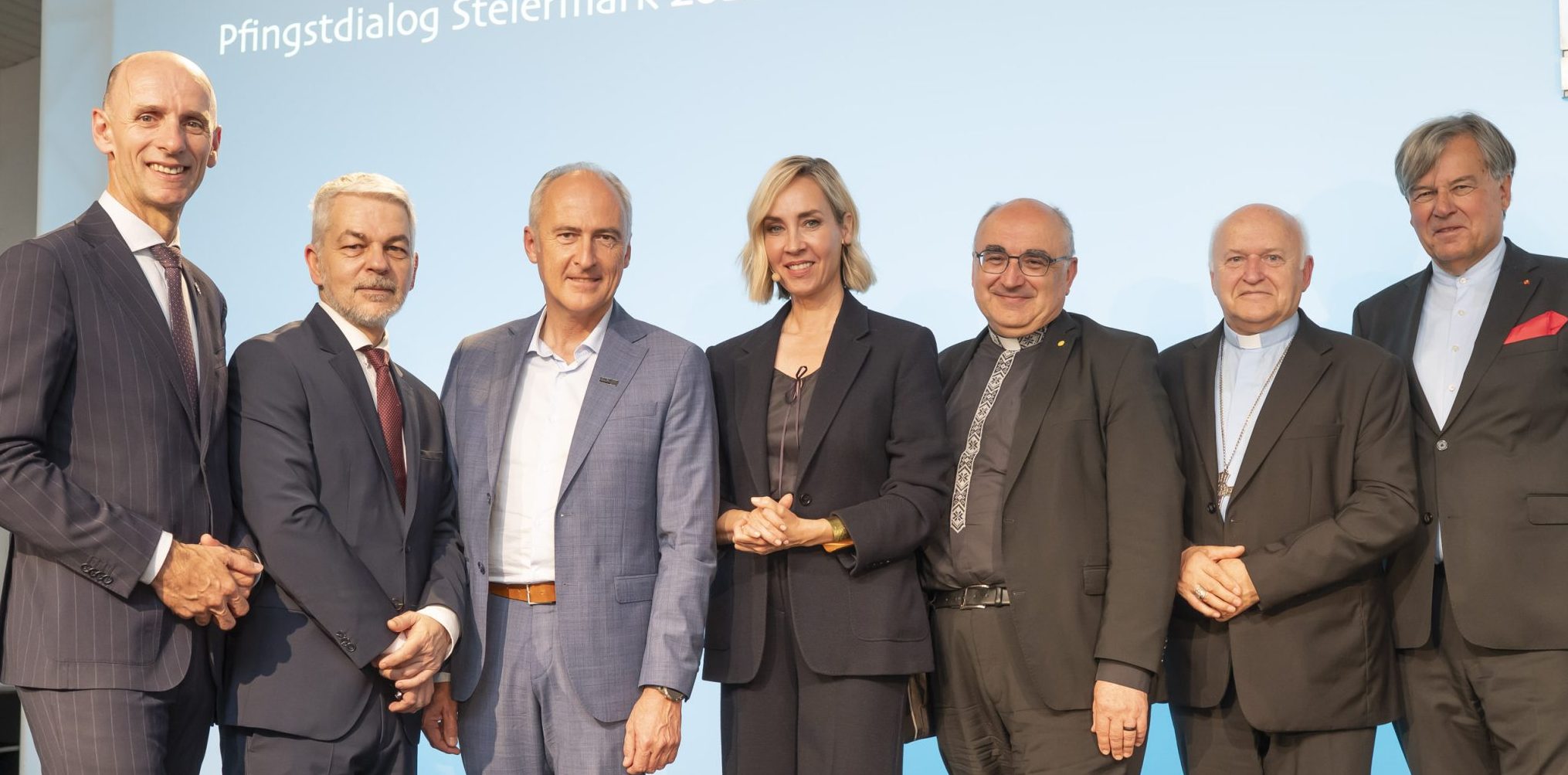
Whitsun Dialogue 2026: In his opening address, Willibald Ehrenhöfer, Regional Minister for Economic Affairs and Science, emphasised the need for a new European identity and a new sense of European self-confidence in order to strengthen the Old Continent: “Europe stands for freedom, the rule of law, liberal democracy, freedom of expression, economic strength and a high capacity for innovation. We need a renewed confidence in our own ability to shape the future. Styria is leading the way in this regard and remains a strong European region of the future. The focus remains on cross-border cooperation and, above all, on harnessing scientific potential.”
Europe's strengths
Whilst the long-serving EU Commissioner and current President of the OeNB, Johannes Hahn, advocated for the effective implementation of ideas, called for every individual to play their part, and urged a change in mindset, fiscal transparency, progressive economic policy and constitutional and administrative reform, Diocesan Bishop Wilhelm Krautwaschl and Superintendent Wolfgang Rehner called for reason as Europe’s central strength. A willingness to engage in dialogue and show solidarity is important for any social community. JR CEO Heinz Mayer highlighted the strength of European science and, in particular, that of the Styrian research landscape.
Keynote: Freedom & Security
In his keynote speech, the renowned political scientist Carlo Masala addressed the topic of “What Europe could be” and examined the relationship between freedom and security. “Only when one is secure does one have the freedom to make decisions for independent development.” Europe’s freedom is under massive threat from both outside and within. Europe’s very existence is at stake. Masala sees a military threat from Russia, an economic challenge from China and a threat from the USA. It is precisely the transformation of the USA that is bringing about a new world order. Masala sees Europe’s internal enemies in the rise of right-wing populist and far-right forces. He concluded his well-founded remarks with the following statement: “Security is the foundation for free social development. But it comes at a political and economic cost. For governments, this means making clear decisions. Political leadership is therefore needed to reach out to our own societies and to protect Europe in this way.”
Focus on the challenges
Leading experts such as Johannes Benigni from JBC Vienna, the renowned economists Gabriel Felbermayr and Monika Köppl-Turyna, Anette Klinger from the IFN-Internorm Group and the President of the Styrian Industrial Association, Kurt Maier, discussed the various challenges and, ultimately, the options for a necessary economic recovery in Europe on the evening of the first day. The stimulating theological address by the Archbishop of Belgrade, Cardinal Laszlo Nemet, and the literary contribution by the publisher and publicist Lojze Wieser provided an impressive conclusion to the first day.
Space research
The debates on the second day began with a brief welcome to the guests of honour by “Geist & Gegenwart” coordinator Herwig Hösele. The morning forum featured a panel discussion – in cooperation with STYRIA Ethics – on the topic of “The Future of Space”. Space research in Europe, Austria and Styria is currently receiving a new boost, not least to ensure it does not fall behind in global competition. Particularly in satellite communications, vehicle and aircraft navigation, and remote sensing (monitoring the Earth’s surface from above), there are areas where findings from basic research are being transferred to application-oriented research, as JR Managing Director Heinz Mayer explains. New security requirements in Europe are fuelling research for the defence sector and leading to increased budgets in this area. Satellite data is also increasingly required for the optimisation of hydropower in Austria, as well as in agricultural support and underground railway construction. Austria’s strengths in space research lie in reliability achieved through good, organised networking. Austria’s community is well positioned in this regard. Klaus G. Strassmeier from the Leibniz Institute for Astrophysics Potsdam says: “ARIANE is the most important pillar of European research – this project is essential.” At the same time, he calls for more basic research at Austrian universities.
Insiemegruppen
Die über Mittag tagenden Insiemegruppen dienten der vertiefenden Behandlung von ausgewählten Fragestellungen wie „Freiheit als europäische Identität“, „Kreativität in Bildung, Forschung und Technologieentwicklung“, „Universitäten und liberale Demokratie“, „Klimaschutz, Marktwirtschaft und sozialer Zusammenhalt“ und etwa auch „Innovationsregion Alpe Adria“. In diesen Insiemegruppen wurden erste Vorschläge erarbeitet, die in den nächsten Tagen auf der Website des Pfingstdialogs veröffentlicht werden.
Religiöse Unterschiede – gemeinsame Werte?
Ein Höhepunkt am Donnerstag war ohne Zweifel die Keynote des israelisch-deutschen Psychologen und Autors Ahmad Mansour und das thematisch richtigerweise daran folgende Forum „Freiheit und Religionsvielfalt“ mit dem Ethiker Matthias Beck von der Universität Wien, dem Schweizer Publizisten Roger de Weck, mit Barbara Krenn vom ORF und mit der Publizistin Danielle Spera. Im Zentrum dieser Diskussion stand nicht zuletzt die Frage, ob religiöse Unterschiede in einer Gesellschaft ausgehalten und letztlich gemeinsame Werte gefunden werden können, um Demokratie, Offenheit und Freiheit in Europa zu bewahren.
Forum Generale: Strategie Europa
Das abschließende Forum Generale zum Thema „Strategie Europa“ startete mit der Keynote des renommierten Politologen von der Humbold Universität zu Berlin, Herfried Münkler, und gab Ein- und Ausblicke in mögliche strategische Szenarien für eine Neupositionierung Europas im politischen Machtspiel der globalen Player. Die Diskussionsteilnehmer*innen waren u. a. Wirtschafts- und Wissenschaftslandesrat Willibald Ehrenhöfer, Politologe Herfried Münkler, Othmar Karas, Präsident des European Forum Alpbach, die Ökonomin Monika Köppl-Turyna und die Demokratieforscherin an der Universität Graz, Katrin Praprotnik.
Weitere Informationen, Fotos und die Nachschau finden Sie hier
„Geist und Gegenwart“ ist eine Veranstaltungsreihe von Club Alpbach Steiermark, JOANNEUM RESEARCH und Land Steiermark in Kooperation mit der Diözese Graz-Seckau.