



pH indicator dyes
We offer a comprehensive range of pH indicator dyes that can be covalently immobilised onto a variety of substrates, including cellulose, carboxymethylcellulose, viscose, agarose, polyamide, wool, starch, and paper.
The dyes have pKa values that are tailored to applications such as monitoring wound healing and skin health, as well as analysing biological samples, enabling measurements to be taken in direct contact with humans and animals.
Get in touch: We look forward to your message.
Broad Application Potential
Our pH indicator dyes enable colour changes to be integrated into a wide variety of materials, which can be observed directly with the human eye. They are particularly suitable for use in:
- Smart textiles
- Paper-based microfluidics
- Food quality control
- Wound dressings and wound monitoring
The covalent immobilisation of the dyes ensures that there is no leaching or contamination of the environment or humans.
Safety, Stability, and Sterilisation
- The immobilised dyes are confirmed to be non-toxic (see references).
- The materials can be sterilised using γ-irradiation.
- They offer a shelf life of several years and an operational lifetime of weeks/months, depending on the application.
These properties make the materials suitable for use in microtechnology, optoelectronics, medical devices, sensors, and photonics.
Availability and Collaboration Models
All pH indicator dyes are commercially available and can also be obtained as part of:
- Custom synthesis services
- Research collaborations
- Method development and feasibility projects
Polymerisable Fluorescent pH Indicator
In addition, we offer a polymerisable fluorescent pH indicator that can be copolymerised with monomers of your choice. The indicator has already been successfully immobilised using various methacrylates and has been applied in the fabrication of molecularly imprinted polymers (MIPs) (see references).
Our dyes
Discover our covalently immobilisable pH indicator dyes with precisely tuned measuring ranges (i.e. pKa values) for applications in textiles, sensor technology, medical technology and research.
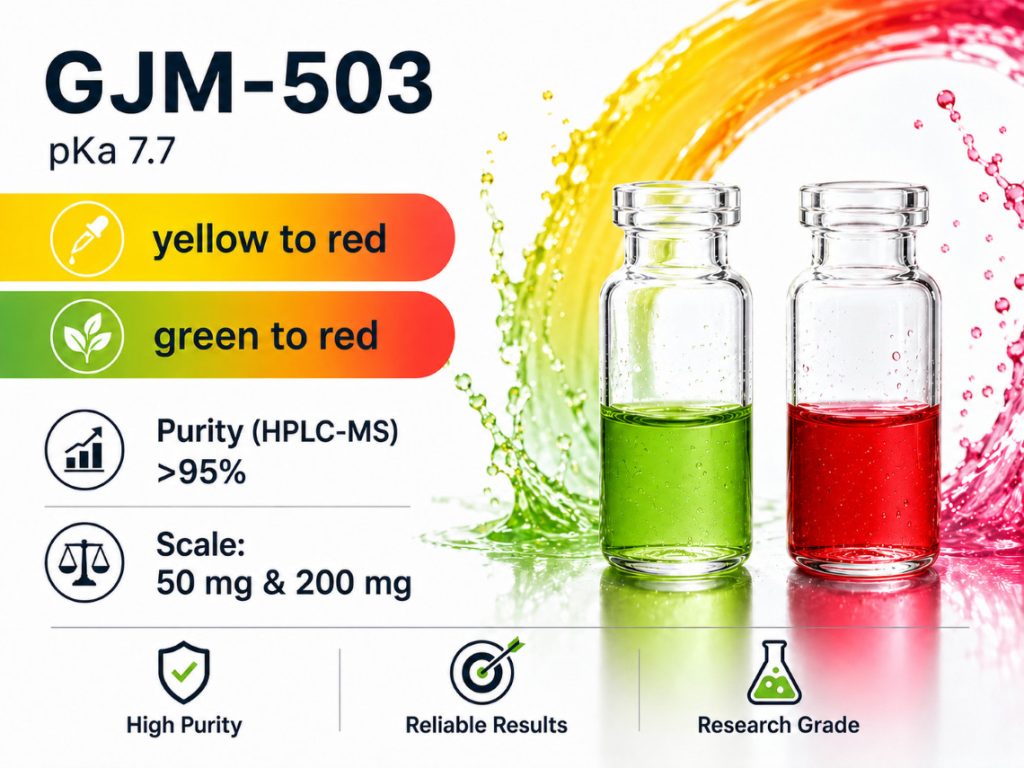
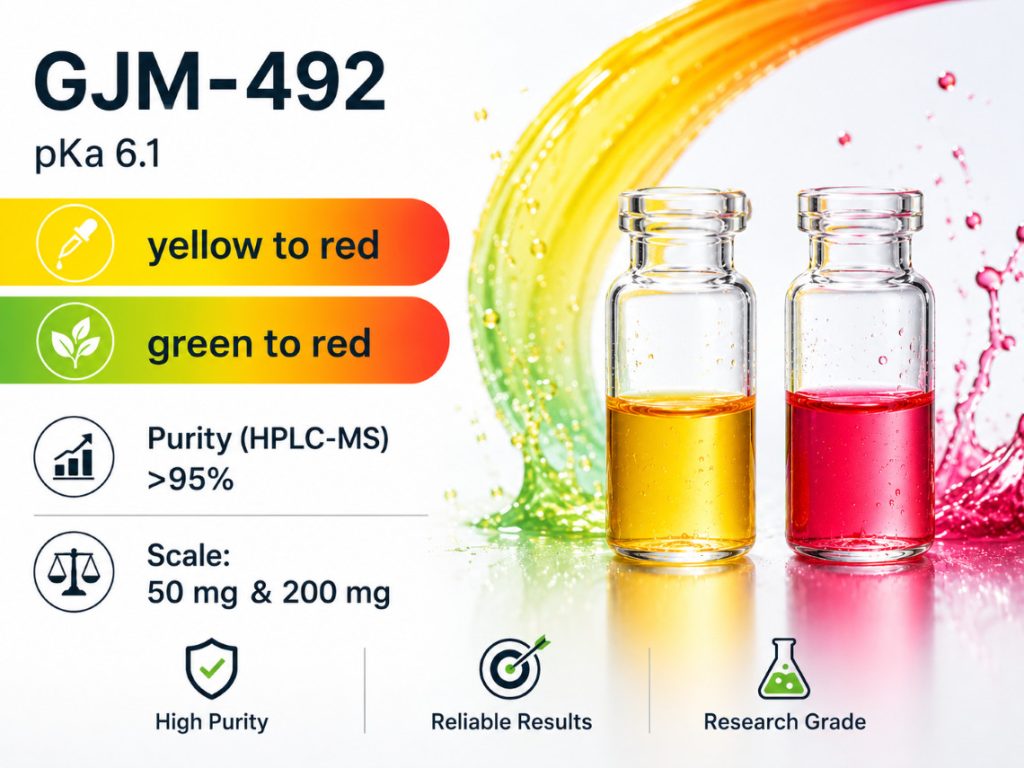
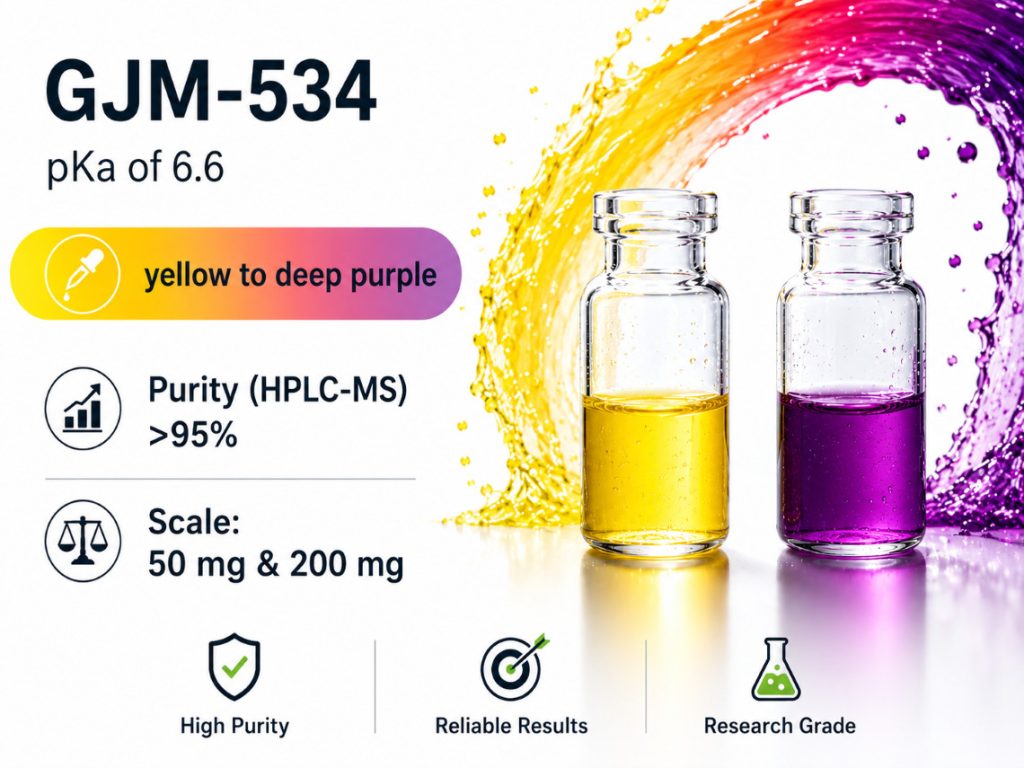
Each dye offers a clearly visible colour change, high purity (>95% HPLC-MS), and is available in practical quantities. Detailed product specifications, structural information, and application examples can be found in the respective product view.
Designed for innovative materials with integrated, reliable indicator functionality.
Get in touch: We look forward to your message.
Downloads
Safety data sheets, certificates of analysis, application guidelines and further product information can be found in the downloads section.
Browse the product brochure to explore detailed information on our pH indicator dyes, including colour transitions, specifications and pricing.
Customers purchasing GJM-492 or GJM-503 receive the same quantity of RBBR dye free of charge.
Application examples
pH Indicator Washcloth for Skin-Friendly Body Care Products

Making skin compatibility visible
The protective acid mantle of human skin has a pH value of approximately 5.5 and is therefore slightly acidic. Many skin-friendly detergents, shampoos, and shower gels are adjusted to this pH range. In contrast, soaps and low-cost detergents are often alkaline, with pH values above 8, which may cause skin irritation—particularly in infants and people suffering from dermatitis.
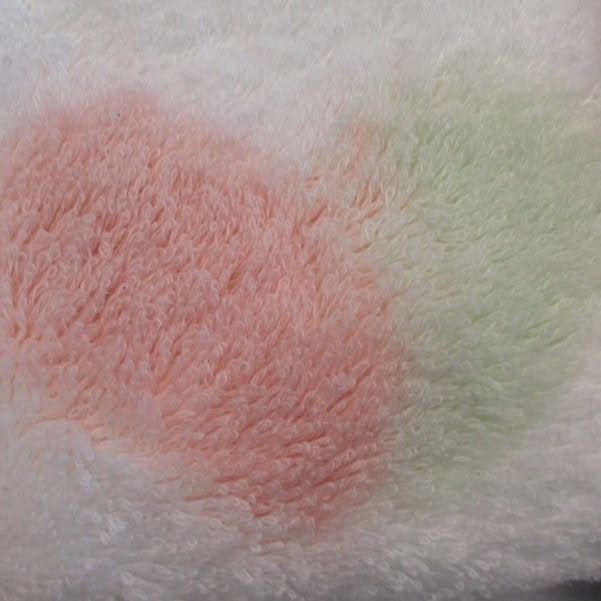
The indicator washcloth provides a simple visual assessment of skin compatibility. A white cotton washcloth is covalently dyed with a pH indicator that changes color depending on the pH value of the washing solution:
- Green: pH below 6 – skin-friendly
- Red: pH 8–9 – potentially skin irritating
The production process is straightforward and scalable, involving spray application of the dye solution followed by rinsing to remove unbound dye. The washcloth is OEKO-TEX® certified and has been washed sixty times at 40 °C and 60 °C with conventional detergents without any loss of color or functionality. The color change is fully reversible.
Wound Dressings for pH Monitoring
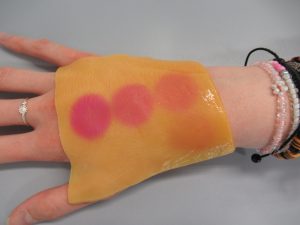
Non-invasive monitoring of the wound healing process
Recent research indicates a strong correlation between wound pH and the healing process. A pH value above 8 suggests impaired healing and the need for medical intervention, as optimal wound healing occurs at pH values between 5 and 7.
At JOANNEUM RESEARCH MATERIALS, a functional wound dressing based on indicator dyes has been developed. The bio-nanocellulose wound dressing, designed for burn treatment, exhibits a distinct color change from yellow to red when the pH value becomes too high. The dressing is semi-transparent, allowing visual inspection of the wound without removing the dressing.
In addition, new indicator dyes have been developed that change color from yellow to blue, avoiding interference from the intrinsic coloration of wounds and further improving readability.
Test Strips for the Detection of Food Spoilage
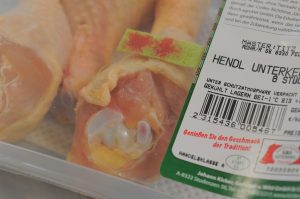
Reliable freshness monitoring for packaged food
Today, most food products are packaged in plastic, making it difficult to detect spoilage by smell. Changes in meat and fish quality are often not visible until advanced stages of degradation.
The test strips developed by JOANNEUM RESEARCH MATERIALS address this challenge by detecting biogenic amines released during the degradation of proteins and amino acids in spoiled meat and fish. The test strips consist of dyed cellulose fibers embedded in water-repellent, food-grade silicone.
The indicator dyes exhibit a clear and intuitive color change from green to red when amines are formed. To ensure food safety, contamination is fully prevented: the dyes are stably bound to the cellulose fibers and additionally encapsulated within silicone.
Extraction tests of the dyed microfibers and sensor layers were conducted in accordance with ISO 10993-5 and ISO 10993-12 , demonstrating no reduction in cell viability.
References
[1] Remazol Brillantblau R (CAS: 2580-78-1), commercially available from Merck as a substance R8001, https://www.sigmaaldrich.com/AT/de/product/sigma/r8001.
[2] Indicator washcloth for detecting alkaline washing solutions to prevent skin irritation in dermatitis patients and babies doi.org/10.1186/s40691-017-0092-2
[3] https://youtu.be/oWDmWVPkNVo
[4] Continuous pH monitoring in wounds using a composite indicator dressing – a feasibility study, doi.org/10.1016/j.burns.2019.02.021
[5] https://www.youtube.com/watch?v=uXN_uv2_PMo
[6] https://www.evomedis.com/evosens.html
[7] Development of a sensor layer for the optical detection of amines during food spoilage, doi.org/10.1016/j.talanta.2017.04.029
You are currently viewing a placeholder content from Youtube. To access the actual content, click the button below. Please note that doing so will share data with third-party providers.

Environmental, bioanalytical and diagnostic sensor technology combined with smart microfluidic lab-on-a-chip and organ-on-a-chip systems

Printable sensor inks and sensors with piezoelectric, pyroelectric and magnetoelectric features
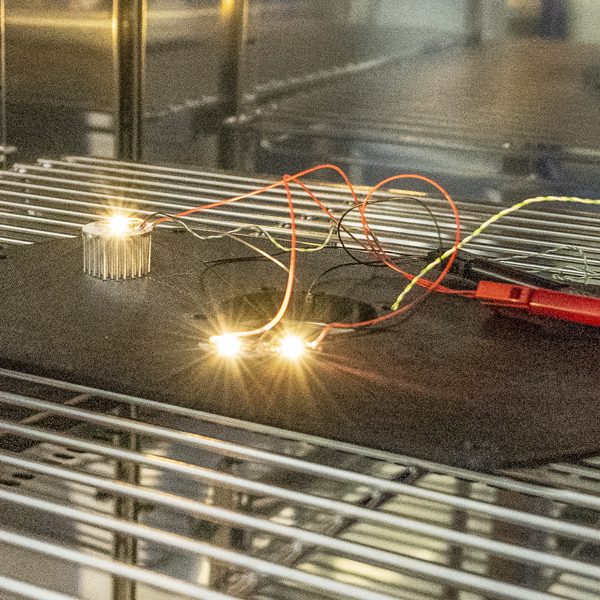
Cost-effective solutions by extending the functions of classic LED-based lighting systems in the areas of Visible Light Communication, Visible Light Positioning and Visible Light Sensing
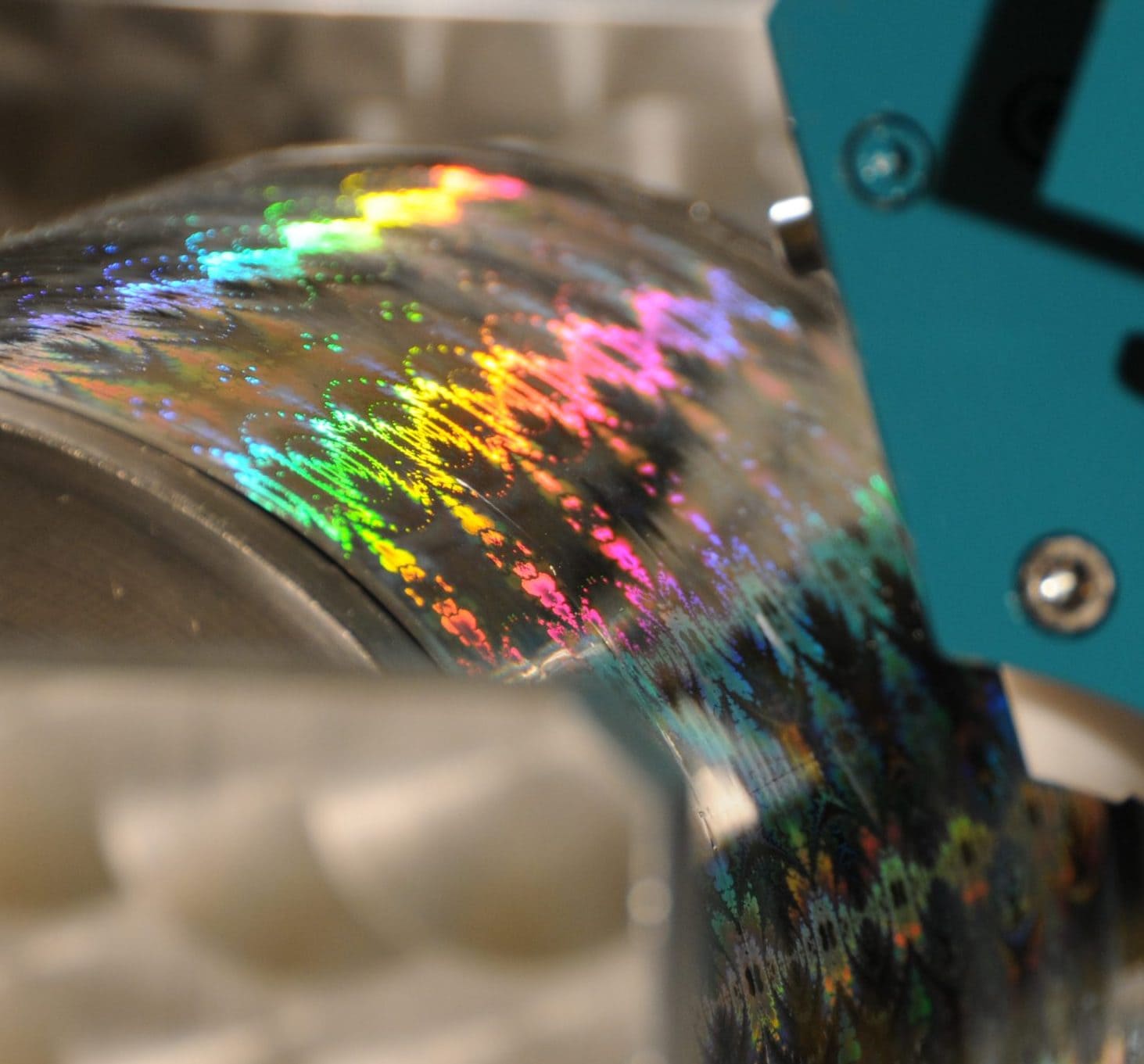
R2R-UV-NIL pilot line for the continuous and cost-effective production of micro- and nanostructures on flexible large-area film substrates

Replication of master structures almost seamlessly onto large surfaces (380 x 700 mm²) using a step&repeat UV-NIL process
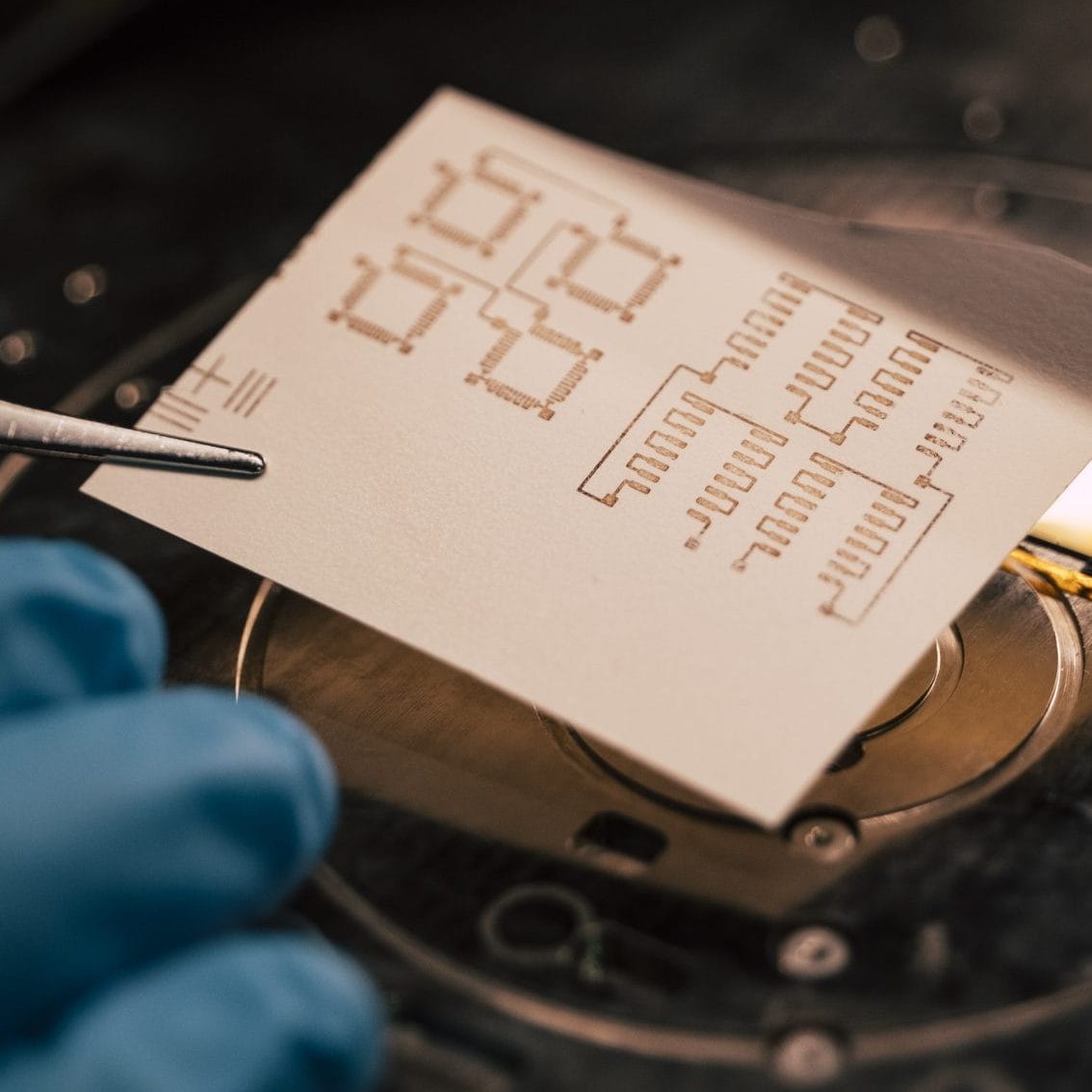
Measurement and analysis of the smallest structures, layers and components on a micro- and nanometre scale
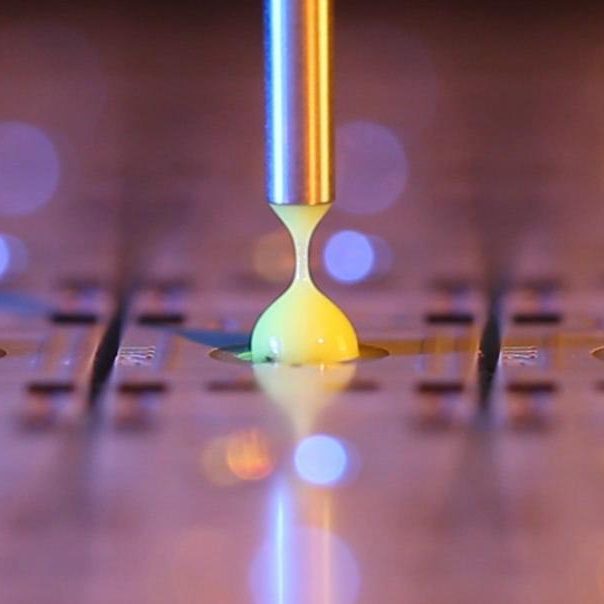

Complete solutions from optical simulation, mastering and prototyping to the transition to high volume, cost effective production of optical structures and components
Reusable materials, components and compounds and their applications, e,g, coatings developed in-house for UV imprint lithography (NILcure)

Additive manufacturing thanks to new design and simulation tools, new materials and the realisation of special topological structures

Ultrashort laser pulses to directly write 3D microstructures in a variety of different materials