• Menu menu
  • menu Menü öffnen
Research infrastructure  
Materials

Roll-to-roll nanoimprint lithography

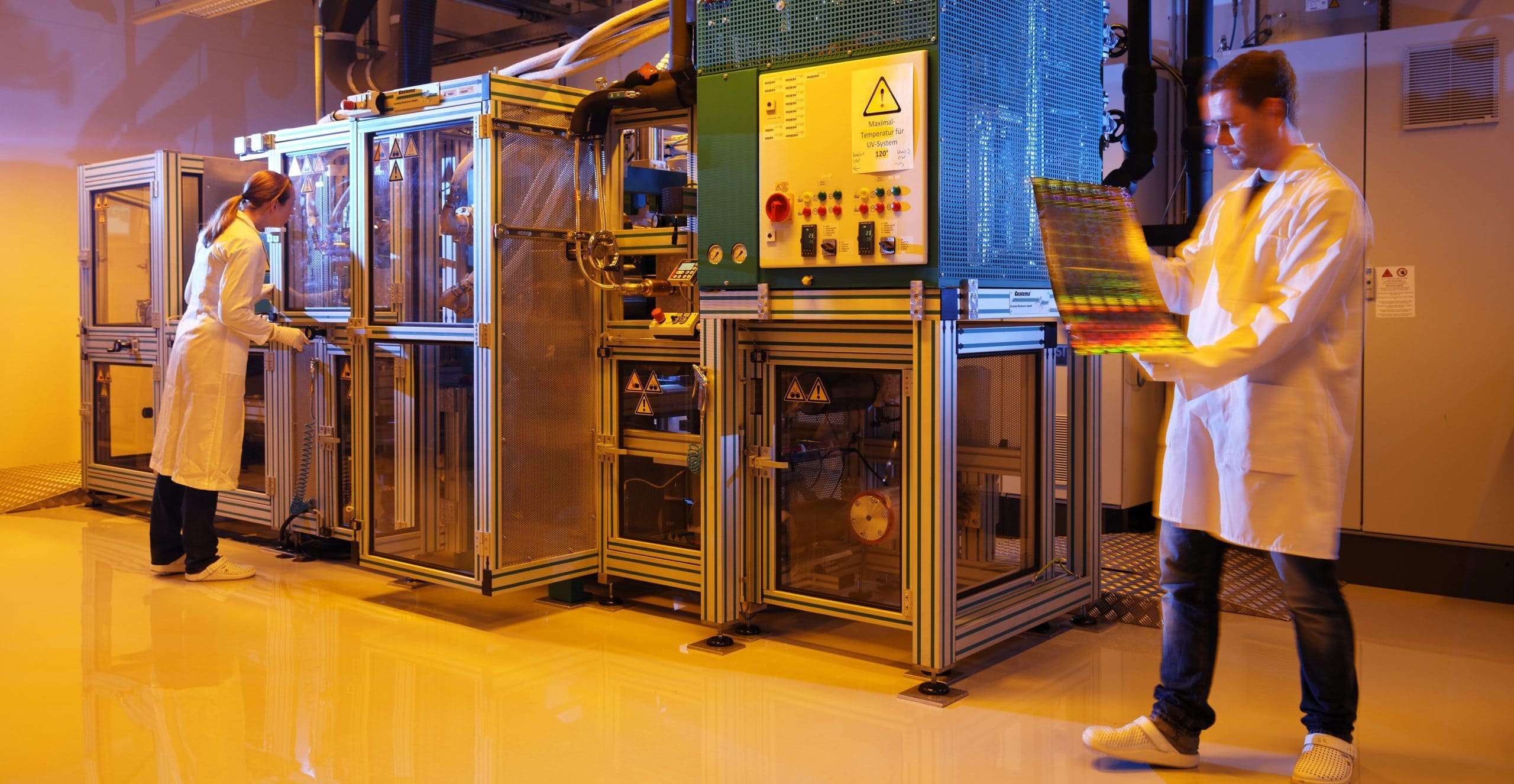
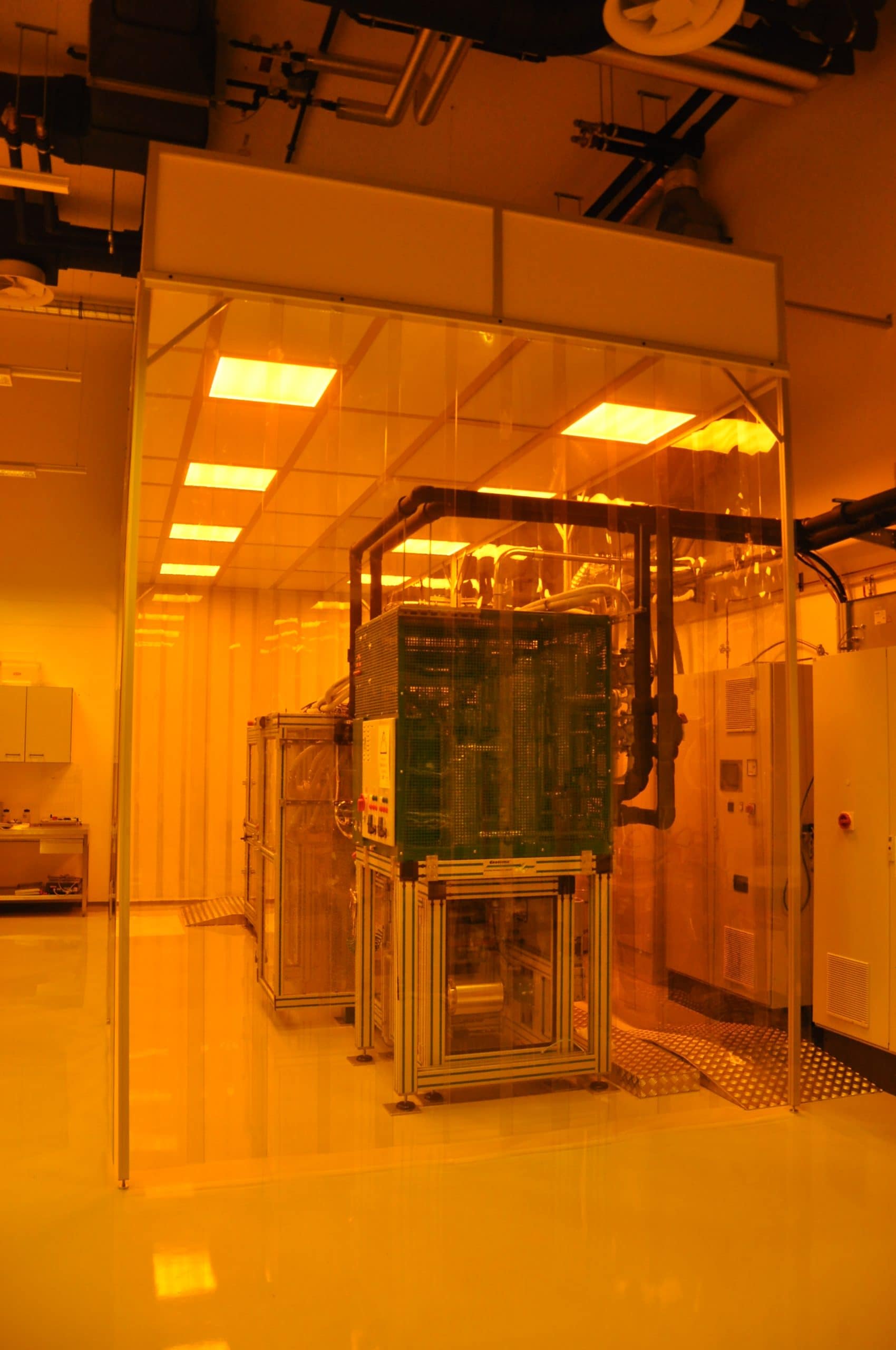
Our R2R-UV-NIL pilot line enables the continuous and cost-effective production of micro and nanostructures on flexible large-area film substrates for applications in lighting, photovoltaics, AR/VR, AR/VR, microfluidics, diagnostics, security, film finishing and packaging, the pharmaceutical industry and life sciences.


Rolle2Rolle Anlage, Standort Weiz

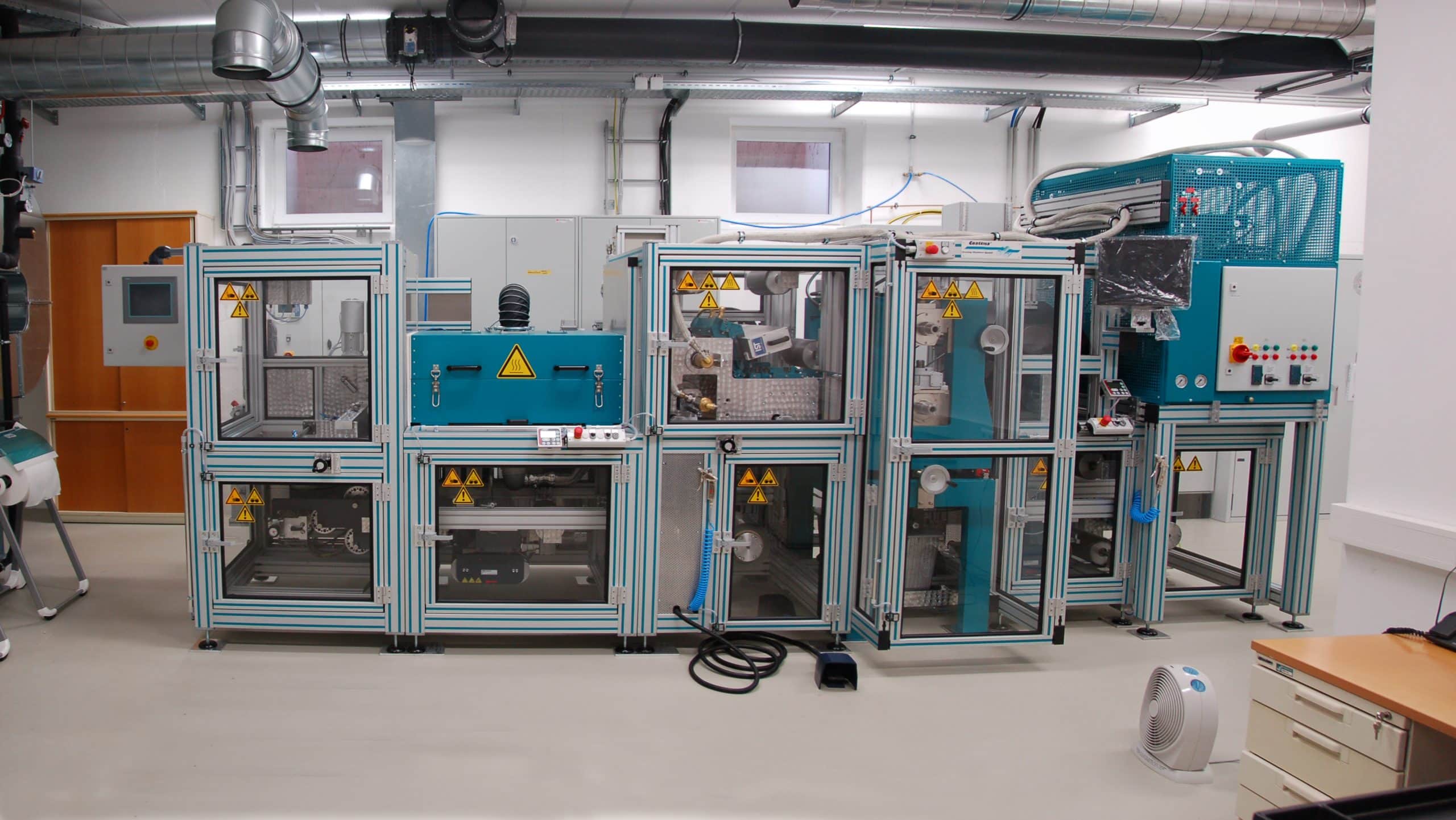
Roll2Roll system, credit: JOANNEUM RESEARCH/Bergmann

Nano-structures in roll-to-roll

The R2R pilot plant enables us to:

  • sustainable production of high-resolution conductive structural elements for organic electronics (fine conductor tracks, nanoscale electrodes for organic transistors)
  • precise optical creation of 2.5D structures for the light management in flexible films (coupling and outcoupling, light guiding) for applications in photonics
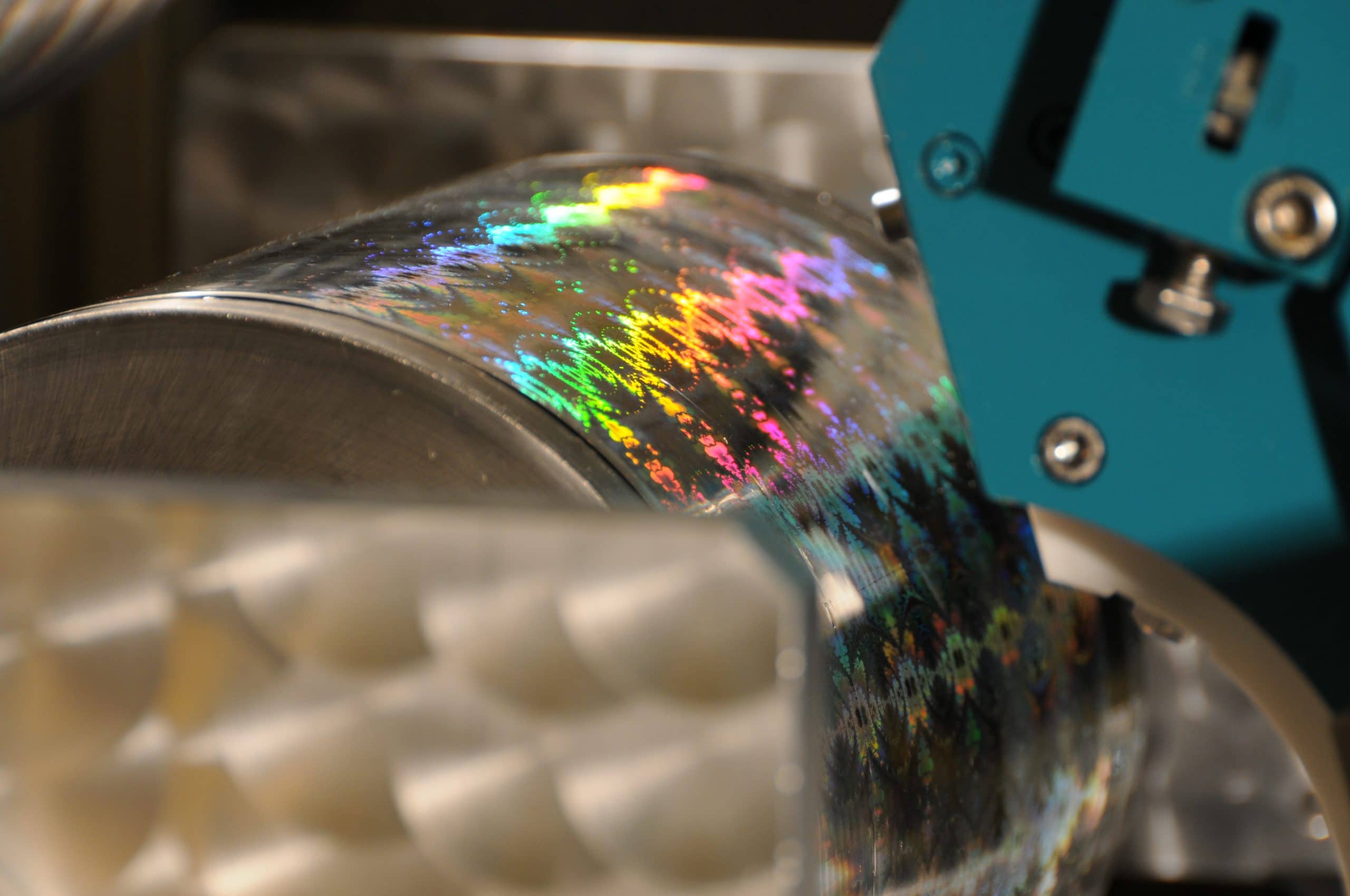
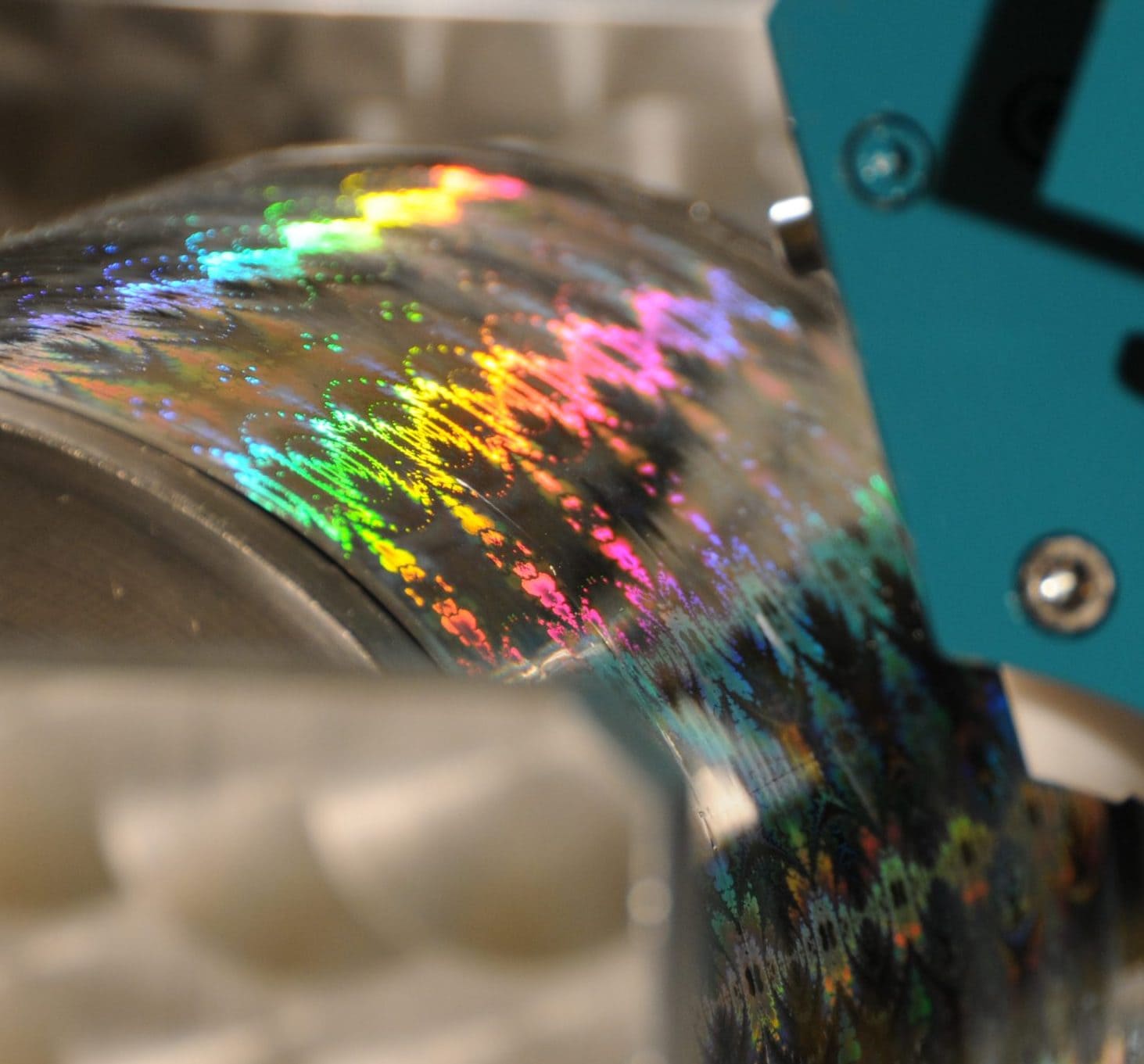
  • large-scale realisation of structured bionic surfaces and complex nanopatterns, which allow the artificial imitation of biological characteristics (shark skin, lotus effectgecko effect, structural colors)
  • cost-effective production of complex microfluidic elements on foil for bioanalytic lab-on-foil systems
  • continuous production of optimized high-tech film surfaces for packaging, decoration, safety and labeling, which display improved optical, mechanical and chemical behavior due to their micro and nanostructural properties


You are currently viewing a placeholder content from Youtube. To access the actual content, click the button below. Please note that doing so will share data with third-party providers.

More Information


Process sequence for R2R imprinting

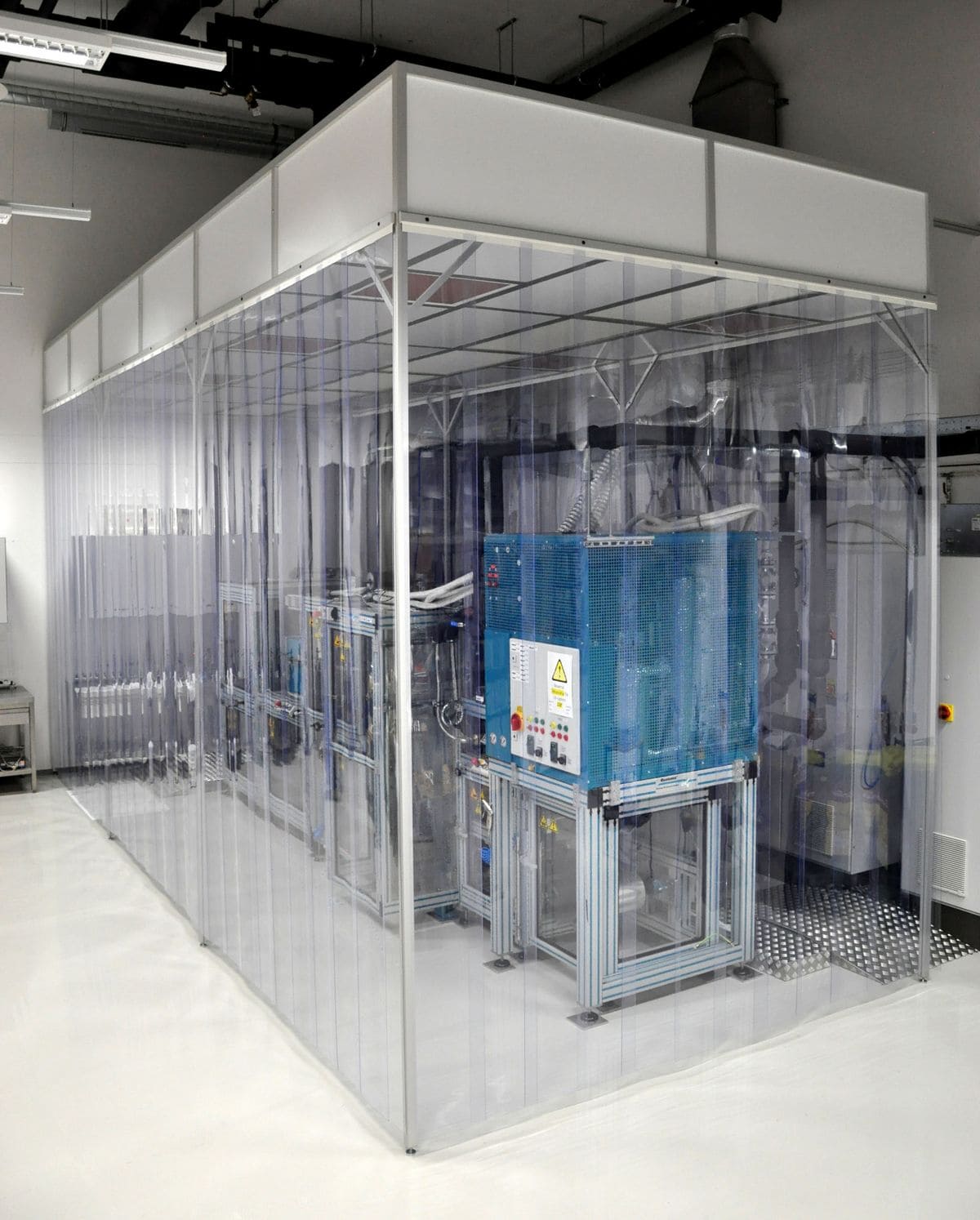
  • The entire system is located inside a laminar flow box, which guarantees a class 10.000 cleanroom environment (ISO 7 standard).
  • A flexible polymer film as substrate on a roll is cleaned from particles by means of ionization and suctioning devices during the production process. If necessary, the surface to be coated may be pre-treated in a corona unit to improve wettability.
  • The web edge control after unwinding and directly before winding regulates the position of the web edge, keeps the web centred and ensures even winding.
  • A coating step follows, whereby the liquid lacquer is applied by means of gravure printing. If necessary, the material can then be pre-dried in the thermal dryer in order to evaporate undesired solvent.
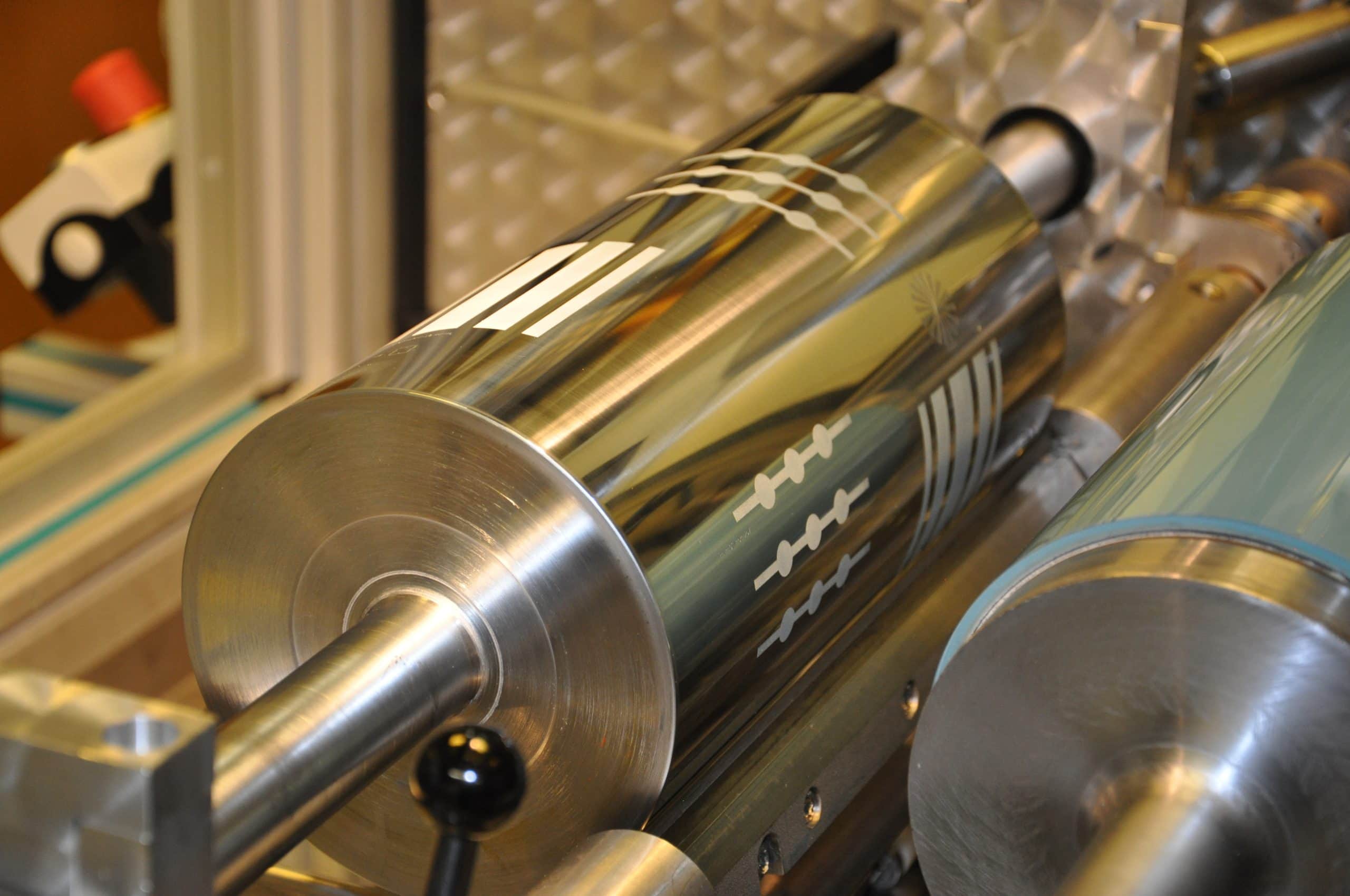
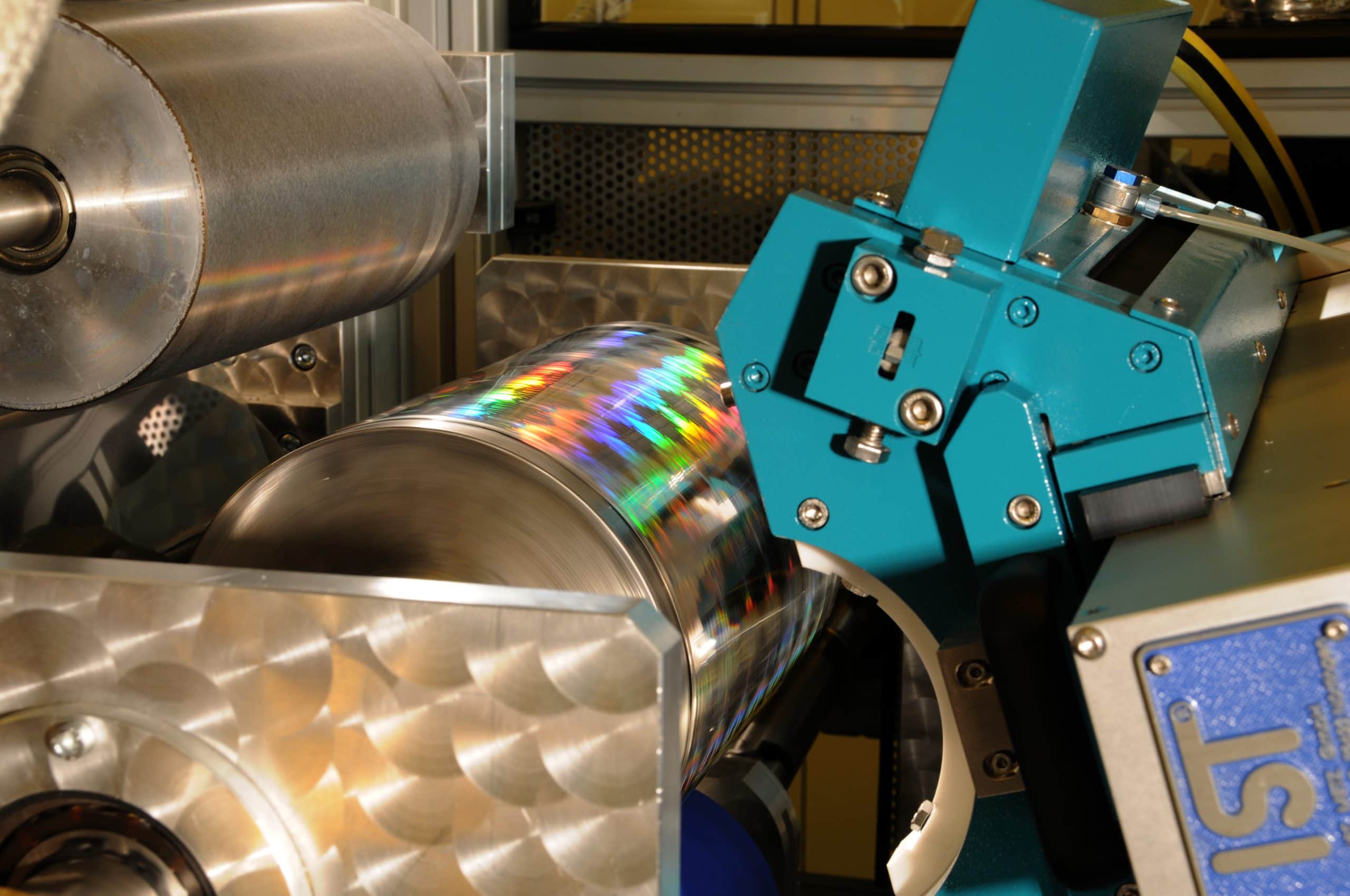
  • The structuring of the coated embossing varnish is then carried out using UV nanoimprint lithography (UV-NIL). The structures are transferred from an embossing die into the still liquid UV-curable lacquer and cured/cross-linked by means of UV exposure. Once these structures on the film have been released from the embossing stamp, the film is rewound.
  • The quality of the embossing is checked in-line with a high-resolution line scan camera.


Find out more about our services in the area of R2R pilot line for micro- and nanostructuring as well as Materials and components for micro- and nanostructuring (NILcure).

Contact

Your contact

Location

MATERIALS – 
Institute for Sensors, Photonics and Manufacturing Technologies
Franz-Pichler-Straße 30,
8160
Weiz

Das sagen unsere Kunden

Further research infrastructure

Teilen Sie uns Ihre Anwendung und technischen Anforderungen mit!

Wir prüfen Machbarkeit, mögliche Prozesswege und nächste Schritte.

Skip to content